Barbara Rubin Turned Projection Into Part of the Performance
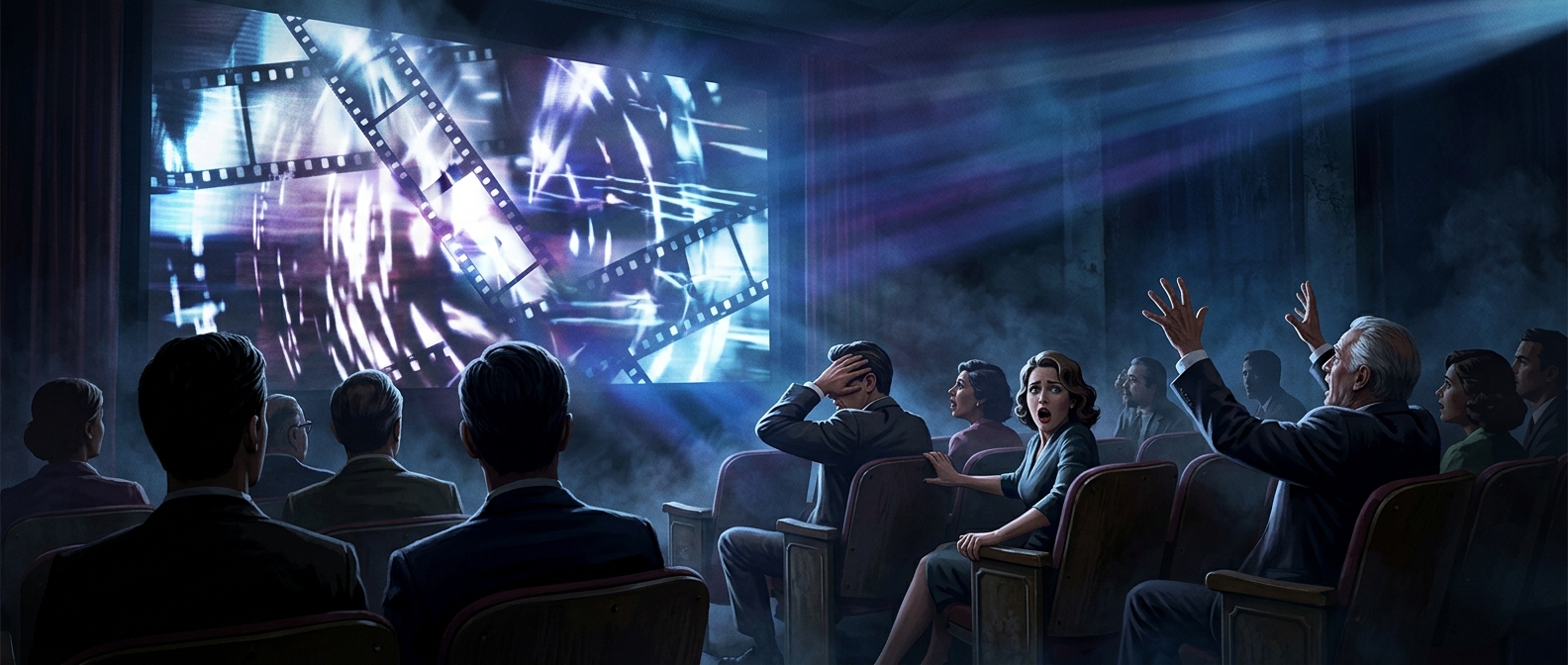
Barbara Rubin’s Christmas on Earth did not behave like a conventional movie. Made when she was 17, it was designed to be shown on two 16mm projectors at once. The images overlapped on the screen, so viewers had to take in layers rather than follow one clean, continuous picture. Its explicit imagery and fragmented form made the act of watching feel unsettled and immediate.
That setup also made the screening an event, not just a film playing in a room. Rubin projected the work in front of live bands, placing its shifting images alongside music and performers. The audience encountered sound and picture together, with no single element controlling the experience.
A Film Became a Meeting Point
The underground art world of the early 1960s was small enough for screenings, parties, and collaborations to connect people who were pushing against mainstream culture in different ways. Rubin’s film and performances brought her into contact with figures including Andy Warhol, Bob Dylan, and the Velvet Underground. The importance of that connection was not simply that a teenager had made a provocative film: she was creating situations where artists and musicians could meet around work that resisted familiar rules.
Rubin later left the art world and converted to Orthodox Judaism. That sharp change makes her brief period of avant-garde activity feel especially concentrated. For a time, she used two projectors and a live performance setting to turn a film screening into a shared, unpredictable encounter—one that could pull an emerging downtown scene into the same room.