The camera has to measure before it can photograph
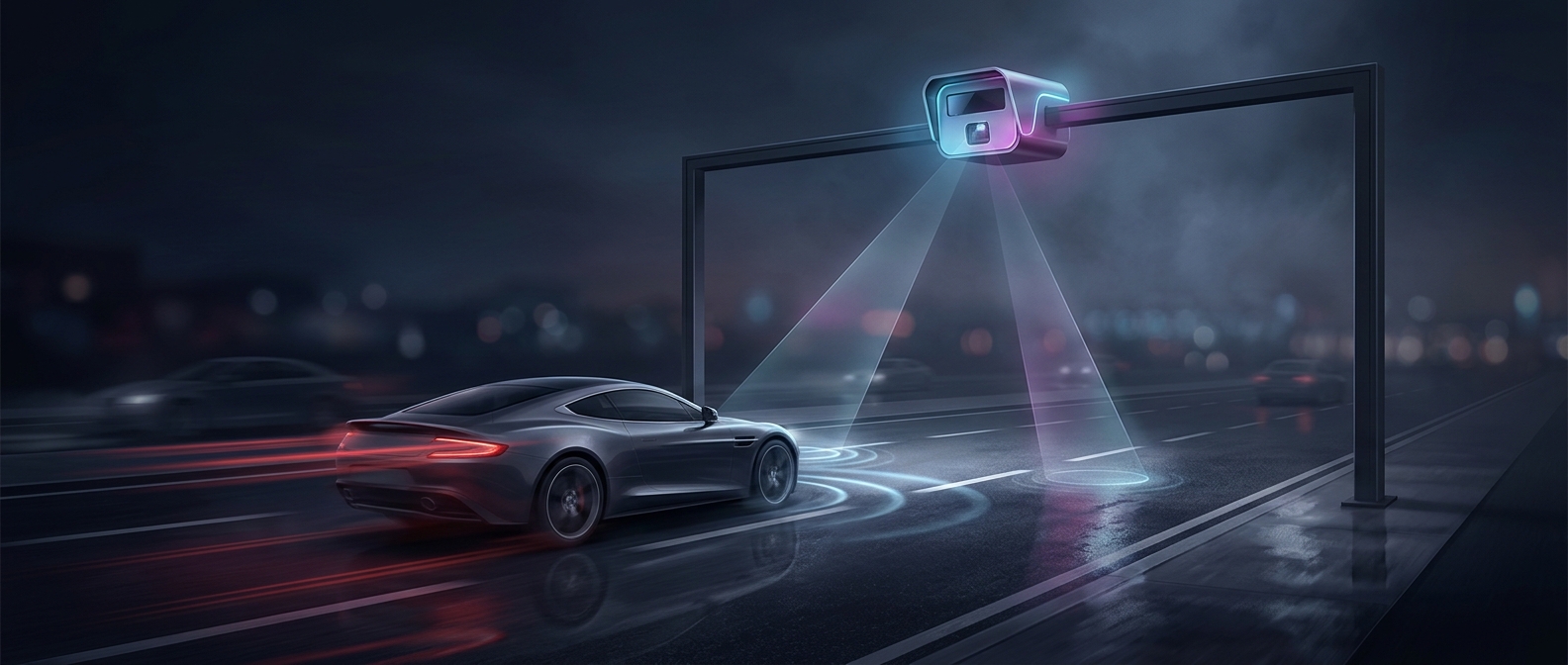
A speed camera does not judge how fast a car looks in a picture. Depending on the system, it measures speed with radar, which detects a change in the signal reflected from a moving vehicle; lidar, which sends rapid laser pulses and tracks how quickly distance changes; or sensors in the road that record a vehicle at known points. Each method turns a physical signal or a measured interval into a speed reading.
The camera is linked to that measurement. When the system detects a vehicle exceeding its configured threshold, it can trigger a photograph to document the event. The image helps identify the vehicle and connect it to the reading; it is not usually the source of the speed calculation.
Why a last-second brake cannot undo the reading
Braking changes a car’s speed, but only from the moment the driver applies the brakes onward. A measurement already taken describes the car’s motion during the camera’s measuring interval. Slowing before that interval can affect the reading; slowing after it cannot rewrite it.
Not every camera measures in exactly the same way. A point camera may capture speed at one location, while an average-speed system compares the time a vehicle takes to travel between separated points. In either case, the useful question is not whether the driver is braking when the flash appears, but what speed the system measured over the interval that triggered the record.