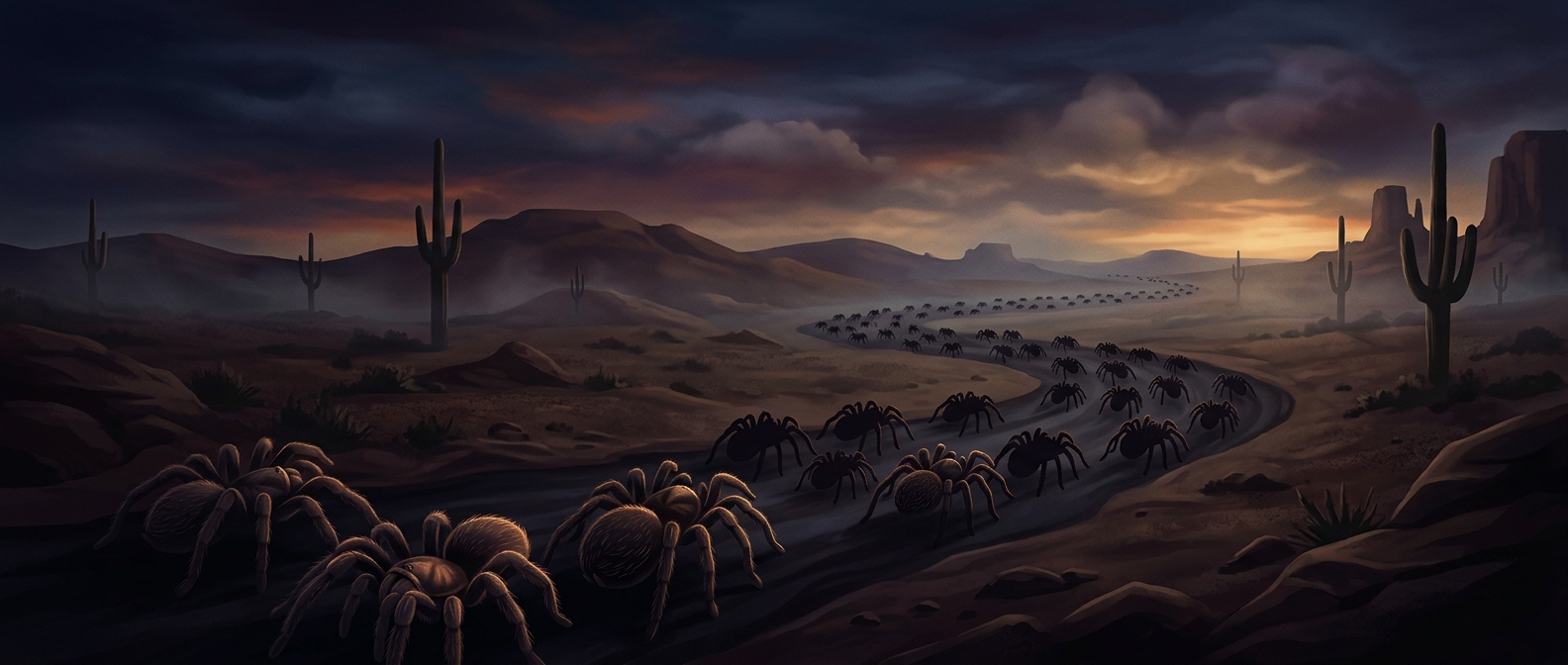
Why male tarantulas wander in autumn
The crossings are usually a search for mates, not a mass migration in which the spiders travel together. When breeding season arrives, mature male tarantulas leave the burrows where they have lived and roam across open ground. Females generally remain near their burrows, so a male may cover considerable distance before finding one.
That roaming turns a quiet stretch of road into a visible route through spider habitat. A road can cut across the same grassland or scrub that males would otherwise cross on foot, funneling their journeys into a place where drivers are likely to notice them.
A short journey with real risks
Tarantulas move slowly compared with cars, and their dark bodies can be hard to spot against pavement, especially after dusk. Many never make it across. The spiders are not seeking roads; they are following the landscape and breeding season, with traffic simply in the way.
For travelers, the autumn spectacle is also a reminder that wildlife movement does not stop at the edge of a road. Slowing down where tarantulas are known to cross can give them a chance to reach the other side—and helps keep a mating-season wander from ending under a tire.