Why a plain building story gets a ghost
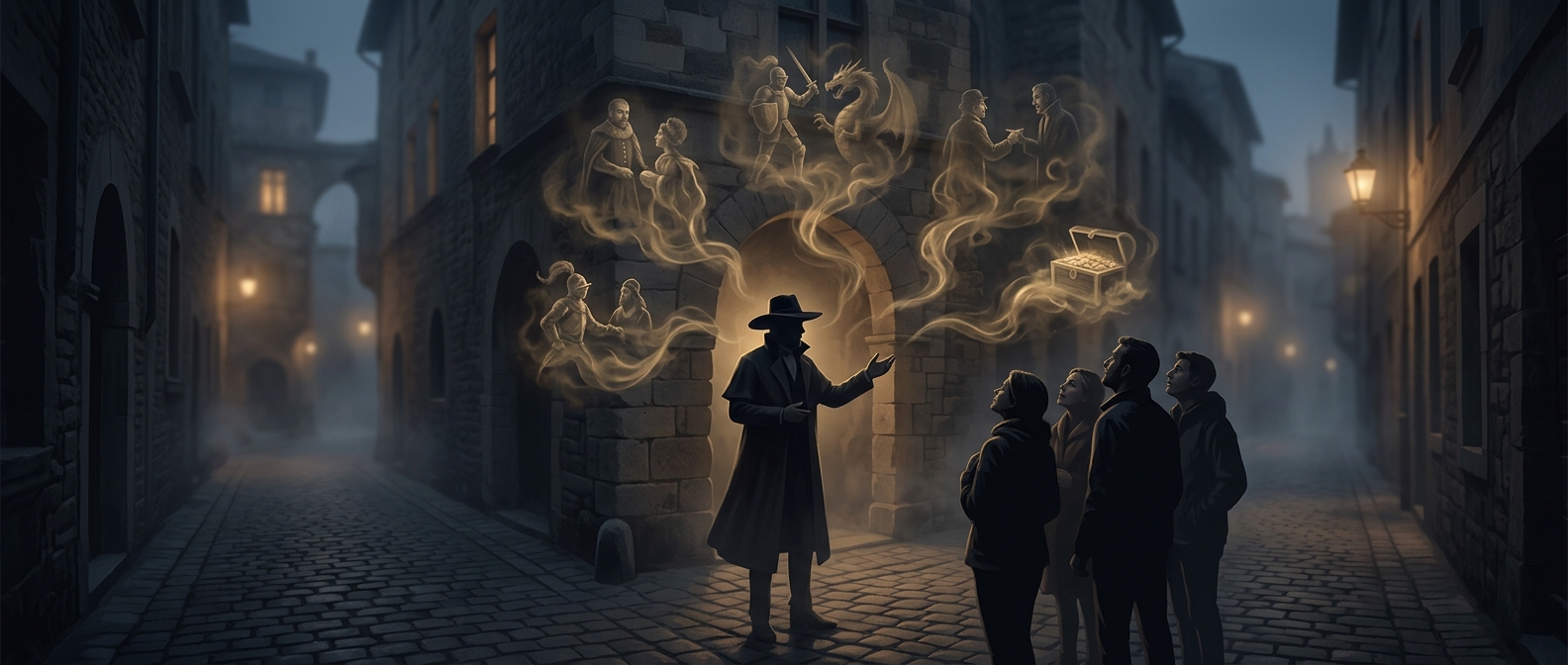
A building may have been put up for a practical reason: to house offices, store goods, or make money. On a walking tour, that explanation can be hard to picture—and harder to remember—than a tale of a ghost in a window or two families locked in a feud. A dramatic story gives visitors a character, a conflict, and a reason to look closely at the place around them.
The story changes what visitors notice
Once a guide describes a haunted staircase, an ordinary creak or shadow can feel like part of the plot. A supposed feud can make a doorway or neighboring facade seem like evidence of rivalry. The story turns architecture into a stage, helping a group stay engaged as it moves through streets and pauses at buildings.
That makes invention tempting, especially when a tour has to hold attention amid traffic, crowds, and limited time. But a vivid detail can travel farther than its disclaimer—or than the building’s documented history. Visitors may repeat the tale as fact, and the real decisions behind the structure can disappear from view.
Make the ordinary details do the work
A more grounded tour can still build suspense: point out what the building’s layout reveals, explain who used it, or show how its design served its original purpose. Those details give visitors something concrete to notice without turning speculation into history. The next time a guide offers a perfectly theatrical feud, the useful question is whether the building’s visible features support the story—or merely provide its backdrop.