One toolkit, two very different worlds
A game’s software engine is less like a script than a workshop. It provides reusable machinery for tasks such as drawing three-dimensional scenes, while the game’s own code and content decide what players see and do. RenderWare was middleware: software developers could plug into their projects rather than build every underlying system from scratch.
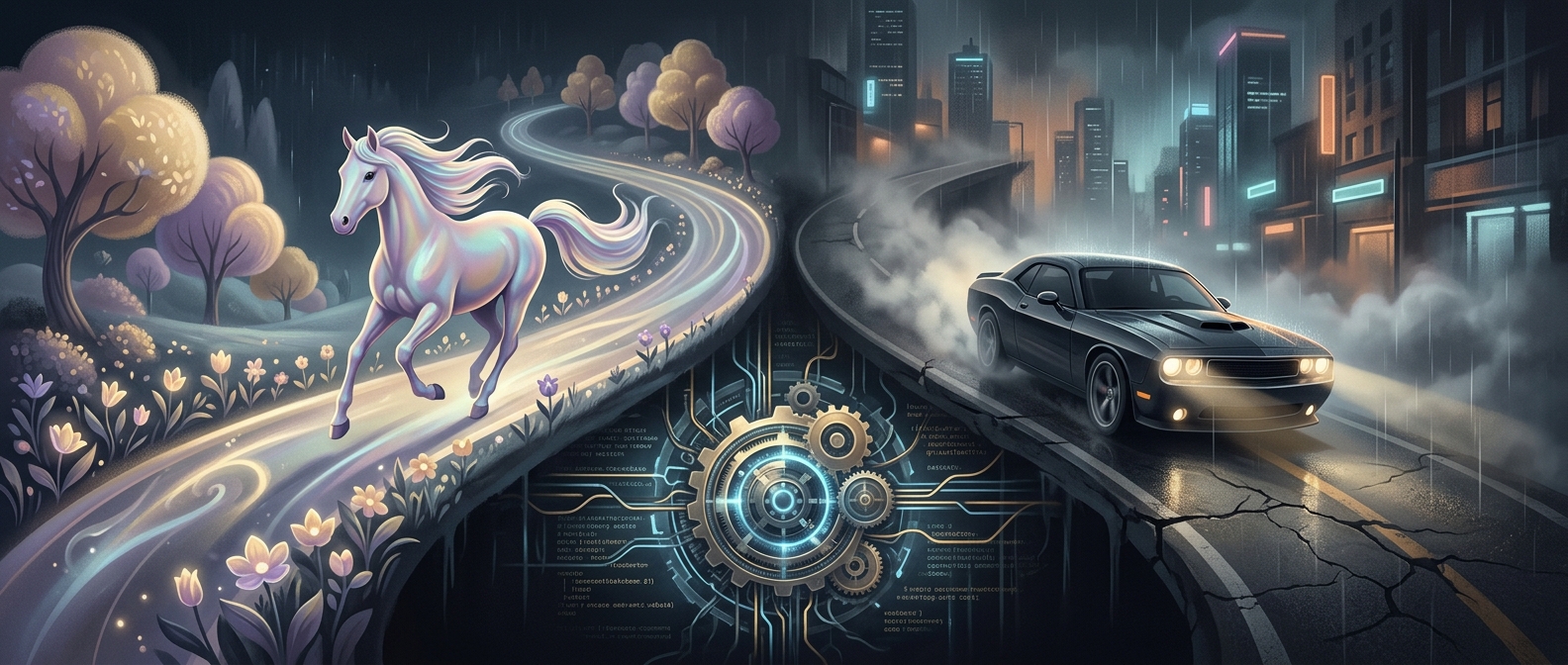
That separation helps explain how the same toolkit could serve Barbie Horse Adventures and Grand Theft Auto. RenderWare could help display a horse, a road, or a building in 3D; it did not determine whether the player rode through a gentle adventure or drove through a crime story. Those experiences came from the teams’ designs, rules, characters, and assets—the models, sounds, and other materials that make a game’s world its own.
Reuse saves work, but does not make games alike
Building a 3D game involves many technical chores before its distinctive features are in place. Middleware gives a team a foundation for some of that work, so effort can go toward shaping the particular game instead of recreating every basic capability. It also means developers still have to adapt the tools to their needs: shared foundations are not finished games, and they do not erase the limits or choices of a project.
The comparison is a useful reminder that a game’s identity does not reside in its engine alone. The toolkit helps make a world visible and playable; design determines what that world asks the player to do. The same technical foundation can therefore sit beneath a horseback adventure and a sprawling city game without making them feel remotely alike.