Seaman Made Conversation Part of the Game
In Seaman, the microphone was not just a novelty accessory. It turned the Dreamcast’s controller into a two-way channel: players spoke aloud, and the game used voice recognition to identify a limited set of words and prompts. The creature’s replies—narrated by Leonard Nimoy—made its tank feel less like a screen to watch and more like a small habitat that expected attention.
That expectation shaped the game’s design. Seaman began as an aquatic creature and developed through stages, with players returning to feed it, check on it, and talk to it. Its responses could be odd, abrupt, or demanding, giving the interaction an intentionally prickly personality rather than the cheerful obedience of a typical virtual pet.
Neglect Had a Visible Cost
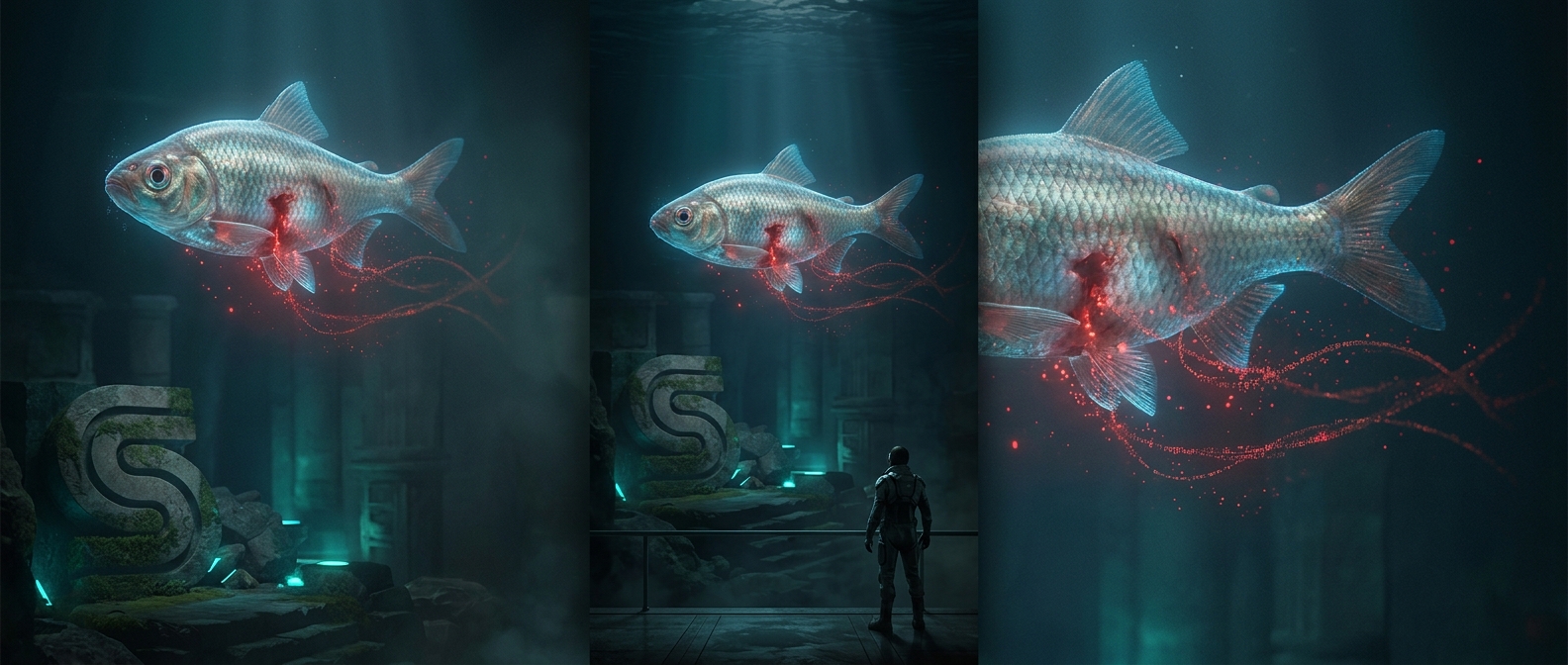
The fish’s health was tied to the conditions players maintained. Feeding and care kept it alive; leaving it unattended could make it sick, and the game could show blood as part of that decline. Seaman could ultimately die. The consequence made absence part of the play experience: the game did not pause its creature’s needs simply because the player had walked away.
This was a deliberate contrast with games built around constant action and immediate rewards. Seaman asked for intermittent attention, then used its talking face and changing condition to make that attention feel personal. The microphone could make a conversation seem spontaneous, but the creature’s apparent independence came from designed responses and care systems—not from an animal living inside the console.