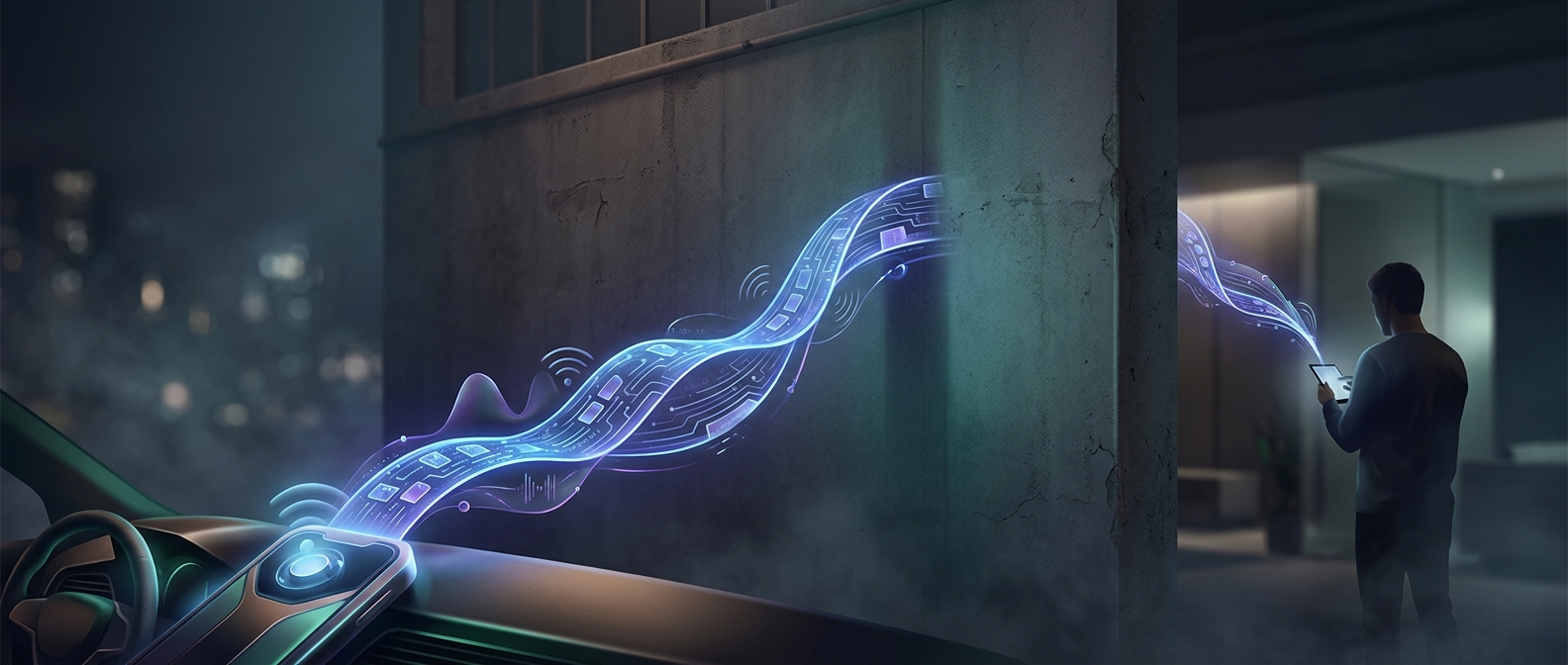
What a Wi-Fi signal meets inside a wall
A wall is not a single barrier so much as a layered mix of materials. Radio energy can be absorbed by water in materials and furnishings, scattered by uneven surfaces, or reflected by dense layers. The portion that emerges is weaker, and some may arrive by bouncing off other surfaces rather than traveling straight from router to device.
That is why two walls that look similar can affect a connection differently. Drywall and wood usually impede signals less than thick masonry; reinforced concrete and metal-backed insulation can block much more. Moisture also matters: a damp wall or a crowded room full of people can absorb more radio energy than an empty, dry space.
Why a connection can change from room to room
Wi-Fi uses different radio bands, and higher-frequency signals generally lose strength more quickly as they pass through obstacles. A router may therefore reach one room reliably on one band while a faster, higher-frequency band struggles to get there. The device and router continually exchange information about whether received signals are clear enough to use; when the signal is weak or distorted, data may need to be sent again, slowing the connection.
Walls are only part of the route. Reflections from floors, ceilings, and furniture can create several copies of a signal that arrive at slightly different times. Those copies can either help reception or interfere with one another, so moving a router or device a short distance can change the result even when the walls stay the same.
The practical consequence is that Wi-Fi coverage is shaped by the building, not just the router’s advertised power. A central, open placement often gives signals fewer obstacles to cross—and can matter more than simply turning the router up.