Your body prepares for a moving floor
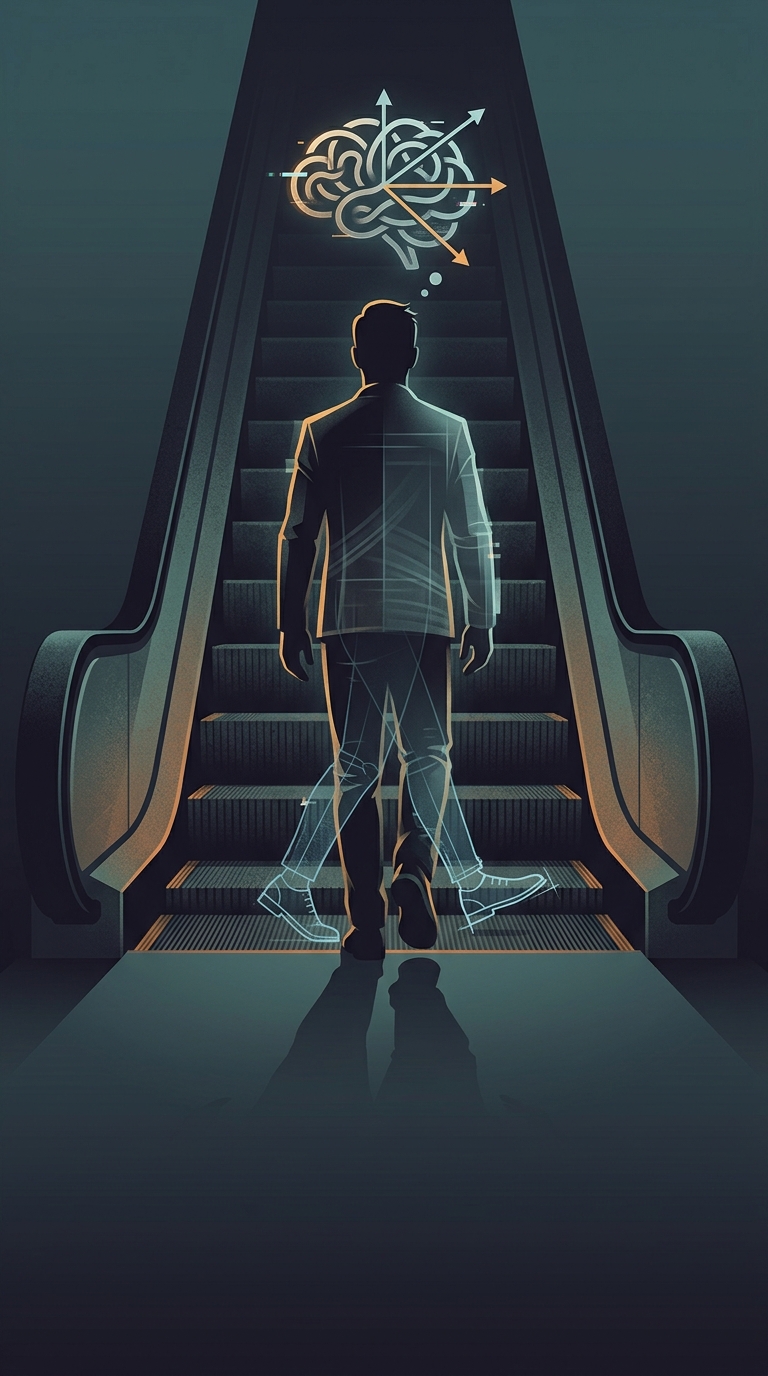
An escalator is not just a set of stairs: when it is running, its steps carry you forward as you step on. After repeated rides, your brain learns to expect that extra motion and quietly adjusts your balance and leg movements to match it. These adjustments happen automatically, before you have to think through each step.
Seeing the stop is not the same as resetting the prediction
When you approach a stationary escalator, your eyes can register that the steps are not moving while your motor system still prepares for the familiar ride. You may step with slightly altered timing or force, as if the floor will move beneath you. Because it does not, that small mismatch can throw off your balance for a moment.
The result is a brief stumble or awkward step—not because you failed to notice the stopped escalator, but because conscious recognition and learned movement do not update at exactly the same speed. Once your foot lands and your body gets feedback from the stationary step, you can correct your balance.
A prediction error, not a mystery
This is an example of the body relying on a useful prediction: normally, the escalator will carry you. Most of the time, that expectation makes boarding smoother. When the expected movement is missing, the same automatic adjustment briefly works against you. The odd sensation is a reminder that walking depends not only on what you see, but also on what your body expects the ground to do.