The advice behind Findhorn’s giant cabbages
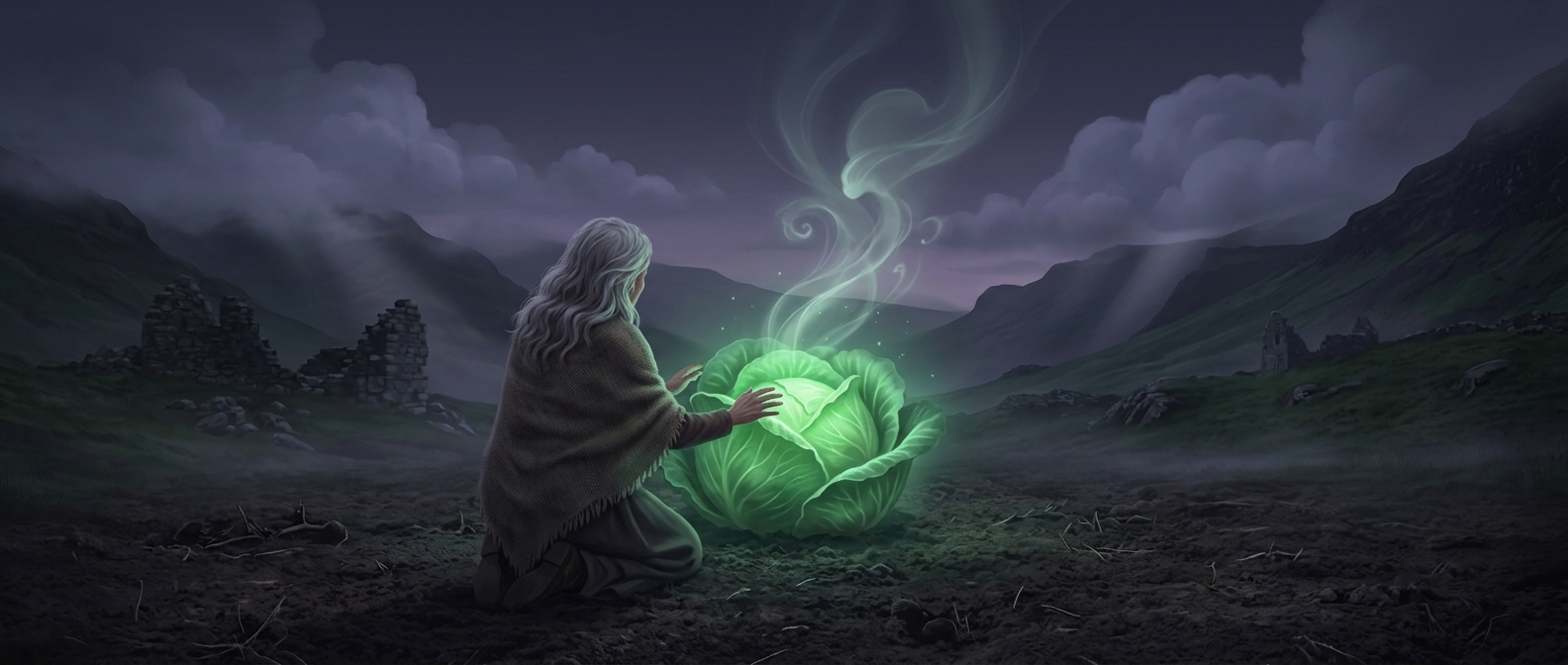
At Findhorn, in northeastern Scotland, the founders attributed their gardening guidance to plant devas—nature spirits they believed were connected with particular plants. They said the devas offered practical advice about composting and planting, not just general encouragement. The reported result was cabbages weighing as much as 40 pounds, grown in sandy ground they described as barren.
That account joins a spiritual explanation to an ordinary gardening challenge: sandy soil drains quickly and often holds little water or nourishment. Compost—decomposed organic material—can add nutrients and help soil retain moisture. How a crop is planted and cared for also affects whether it can make use of those resources. The source account does not specify the devas’ individual instructions, so the striking claim is the founders’ account of where their guidance came from, rather than a recipe that can be reconstructed step by step.
A spiritual account of practical work
In the founders’ telling, gardening was a relationship with living nature: people could listen for guidance from beings associated with plants and then act on it in the garden. The cabbages became a visible expression of that belief, because their extraordinary size seemed to make the unseen advice tangible.
The story is worth retelling for that overlap. Composting and planting are hands-on responses to poor growing conditions; the devas belong to the founders’ spiritual interpretation of how they learned what to do. At Findhorn, the garden’s harvest made that interpretation part of the place’s identity.