The seam is a listening problem
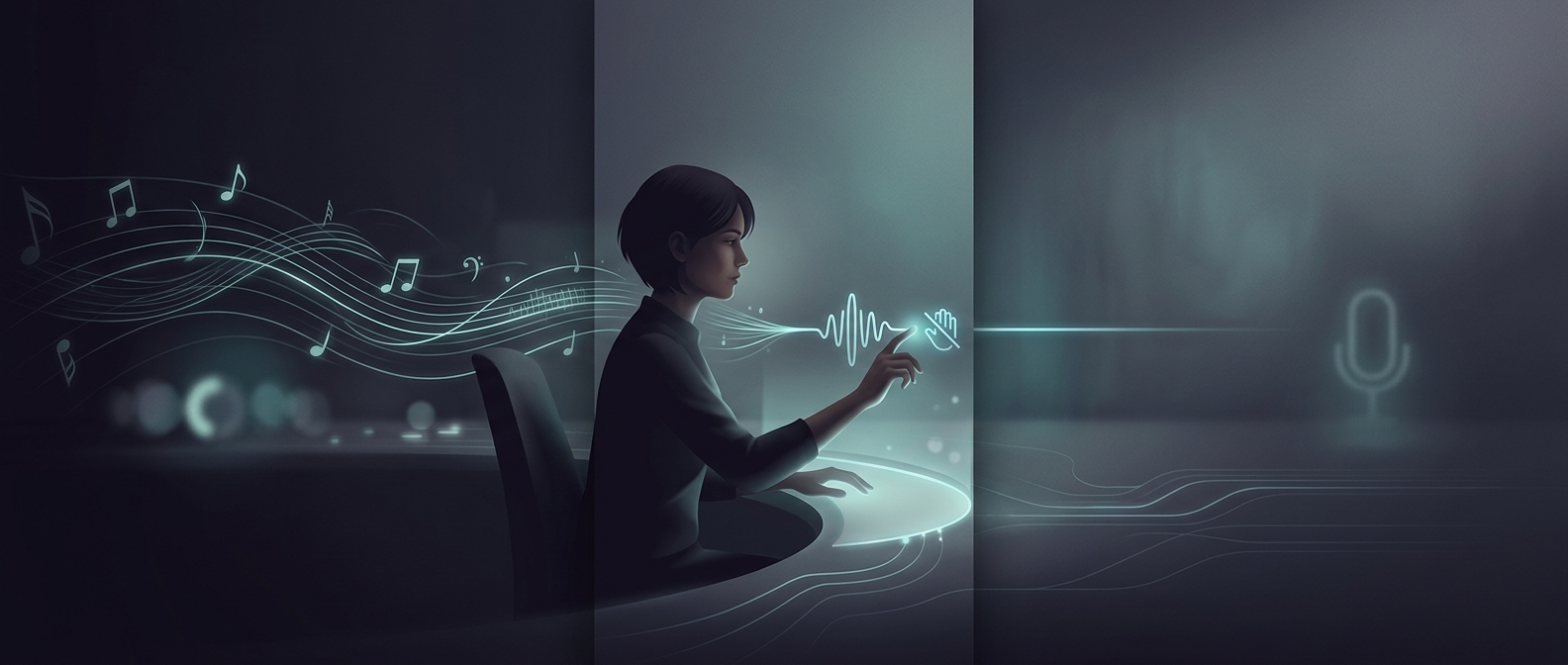
A loop has to satisfy two listeners at once: the game engine, which simply jumps from the end of a file back to its start, and the player, who may hear a click, sudden change in loudness, or repeated sound. A click can occur when the waveform’s value at the final sample differs sharply from its value at the first. Even if that boundary is technically smooth, a bird call or splash cut in half can make the restart obvious.
The editor’s job is to choose a boundary where the sound is already changing gently, then make the two sides fit. Sometimes that means trimming at a quiet moment. Another option is a short crossfade: the tail of the recording fades down as its opening fades up, overlapping the two sections so the handoff is less abrupt. The overlap must be chosen carefully; too much can blur a distinct event or make the ambience swell.
Repetition without a metronome
Ambient tracks are especially difficult because they often contain irregular details—wind, insects, distant traffic—that sound natural precisely because they do not repeat in a clear pattern. If a recognizable chirp lands at the same point every cycle, a player may notice the loop even when the transition itself is seamless. Editors may therefore use longer recordings, move or soften conspicuous events, or combine looping ambience with other changing sounds.
That design choice matters in a game because a short audio file can run through a long stretch of play. A clean boundary prevents an unwanted interruption; a less predictable pattern helps keep the environment from feeling like a recording on repeat. The best loop is one whose restart works technically but gives the player no reason to count the cycles.