What blending changes—and what it leaves behind
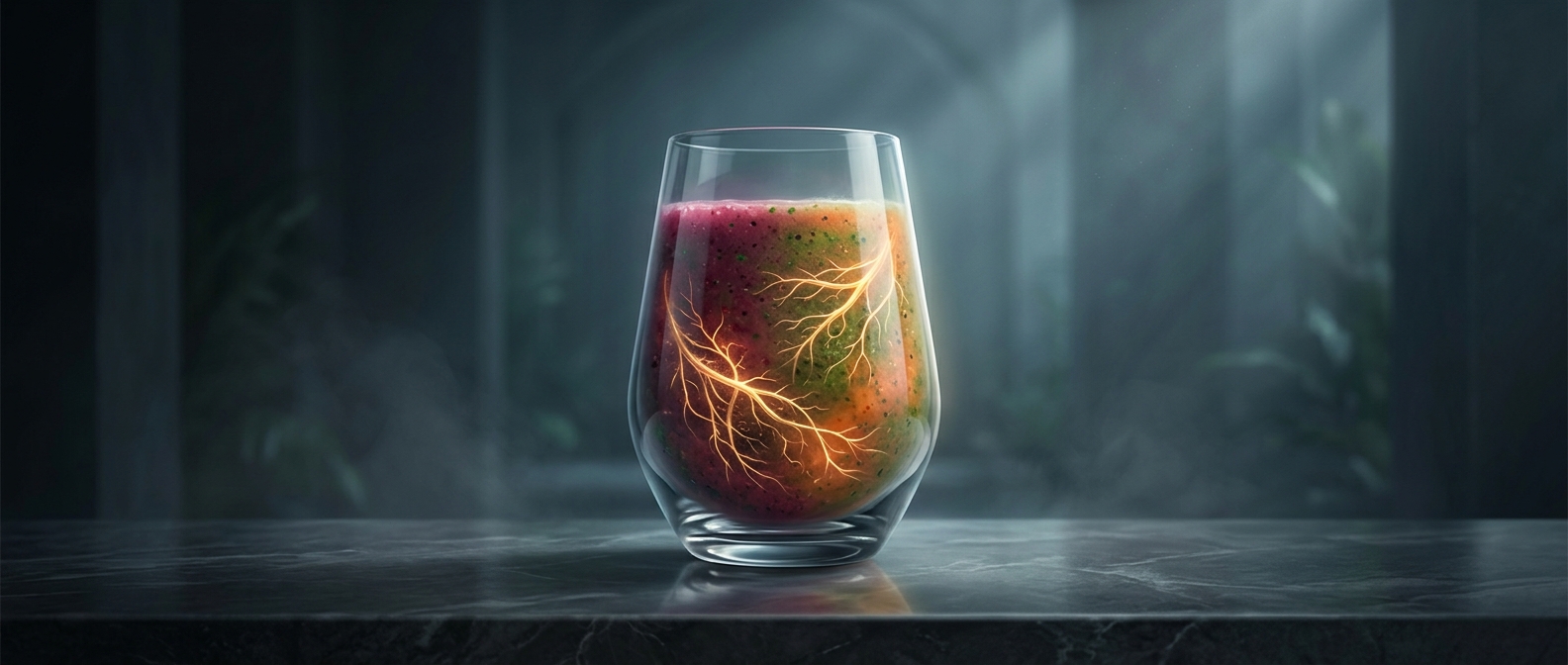
A blender changes fruit’s physical structure, not its basic fiber content. Its blades break the fruit’s cells and tissues into smaller pieces, dispersing the fiber through the drink. Because the mixture is not filtered, the fiber remains in the glass along with the fruit’s liquid and sugars.
Fiber is the part of plant foods that the body does not fully digest. Some is soluble, meaning it mixes with water; some is insoluble, meaning it stays more solid. Both can be chopped into smaller particles without disappearing. To remove much of the fiber, you would need to strain or filter the blended fruit and discard the solid pulp.
Why a smoothie can seem different
Whole fruit holds its shape, so you bite and chew it. Blending turns that structure into a drinkable mixture, which can feel much smoother and may be consumed more quickly. That difference in texture does not mean the fiber has been removed—it means the fiber is no longer arranged in the same intact pieces.
The distinction matters when comparing a smoothie with fruit juice: juice that has been strained may leave much of the pulp behind, while an unstrained smoothie keeps the blended fruit in the drink. The blender changes the texture; straining is what separates out the pulp.