How 3-D tried to make the theater feel indispensable
Television offered a new kind of convenience: entertainment at home, without a ticket or a trip. To compete, movie studios needed more than bigger stories. They needed an experience a living-room screen could not easily reproduce. Stereoscopic 3-D supplied one: the sense that objects had depth and seemed to extend toward the audience.
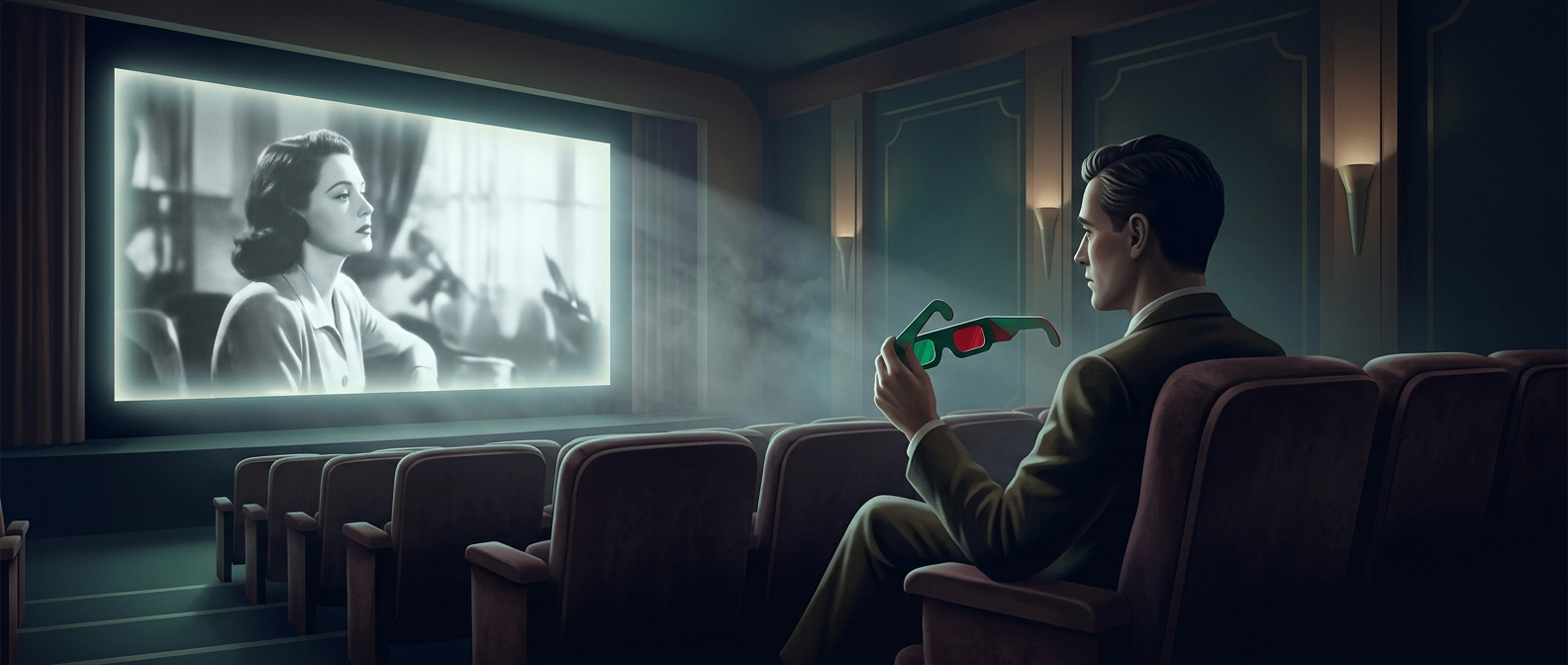
The effect depended on giving each eye a slightly different picture. In many 1950s theatrical systems, two projectors showed matching, offset images through differently polarized light. The lenses in the cardboard glasses acted like filters, allowing each eye to see only its assigned image. The brain combined the pair into a single scene with apparent depth.
A spectacle with strings attached
The glasses were cheap and easy to hand out, but the system behind them was not as simple. The two projected images had to stay aligned; if they drifted, the picture could become uncomfortable to watch. Viewers also had to keep the glasses on, and the effect worked best from suitable seats and angles. The same novelty that made 3-D distinctive could make it a fussy way to watch a movie.
That tradeoff helps explain why 3-D was a useful attraction rather than a permanent answer to television. It gave theaters a visible selling point—an image with a depth a flat broadcast could not provide—while asking cinemas to manage extra equipment and audiences to tolerate extra inconvenience. The cardboard glasses were the most memorable part of the bargain: a small, inexpensive prop that made the theater’s technical advantage something viewers could literally put on.