How the obelisk tells solar time
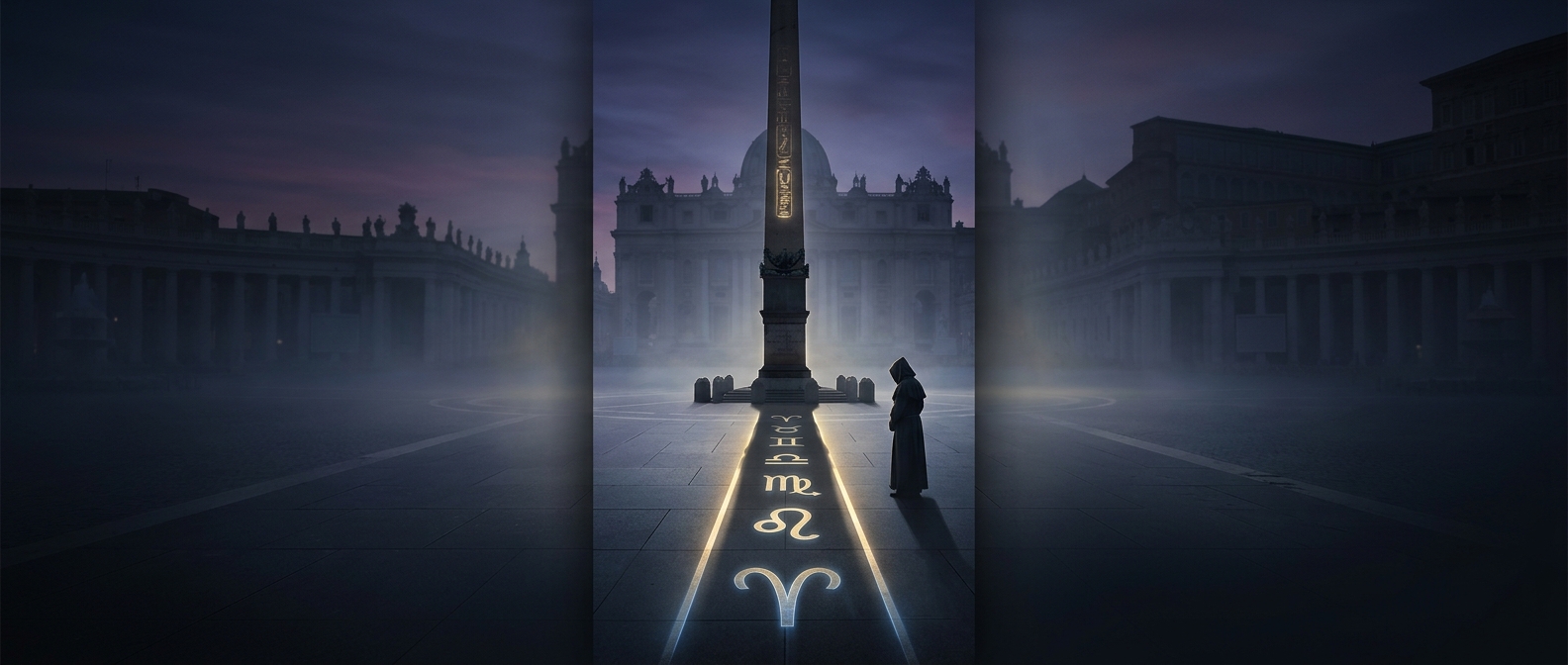
The obelisk in St. Peter’s Square is more than a monument: in sunlight, it acts as a gnomon, the upright part of a sundial that casts a shadow. A meridian line set into the paving gives that shadow a track to cross. Around local solar noon, when the Sun reaches its highest point in the sky, the shadow falls across the line; its position shifts through the year as the Sun’s apparent path changes with the seasons.
That seasonal movement is the key. Earth’s tilted axis makes the Sun appear higher in the sky in summer and lower in winter. The obelisk’s shadow therefore changes length and reaches different points on the pavement over the year. Markers along the line can identify significant dates and the Sun’s place in the annual cycle.
Zodiac signs as calendar markers
The zodiac is the band of sky through which the Sun appears to travel over the year, divided into twelve named sections. In this setting, zodiac symbols can serve as labels for positions in that cycle—not as evidence that the obelisk predicts anyone’s fate. The instrument links a visible shadow to the Sun’s changing seasonal position, making an abstract calendar legible on the ground.
This is also why the arrangement is not a contradiction in itself. The Church’s objections to astrology concern using celestial patterns to claim influence over human lives. Observing the Sun to mark time is astronomy in a practical, calendar-making sense. The same sky can be read for different purposes.
The result is a public timekeeper whose “display” changes slowly: the shadow’s daily sweep tells the hour, while its yearly migration records the seasons.