How Victory Goddesses Helped Give Angels Their Wings
Some biblical visions describe divine attendants in startling forms: Ezekiel sees living creatures beside wheels covered with eyes, while Isaiah’s seraphim have six wings. These images are far from the familiar human figure with feathered wings. That look emerged as artists translated religious ideas into visual forms their audiences could recognize.
A Familiar Sign of the Superhuman
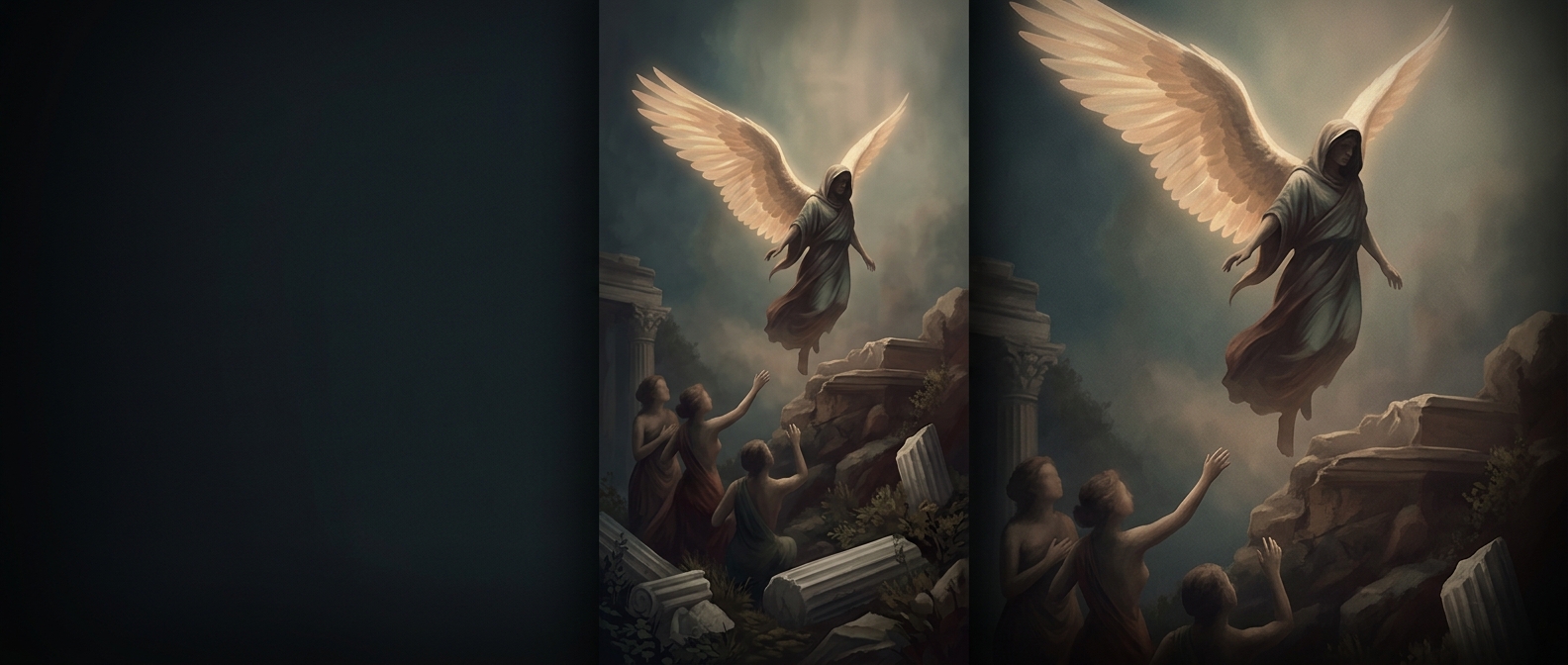
In Greek and Roman art, winged figures such as Nike, the goddess of victory, were established images of beings who could move between the human and divine worlds. Their wings made their extraordinary nature legible at a glance. As Christian art developed within this visual culture, artists could adapt that shorthand to represent angels as messengers from heaven.
The change was not simply a matter of copying one goddess and renaming her. Artists drew on a broader stock of winged figures and artistic conventions. The important transfer was visual: wings, already associated with divine power and supernatural movement, could express an angel’s role without illustrating the stranger details of every biblical vision.
From Vision to Familiar Figure
A many-eyed wheel is difficult to turn into a recognizable character in a painting. A humanlike messenger with wings is easier to identify and place in a story. Over time, that approachable image became the standard way many artists pictured angels—even though biblical texts describe different heavenly beings in markedly different ways.
The result is a lasting blend of traditions: the winged angel feels unmistakably biblical to many viewers, yet its visual language also belongs to the classical world that Christian artists inherited.