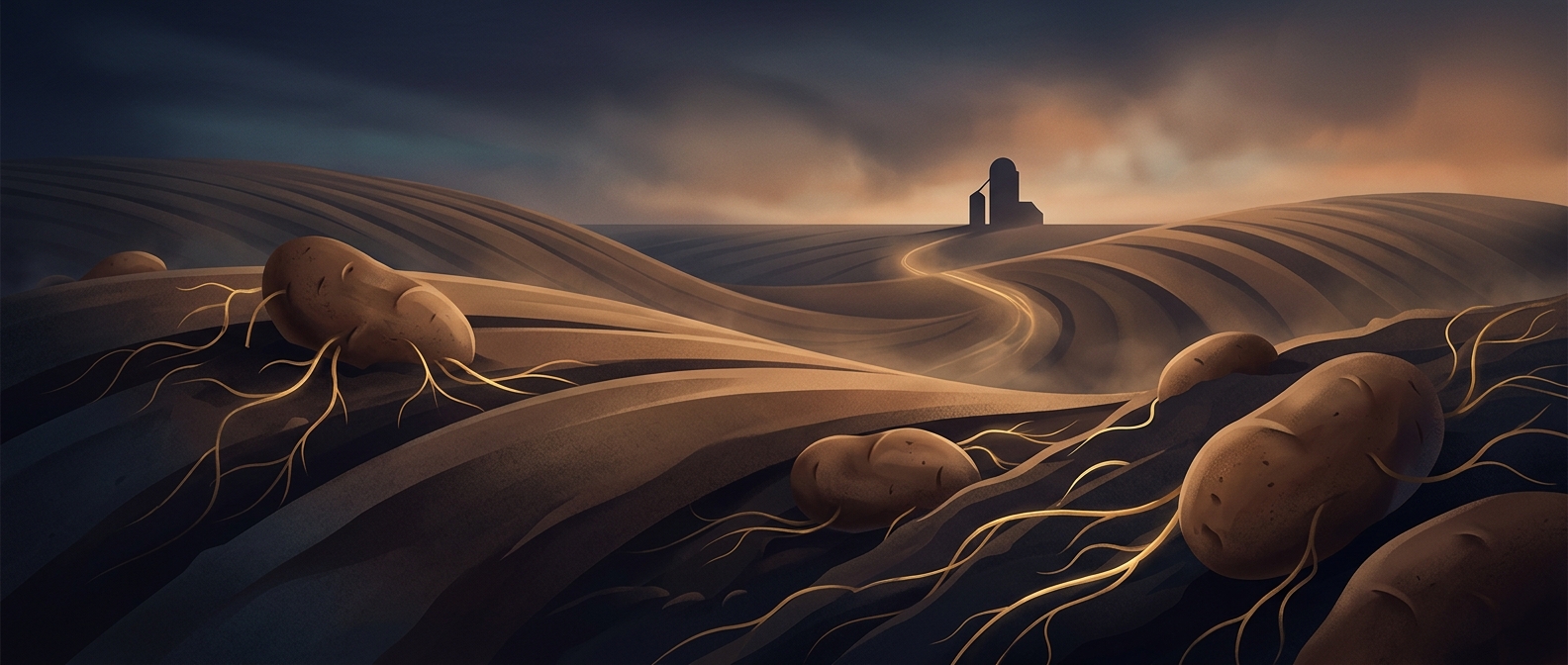
Why Idaho’s volcanic ground suits potatoes
A potato grows underground as a swollen stem called a tuber, so the soil around it affects both its shape and its chances of rotting. Much of Idaho’s potato country lies on the Snake River Plain, where volcanic material helped form soils that are often loose and drain well. That gives tubers room to expand and lets excess water move away rather than linger around the crop.
Soil is only part of the growing system
Good drainage does not mean potatoes can grow without water. In Idaho’s relatively dry farming regions, growers must supply moisture and manage it through the season. The aim is to keep plants growing steadily while avoiding the soggy conditions that can damage underground tubers. The soil’s structure makes that balancing act more workable; it does not do the job on its own.
From field conditions to french fries
The same underground growth that makes soil important also shapes the harvest. Potatoes need to come out with as little bruising or damage as possible, especially when they are destined for processing. Loose ground helps make that practical, while Idaho’s combination of suitable soils and managed water supports large-scale production. The volcanic landscape is not just scenery: its buried materials help determine what can be grown on the plain above.