How Italy’s landscapes shape its cheeses
Italy’s extraordinary range of cheeses grew out of a practical problem: fresh milk is plentiful only where and when animals are producing it, so communities learned different ways to turn it into food that would keep. In mountain areas, cheesemakers could make use of cow’s milk and allow wheels to mature in cool conditions. In other regions, sheep’s milk—often associated with drier grazing land—became the basis for firm, savory cheeses such as pecorino.
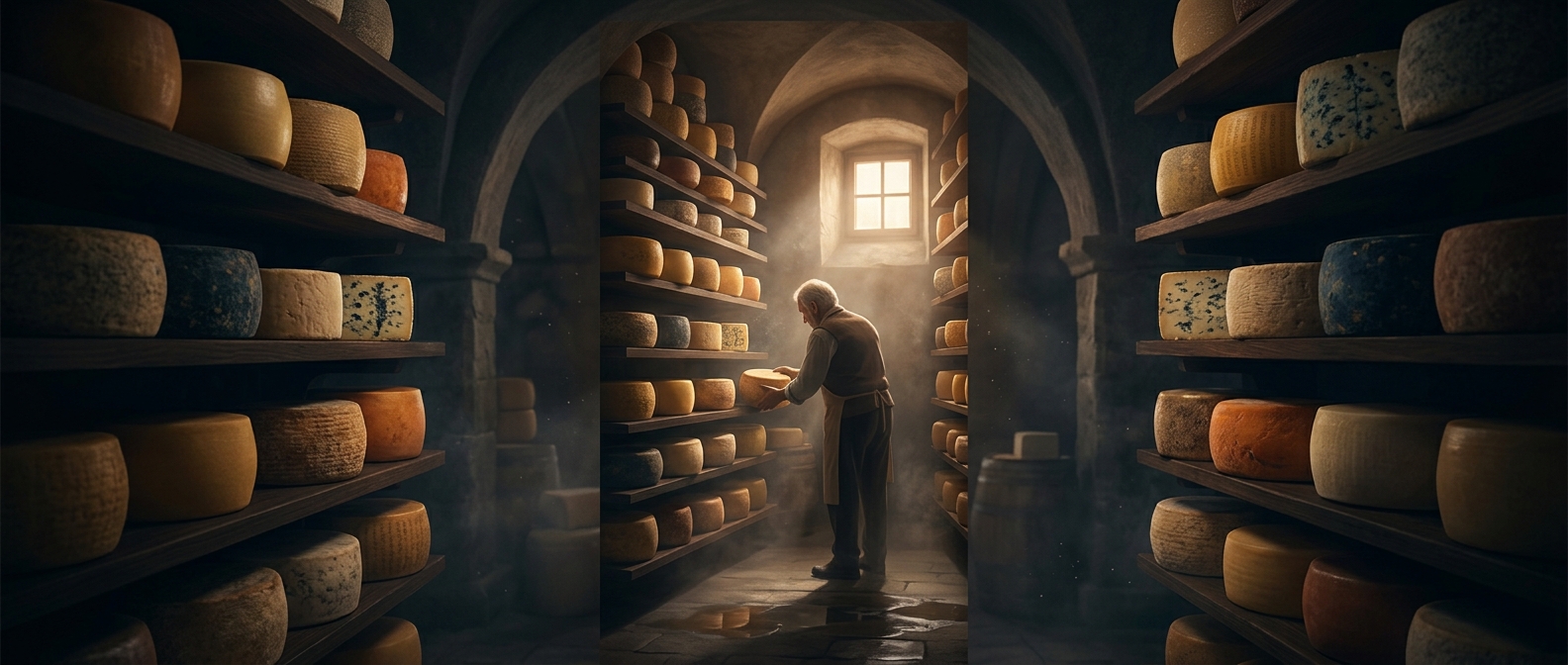
Those local habits became distinctive traditions. The animal’s milk affects a cheese’s fat, flavor, and texture, while choices made in the dairy—how the milk is warmed, how the curds are cut and drained, and whether the cheese is aged—shape the result further. A fresh cheese retains more moisture; a well-aged one loses water and develops a denser texture and stronger taste.
A map you can taste
The difference between a soft, milky cheese and a hard cheese built for long aging is not just a matter of recipe. It reflects different ingredients, working conditions, and ideas about when a cheese should be eaten. Over generations, those choices took root in particular places, giving many cheeses a close connection to local farms and food customs.
That is why traveling through Italy can feel like moving between small cheese worlds. A market counter offers more than a list of products: it hints at the animals, landscapes, and preservation methods behind them. The country’s hundreds of distinct cheeses are, in effect, a regional history preserved in milk.