A border-town dish built for the table
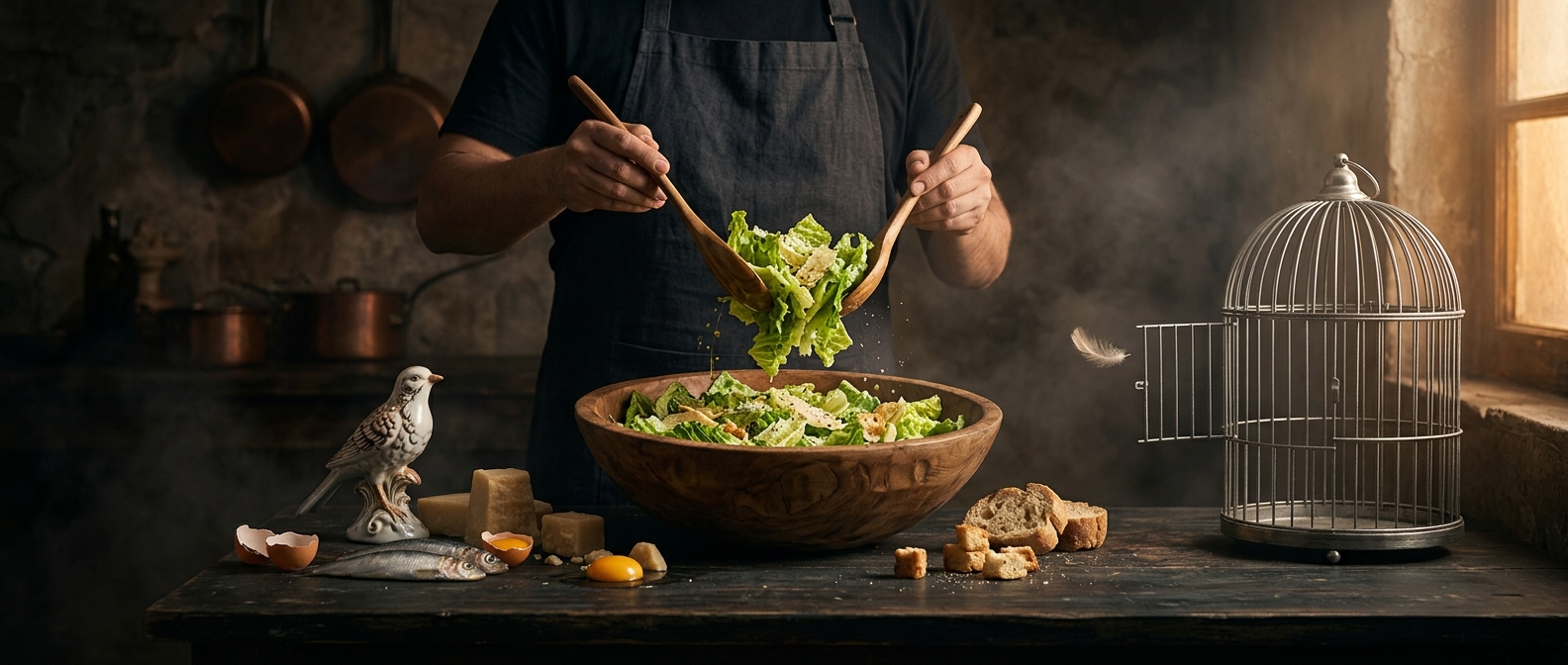
Caesar salad’s Tijuana origin is part of its character: it was not simply a side dish devised for a modern American menu. In the version associated with restaurateur Caesar Cardini, the salad was assembled as a composed dish, with its dressing made from raw egg and other ingredients rather than poured from a bottle. The egg helped bind the dressing into a coating that clung to the romaine and croutons.
That preparation made the salad feel more like an event than a fixed recipe. It also helped the dish travel: once diners knew the combination, kitchens could reproduce it without needing the original tableside presentation.
How chicken changed its role
Chicken was a later addition, not a missing ingredient in Cardini’s original. Adding grilled or roasted chicken gave restaurants a straightforward way to turn a crisp salad into a more filling main course. That shift suited menus where customers expected a salad to provide a substantial portion of a meal, and it made “chicken Caesar” a familiar order in its own right.
The distinction is useful when visiting Tijuana or reading a menu elsewhere: “Caesar” names the salad’s style, while chicken signals a later variation. The dish’s journey from a Tijuana restaurant creation to an adaptable menu staple is also why its name stayed fixed even as its role—and its toppings—changed.