A French Favorite With a Supply Chain Behind It
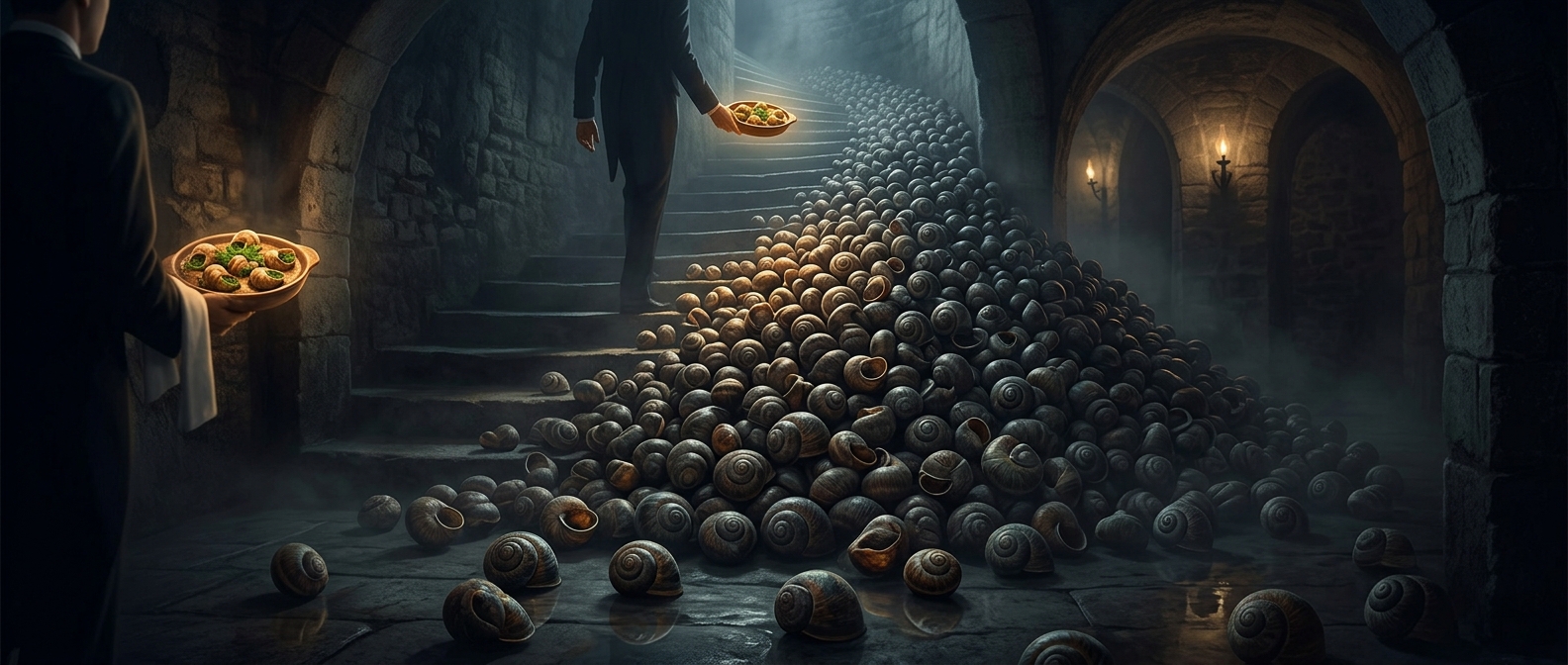
A serving of escargot may look like a small, old-fashioned appetizer, but France’s reported annual consumption of 30,000 tons points to something larger: a national appetite that cannot be supplied just by collecting a few snails from the garden. The demand depends on a food chain built to raise, gather, clean, prepare, and distribute edible snails.
From Snail to Escargot
“Escargot” is the French word for snail, but the snails served as food are selected edible varieties—not simply any snail found outdoors. Before cooking, they must be cleaned and prepared; then they are commonly returned to their shells or placed in serving dishes and cooked with butter, garlic, and herbs.
That preparation turns a small, firm ingredient into a rich dish. The butter carries the garlic and seasoning, while the shells make each portion feel ceremonial: diners pick them up with special tongs and use a small fork to pull out the snail.
Why It Matters Beyond the Restaurant
The scale of consumption helps explain why escargot is more than a novelty on a tourist menu. It connects restaurant service to specialized production and processing, since snails must be available in usable form well beyond the places and seasons where they might be gathered in the wild.
For a visitor, the dish offers a distinctly French dining ritual as well as a taste. The memorable detail is the contrast: an ingredient that can seem humble on its own arrives carefully prepared, transformed by garlic butter, and eaten one shell at a time.