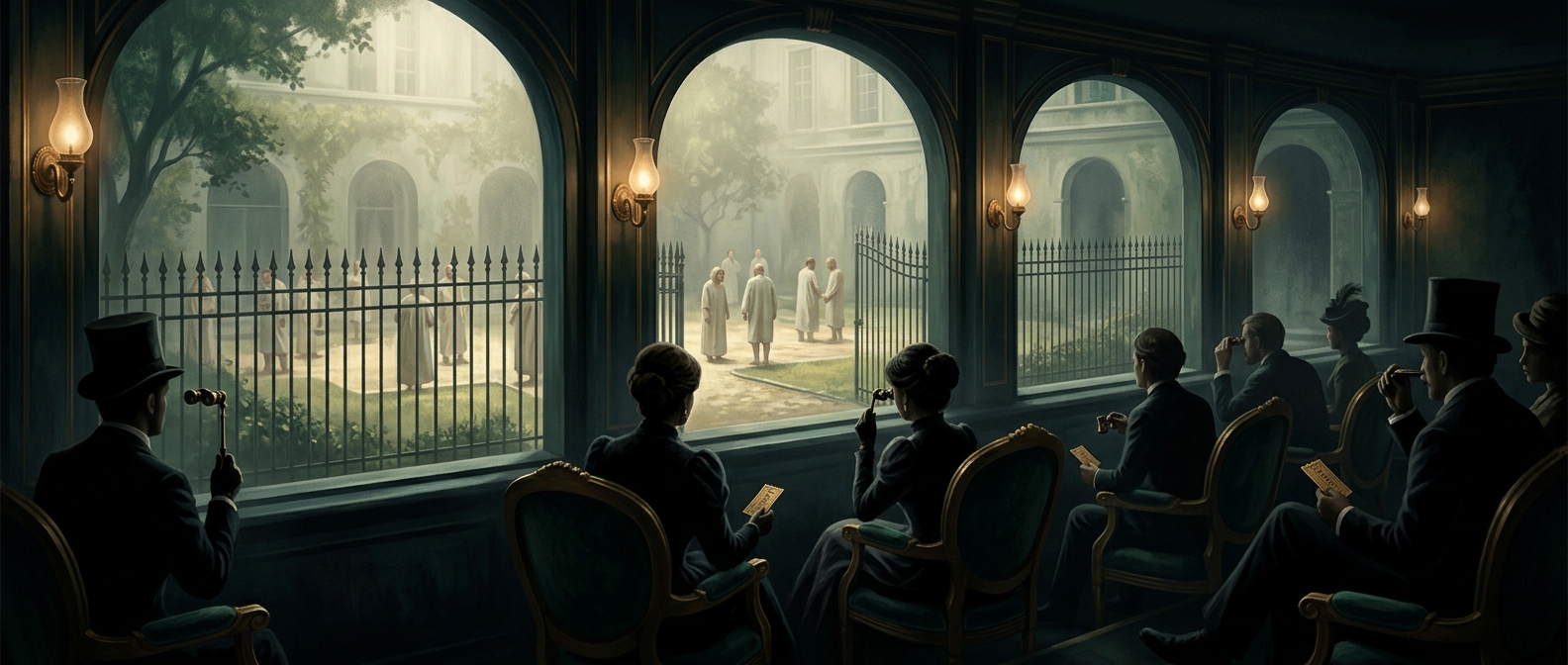
A place of care turned into a viewing gallery
At some historic asylums, visitors could pay for admission and look in on patients. The ticket did not make the visit medical: guests were there to watch, while the people they watched were living under institutional care. In effect, the asylum’s wards became a kind of public exhibit.
That arrangement depended on a sharp imbalance. Visitors could choose when to arrive and leave; patients generally had far less control over whether strangers observed them. Behaviors associated with mental illness—often unfamiliar or distressing to outsiders—became a spectacle rather than something visitors were invited to understand as part of a person’s life or treatment.
The cost of being made a spectacle
Public viewing blurred the boundary between care and entertainment. A building could be described as a place for treating illness while also allowing outsiders to treat its residents as objects of curiosity. The admission fee formalized that relationship: people paid for access to a view of patients, not for a clinical consultation.
The consequence went beyond an uncomfortable visit. Such spectacles encouraged the idea that people with mental illness were fundamentally different and fit to be stared at. For patients, being inside an institution did not necessarily mean being shielded from public scrutiny; it could put them on display.