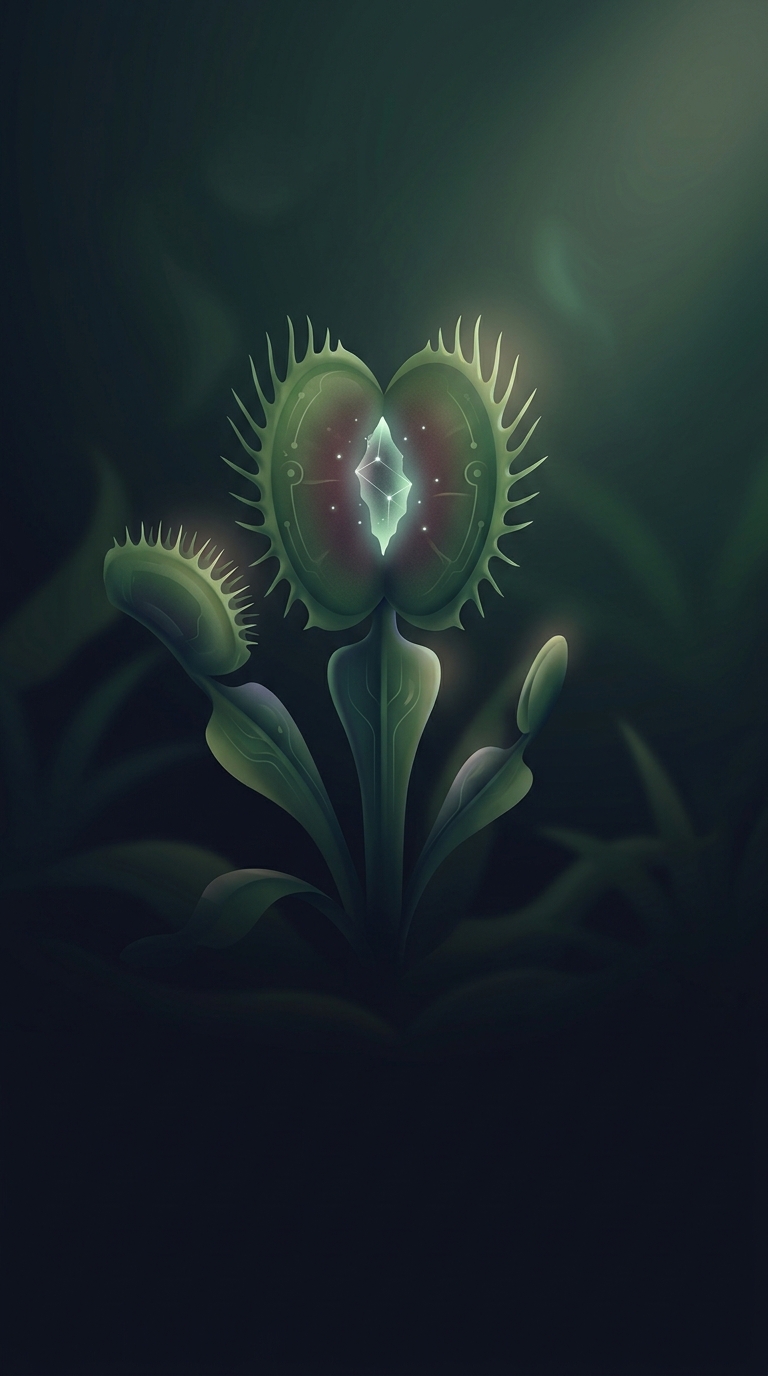
A tiny touch becomes an electrical signal
A Venus flytrap does not recognize a bug the way an animal does. It uses sensitive trigger hairs on the inner surfaces of its leaf lobes. When an insect bends one, cells at the hair’s base produce a brief electrical signal. Plants have no neurons, but they can still send electrical changes from cell to cell.
One touch is not enough to spring the trap. A passing raindrop or bit of debris might brush a hair, and closing costs the plant energy. The trap responds to a pattern of touches, not to a conscious decision. Two trigger-hair stimulations close together—usually within about 20 seconds—build up enough signal to snap the lobes shut.
From signal to snap
The electrical signal changes how water and charged particles move through cells in the leaf. That shifts pressure inside the tissue, while the curved lobes act somewhat like a bent spring. Once the built-up strain passes a threshold, the lobes rapidly flip from open to closed, trapping what is between them.
The movement is fast because the leaf does not have to grow or contract muscle. It releases stored mechanical tension, like a spring changing shape.
The trap checks what it caught
Closing does not automatically mean digestion begins. If the captured object keeps touching the trigger hairs—an insect struggling inside is likely to do so—the repeated signals prompt the trap to seal more tightly and release digestive fluids. A small object that stops moving may not provide that follow-up stimulation, and the trap can eventually reopen without digesting it.
So the flytrap’s “timing” comes from a simple but effective sequence: detect a touch, count repeated signals, and respond to further movement. A trapped insect’s struggle is not just a sign that the trap worked; it helps trigger the next stage.