A gesture that makes “now” explicit
An automatically updating feed can still be out of date. New posts may arrive on a server while the app is in the background, offline, or conserving battery; the phone may not check again until the app becomes active. Even while it is open, an app may fetch updates periodically rather than continuously. “Auto-update” usually means the app refreshes when it can—not that every change appears instantly.
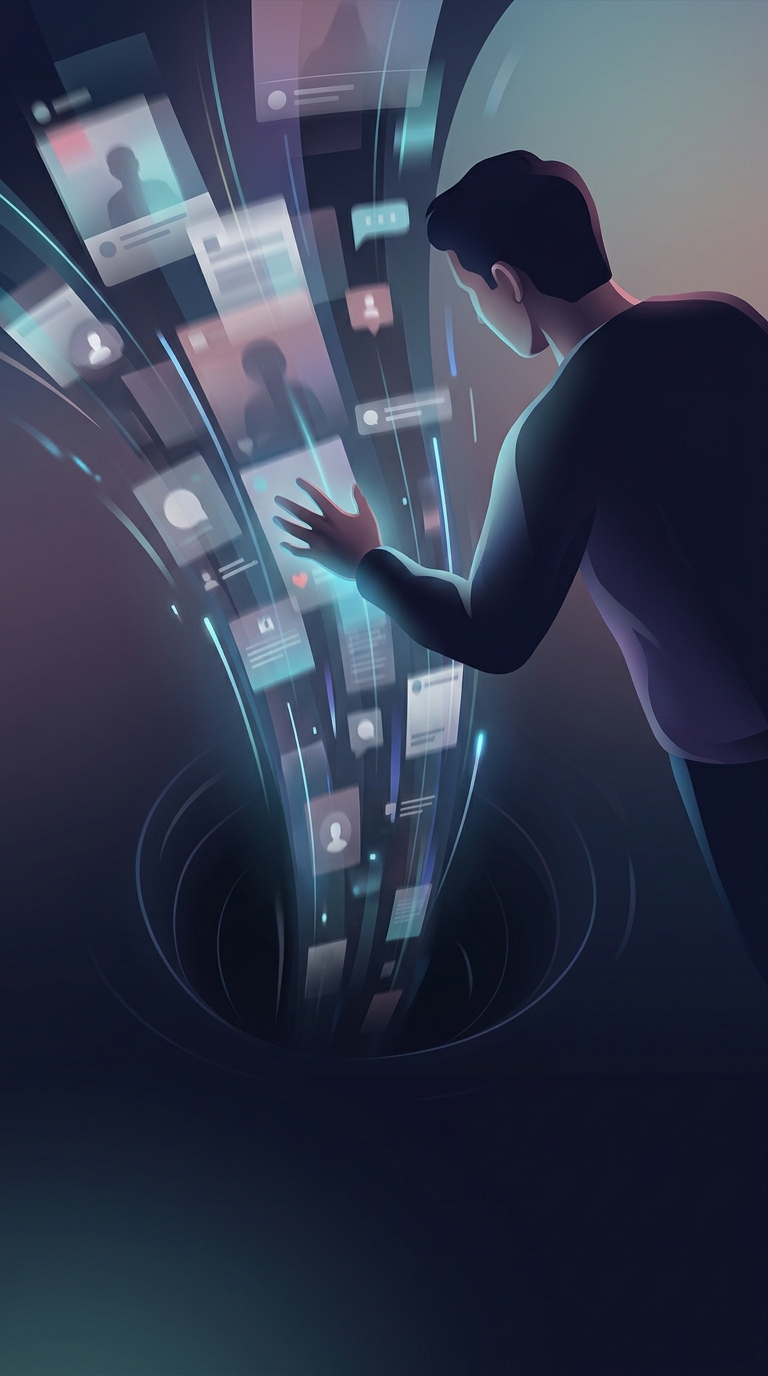
Pulling down gives the reader a direct way to ask for a fresh check at a particular moment. That matters when someone has just opened an app, is waiting for a breaking update, or suspects a connection delay. The gesture turns a vague wait into an action with a visible response: the feed checks, then shows whether anything new is available.
Refreshing is also a matter of control
A feed’s update timing is a tradeoff. Checking constantly can use battery and mobile data, and it still cannot guarantee that a server or network will respond immediately. Checking less often is more efficient, but leaves a window in which the screen may be stale. A manual refresh lets the user choose when that tradeoff is worth making, instead of having the app repeatedly fetch data in the background.
The gesture also gives the interface a familiar way to signal work in progress. A spinner or brief loading state tells the reader that the app is checking, not simply ignoring the request. The result may be new posts, a correction to content already shown, or no change at all; refreshing asks the app to verify the feed, not to produce something new.
That is why the gesture remains useful even in feeds that update automatically: automation handles routine checks, while a pull-down gives the reader a reliable-feeling way to say, “Check again now.”