A Demo Is a Carefully Bounded Slice
A convention demo is rarely the whole game. Developers choose a short section that can show a central mechanic quickly, then build a temporary version around it. That slice may use placeholder art, omit features, or rely on staff to guide players through a particular sequence. It is unfinished, but it is also a deliberately shaped encounter: the team wants visitors to understand what makes the game distinctive before their turn ends.
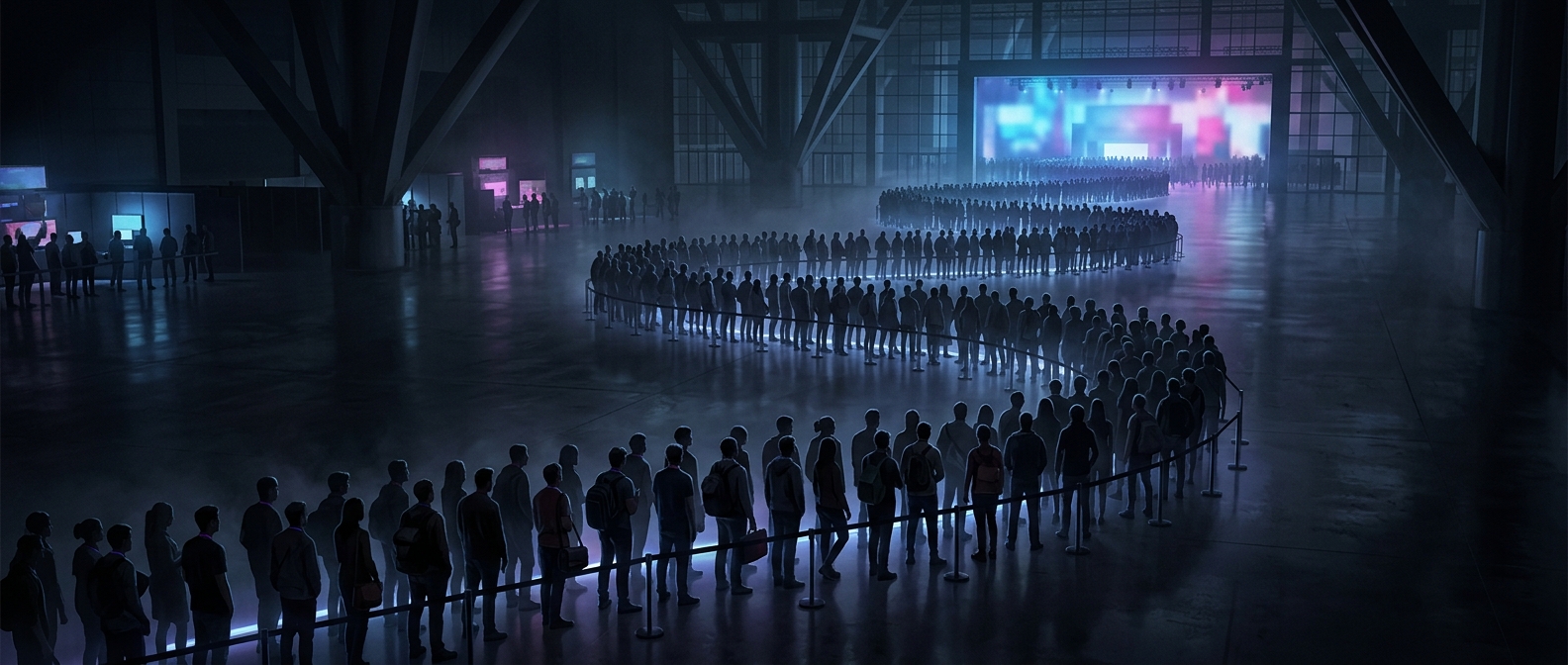
That limit helps explain the mismatch between a brief play session and a long wait. A booth has only so many playable stations, and each turn takes longer than the advertised play time once staff explain the controls, reset the game, or help with a problem. If a build freezes or needs to be restarted, one hiccup can slow the line behind it.
Why Developers Put the Build on the Floor
A public demo can do several jobs at once. It puts the game in front of players, gives the team a chance to see where people hesitate or get excited, and creates a memorable moment that attendees may discuss afterward. Watching someone play can reveal a problem that is hard to spot in an office: perhaps the goal is unclear, a button is easy to miss, or the opening takes too long to become fun.
But a convention is a noisy test environment, not a controlled study. People arrive with different levels of gaming experience, and a short session may show only one narrow part of the game. Developers can learn from those reactions without treating the queue as a verdict on the finished product.
The Queue Is Part of the Experience
For attendees, the wait is a tradeoff: time spent in line buys a chance to try something that is not yet widely available. For developers, the booth has to balance that access against how many players can get through and how much attention each one needs. A five-minute demo is therefore not just a tiny version of a game. It is a small, carefully managed window into a much larger work in progress.