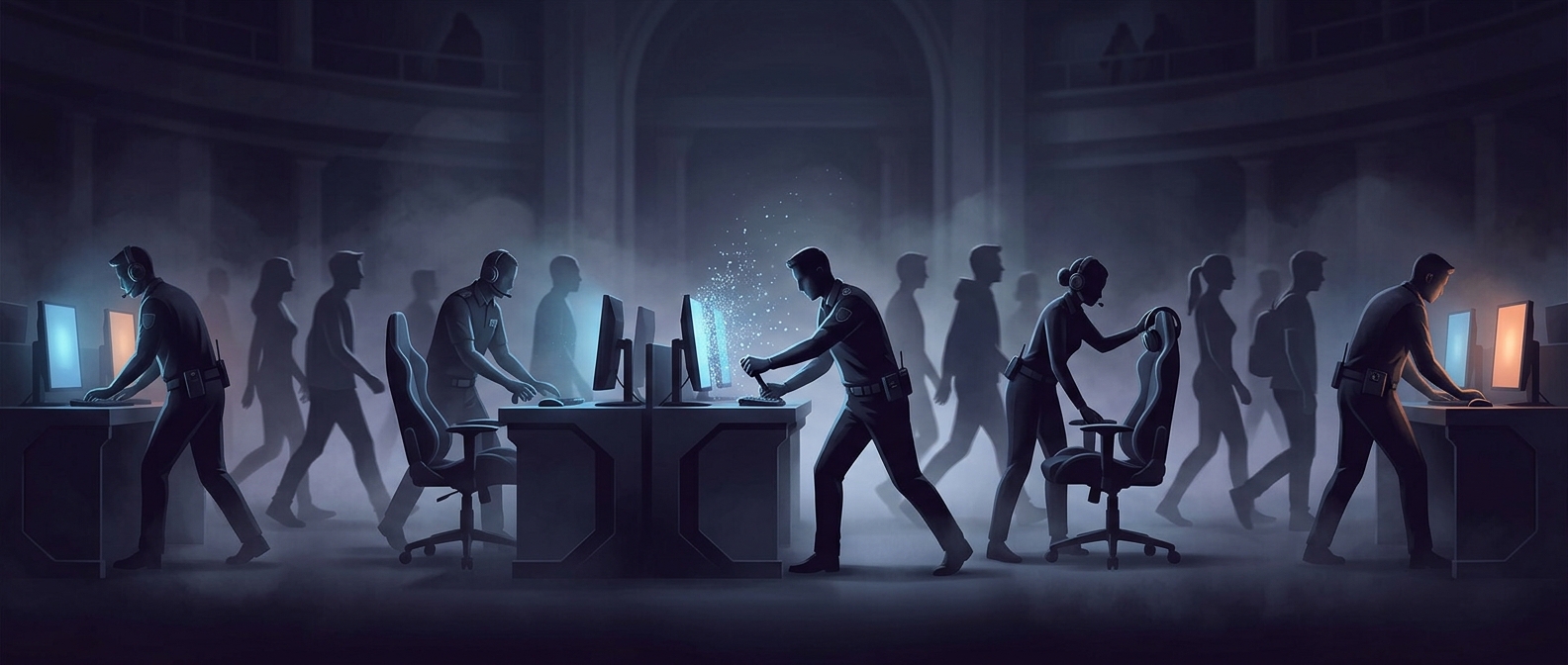
Why the Booth Resets When the Clock Runs Out
A timed game booth is built around a repeatable turn, not an open-ended play session. When the timer expires, staff reset the station so the next person begins from a predictable starting point. That may mean ending the current run and restoring the game to its initial state, even if the player is still looking around or trying to uncover another feature.
The reset also makes the queue easier to manage. If each turn could continue until a player felt finished, one long session could delay everyone behind them. A visible time limit gives staff a clear handoff point and helps keep turns roughly consistent.
The Tradeoff Between Discovery and Throughput
For the player, the timer changes what the game feels like: instead of exploring at their own pace, they have to choose what to try before time runs out. That pressure can make a brief demo more energetic, but it also means some mechanics or areas may go unseen.
The station’s quick reset is therefore part of the booth’s design, not just cleanup. It favors a steady stream of short, comparable turns over letting each visitor finish every possibility. A player may leave curious about what they missed; the next person gets a fresh start without inheriting the previous player’s unfinished run.