How a cell turns a particle into cargo
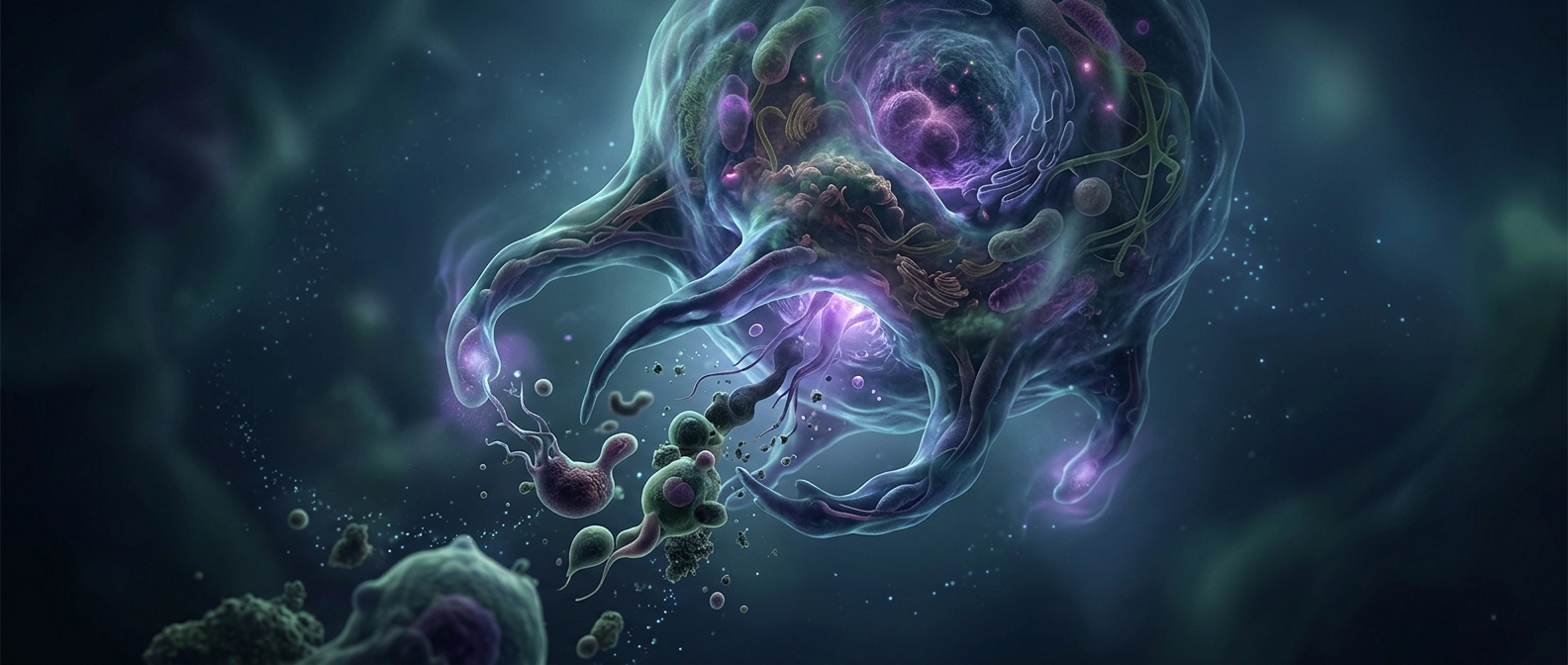
A cell does not simply engulf anything that touches it. In phagocytosis, the membrane’s surface receptors recognize and bind a target—often a bacterium, a dead cell, or a bit of debris. That contact triggers changes in the cell’s internal scaffolding, made partly from actin, a protein that helps reshape the cell. The membrane extends around the target until the particle is enclosed in a sealed compartment inside the cell.
From sealed compartment to breakdown
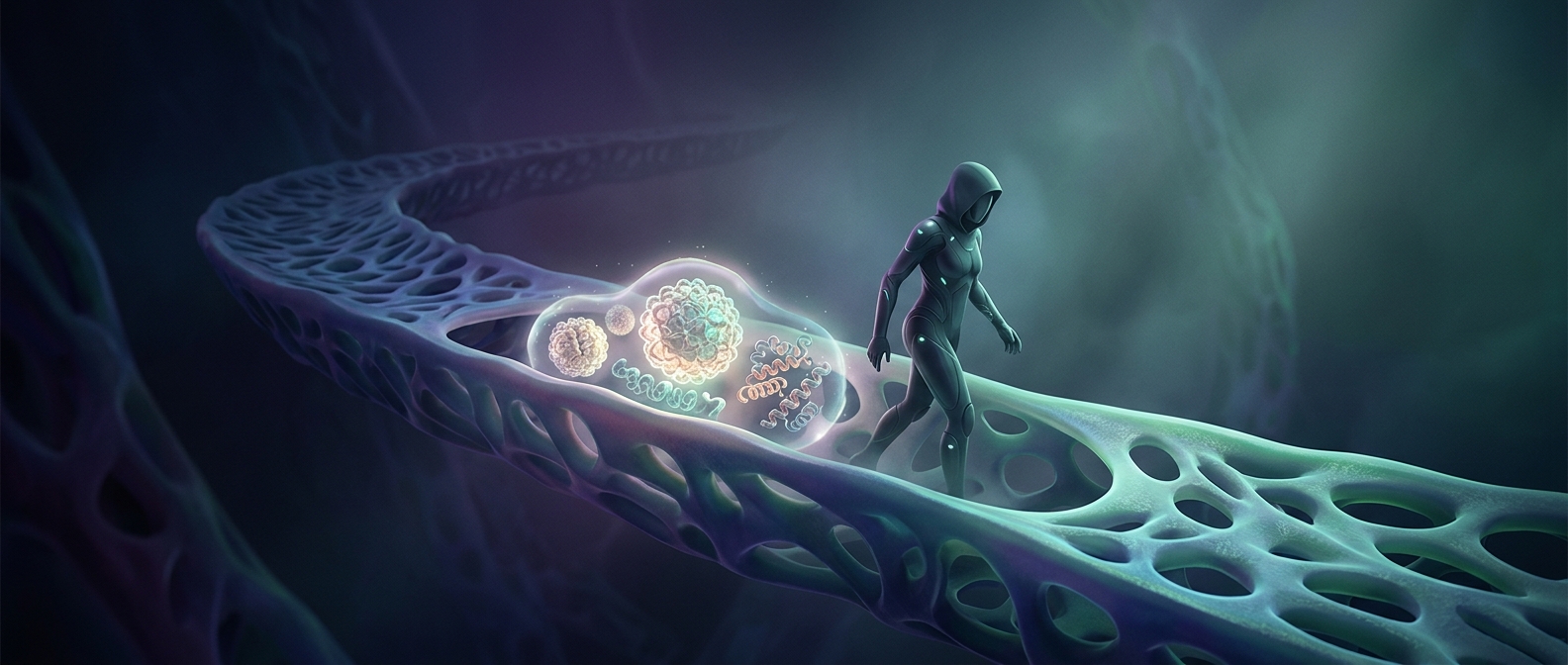
That compartment, called a phagosome, is not yet a stomach. It matures as it moves through the cell, acquiring the chemical conditions and digestive enzymes needed to break down its contents. It can merge with a lysosome, a compartment stocked with enzymes, forming an environment where the captured material is dismantled into smaller molecules.
The result depends on the cell and the cargo. Some breakdown products can be reused; in immune cells, fragments of a captured microbe can also be displayed at the surface, helping other immune cells recognize what was encountered.
Why the sequence matters
Phagocytosis is both a way to clear material and, in some immune cells, a way to gather information. The membrane must first identify and contain a target, then keep the potentially harmful contents enclosed while digestion proceeds. The cell’s cleanup operation can therefore become part of how the body learns to respond to infection.