A song can act like a cue to a whole scene
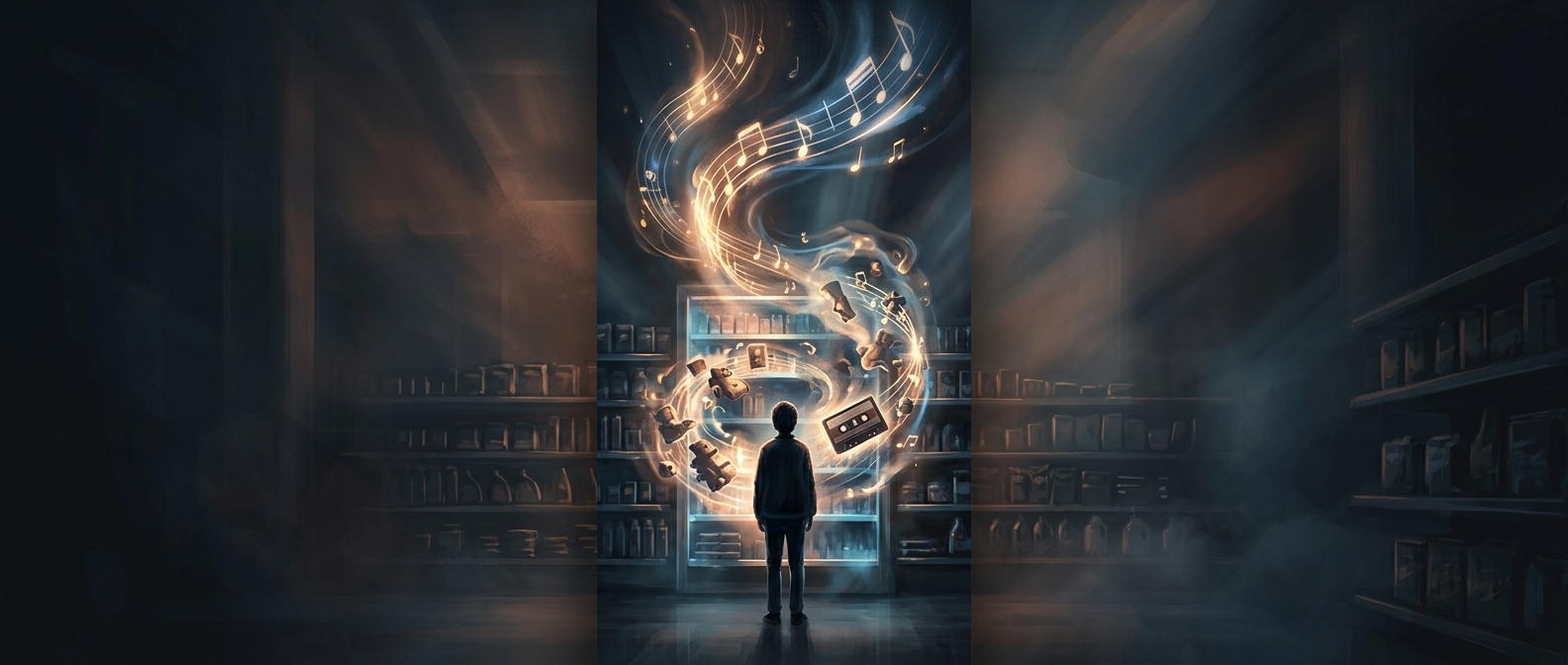
When a song plays during a meaningful period—on a long drive, at a family gathering, through a breakup—it can become associated with the people, places, and feelings around it. Hearing it again may bring back not just the tune but fragments of that episode: a room, a season, someone’s voice, or the mood you were in.
Psychologists call this autobiographical memory: memory for events from your own life. A familiar song can prompt these memories without your deliberately searching for them. Its melody, rhythm, and even a particular lyric give the mind several details to latch onto, making the cue unusually rich.
Why it can feel more personal than a movie
A movie offers another person’s story. You may feel concern for a character, but the events remain outside your own past. A song tied to your life can instead bring your own history into the present. The feeling is not only “this is sad”; it may be “I remember who I was when this mattered.”
Songs also repeat. Repeated listening can strengthen the association between a track and a period of life, while a song’s emotional tone may help make the memory especially noticeable. But the track does not retrieve a perfect recording: memories are reconstructed, and the details or feelings that surface can shift over time.
The past arrives in a few minutes
That mismatch helps explain the song’s force. The music lasts only as long as it plays, but it can cue a network of personal memories that extends far beyond the track. A familiar chorus may make an ordinary moment from years ago feel close—not because the song contains the whole past, but because it gives the mind a path back into it.