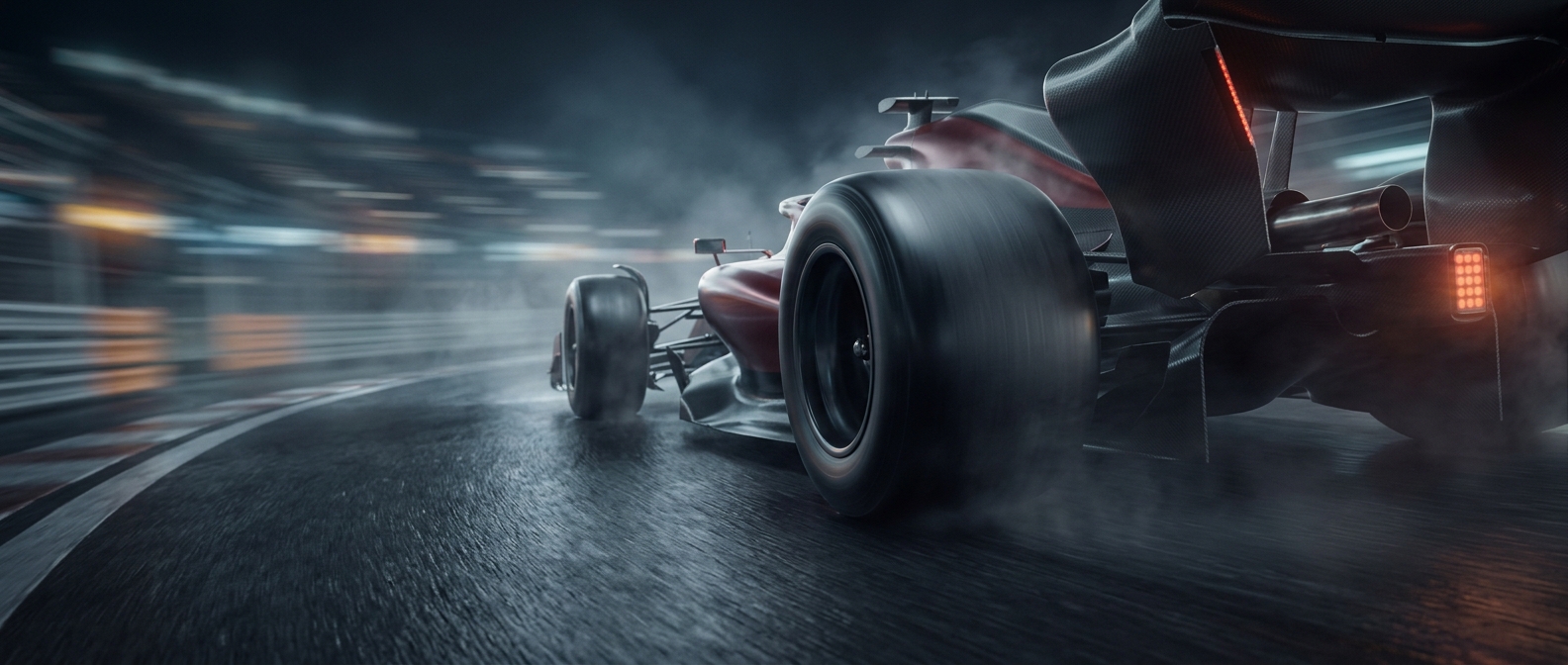
Why a racing tire works best without tread
On a dry track, a tire’s grip comes largely from the rubber pressing against the road and conforming to its tiny bumps. Grooves cut into the tread interrupt that contact: they leave less rubber supporting the car and create edges that can flex under load. A slick tire—one with no tread grooves—uses a continuous tread surface, helping it generate strong grip once it is warm and working as designed.
That grip is not just a matter of having more rubber touch the pavement. Racing tires use carefully chosen rubber compounds and are engineered to operate within particular temperature and load ranges. When the rubber is in that working range, it can deform around the road’s texture and resist sliding. The smooth surface is part of a system, not a guarantee of grip in every condition.
What changes when the track is wet
Water creates a problem between the tire and the road. At speed, a layer of water can prevent the rubber from making firm contact with the asphalt—a loss of traction known as aquaplaning. Tread grooves provide paths for water to escape from beneath the tire, helping it reach the road through the water film.
A slick has no such channels. Its broad surface can work extremely well on dry pavement, but in standing water it may struggle to push water aside, and the car can lose steering and braking grip. That is why racing tires are chosen for the conditions: a grooved wet-weather tire sacrifices some dry-surface contact to manage water. The tradeoff is visible at the track: the same smooth tire that helps a car corner hard in the dry can become a liability when rain covers the racing line.