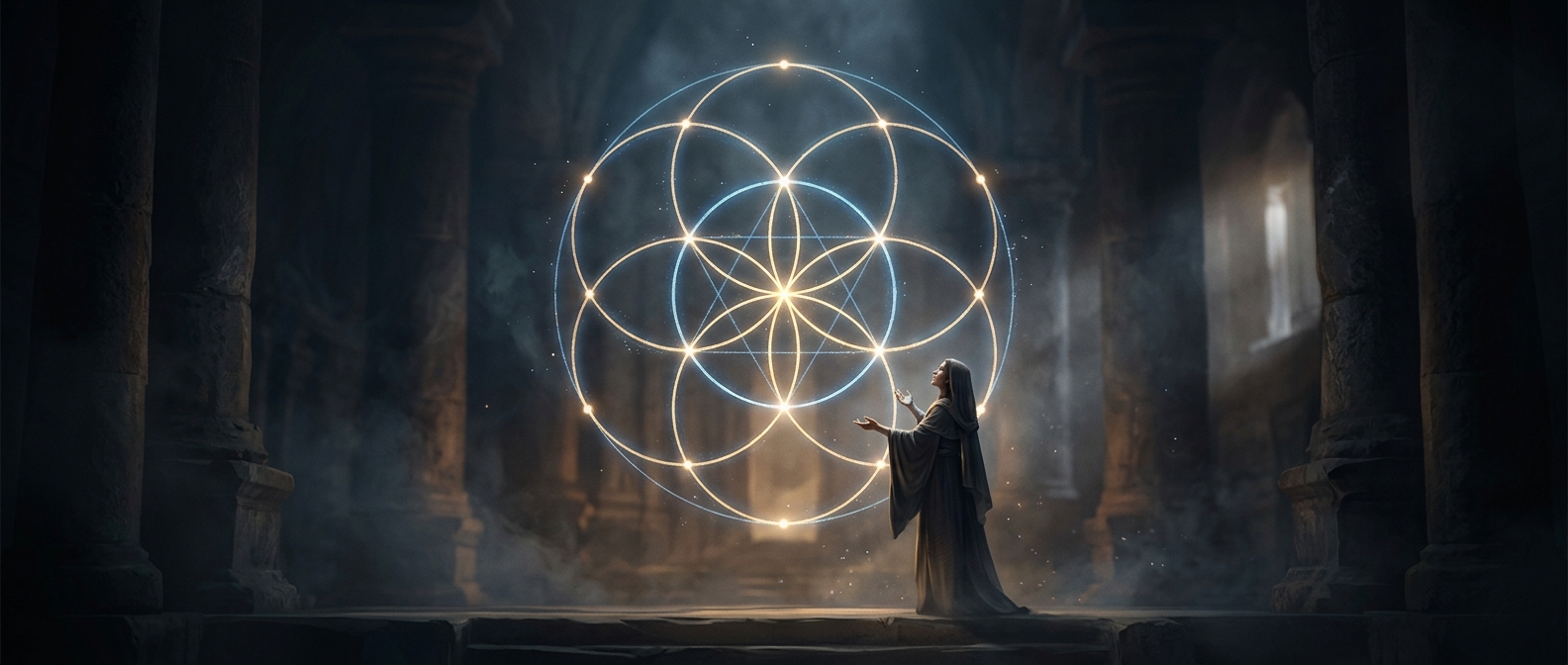
How seven circles make the Seed of Life
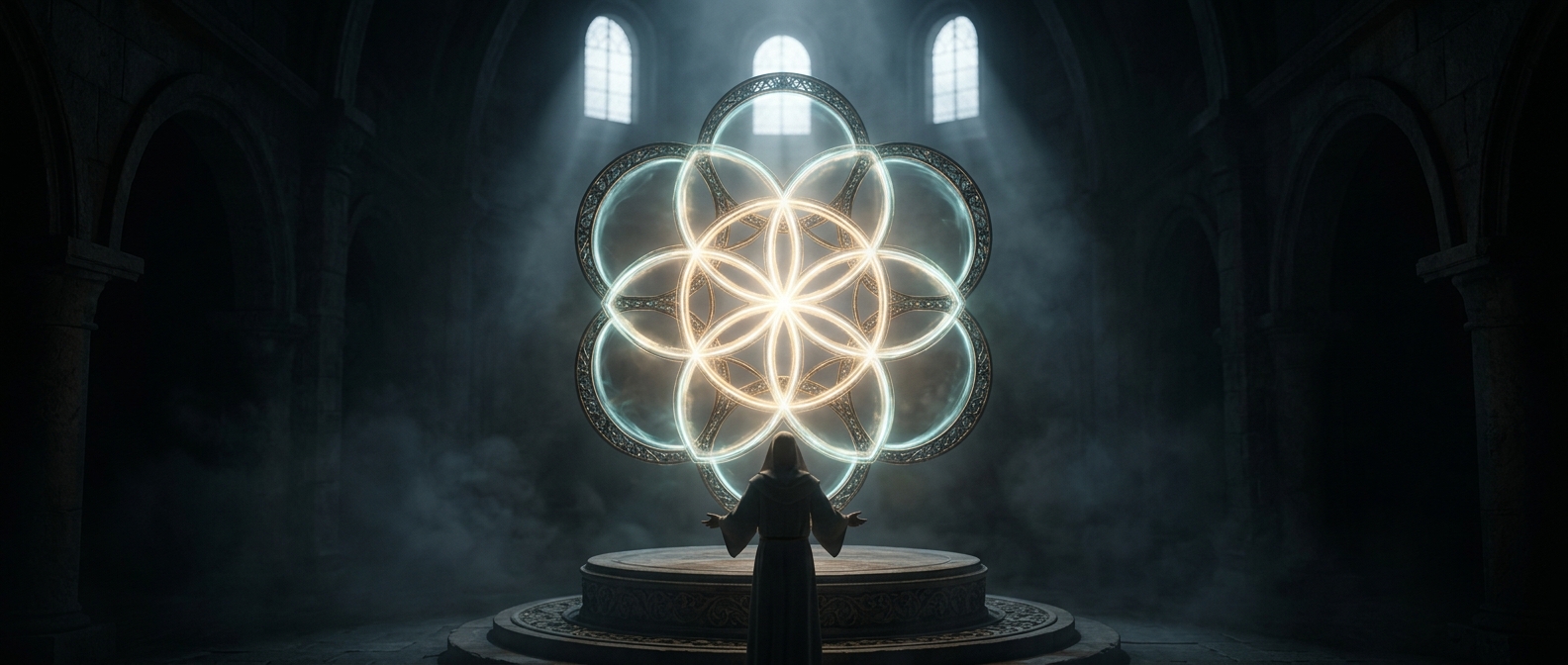
The familiar pattern is built from one circle surrounded by six equal circles. Each outer circle passes through the center of the middle one, and neighboring circles overlap. Those intersections create a compact, flower-like arrangement: seven rings, with a central circle and a symmetrical ring of six around it.
The overlaps matter as much as the circles themselves. They give the design a sense of order emerging from a simple repeated shape, and they provide lines that can be followed or extended when making more elaborate geometric motifs. In that sense, the pattern works both as a finished emblem and as a starting diagram.
What “beginning of form” means
In sacred-geometry traditions, the Seed of Life is read symbolically, not as a scientific account of how the universe formed. Its seven circles can suggest an initial act of creation: one form repeated into a balanced structure, with further complexity implied by the intersections. More elaborate patterns may be drawn by continuing the same circle-and-overlap logic.
That interpretation gives the design its name and appeal. The pattern’s “seed” is the idea that a small, orderly arrangement can contain the plan for something larger—a visual metaphor for beginnings, growth, and the emergence of form.