Diablo’s one-weekend shift from turns to real time
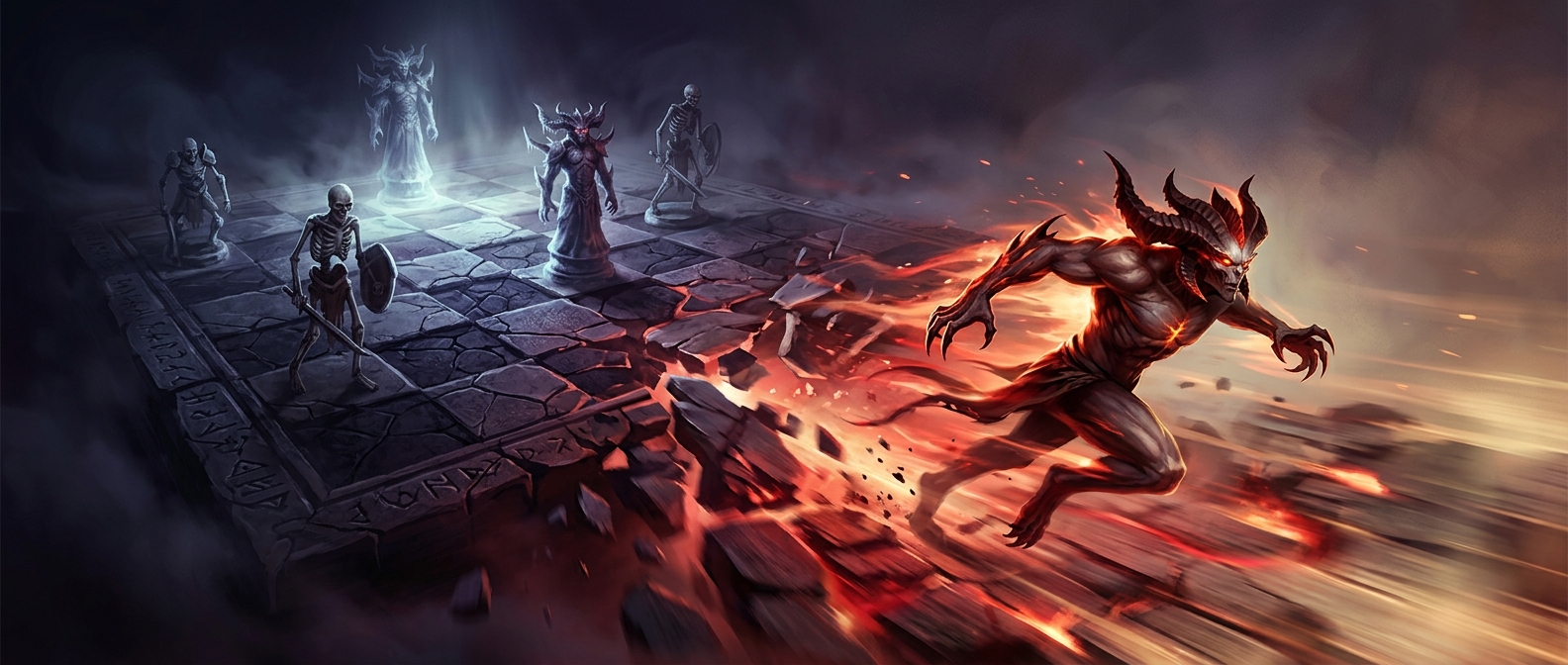
Diablo’s original design treated combat as a sequence of deliberate moves: the player would choose an action, the game would resolve it, and then the next decision would begin. That turn-based approach fit the tactical PC games and roguelikes that inspired David Brevik’s early design. It also meant players could pause to consider each move rather than react continuously.
Executives wanted combat to happen in real time. That was a consequential change, not merely a faster animation: enemies and the player would act at once, making timing and positioning part of every encounter. Brevik coded a working version of the change in one weekend, giving the team a way to see how the idea felt in play.
What real time changed
In a turn-based game, danger often arrives when a player chooses a move. In real time, it can keep advancing while the player moves, attacks, or hesitates. This makes a dungeon encounter feel immediate and lets players respond through repeated actions instead of planning each exchange as a separate turn.
The shift also helped define Diablo’s rhythm: enter a dangerous space, fight, collect what enemies leave behind, and decide whether to press on. The game retained the exploration and danger associated with roguelikes, but made the moment-to-moment combat continuous.
A prototype that reshaped the game
A weekend prototype could settle a design argument more concretely than a pitch: the team could experience the new combat rather than imagine it. Once the real-time version worked, Diablo could develop around that continuous action, helping establish the action-RPG style for which it became known. The pivotal change began not with a large rewrite, but with a playable experiment.