How The Dark Side of the Moon Kept Finding New Listeners
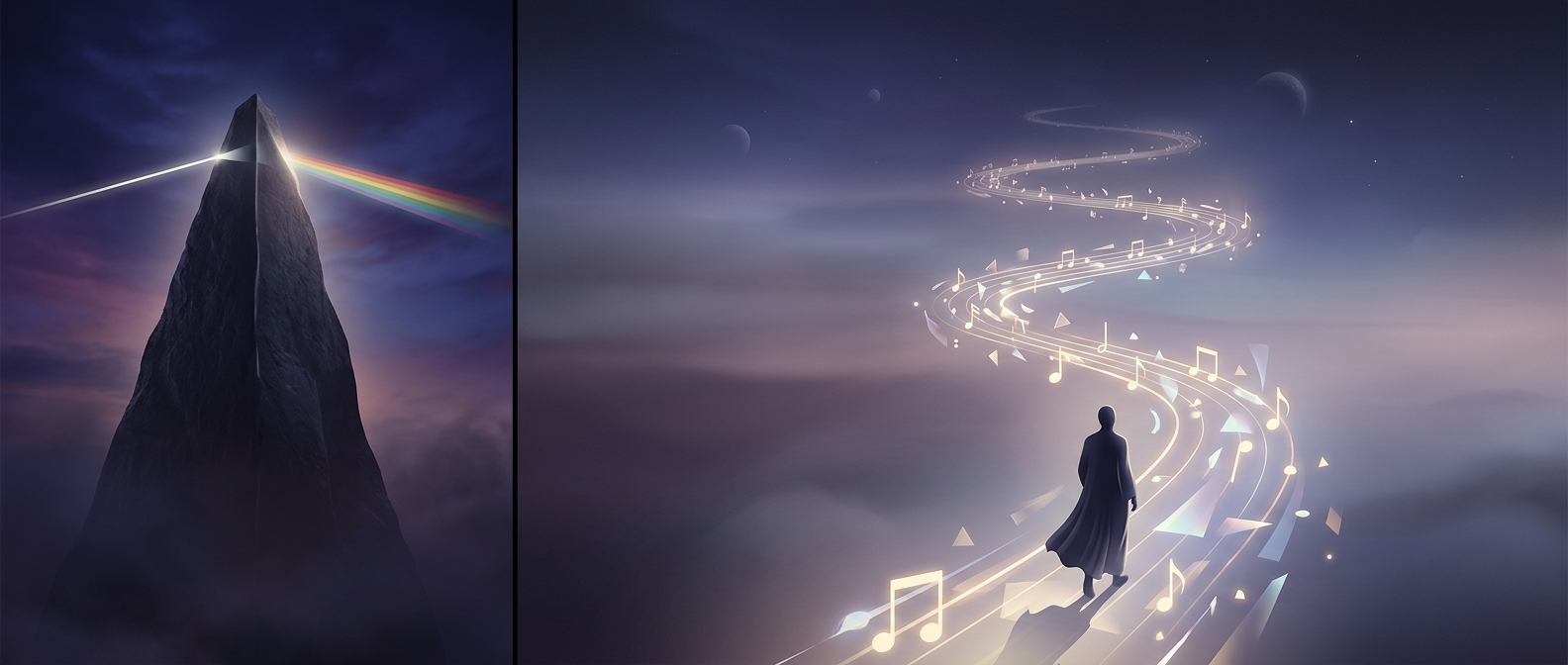
Pink Floyd’s The Dark Side of the Moon was built to work as more than a collection of separate songs. Its tracks run together, linked by recurring sounds and themes about time, money, conflict, and mortality. A listener could come for a familiar song such as “Money” and discover an album designed to reward hearing it from beginning to end.
That balance helped the record travel across generations: individual tracks could draw people in, while the connected sequence gave them a reason to keep the album. Its continued availability in changing formats also made it possible for new listeners to encounter it long after its 1973 release.
What a Long Chart Run Actually Measures
Billboard’s album chart records sales performance in a given week; it does not measure how many people are listening at that moment or whether an album is still a current release. A long run therefore reflects repeated buying over time—not one enormous burst of sales. The album’s more than 700 weeks on the chart show how it kept finding buyers through years of changing musical fashions.
The striking part is the pattern: a record conceived as one continuous journey remained commercially present long enough to be discovered by listeners who were born after it came out. For them, it was not an old hit they remembered from release day; it was a classic they could encounter for the first time.