Why the Beatles’ concerts became impossible to hear
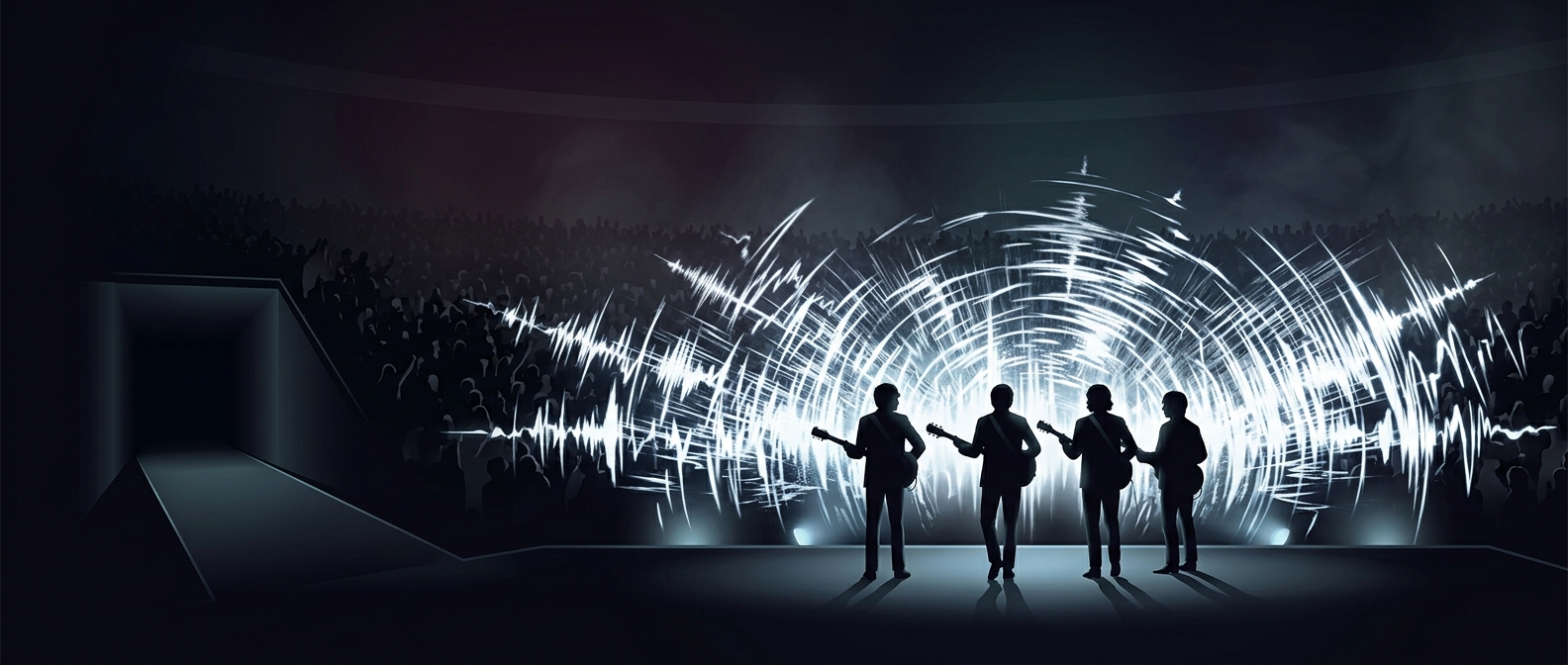
In the mid-1960s, a stadium sound system was built mainly to project music toward the audience—not to send a clear mix back to the performers. The Beatles could hear their own instruments only through their stage amplifiers, while the crowd’s screams and the roar of the venue overwhelmed that sound. They often had to watch one another closely and rely on visual cues to stay together.
That setup became a serious musical constraint as the band’s arrangements grew more intricate. A song recorded with layered vocals and carefully balanced instruments could be difficult to reproduce onstage when the musicians could barely hear what they were playing. The problem was not simply that concerts were loud: the sound reaching the performers was too muddled for them to judge their timing and balance reliably.
Touring no longer fit the music they wanted to make
By 1966, the Beatles were also spending more time creating recordings that depended on studio techniques and sounds they could not readily recreate in a live set. Touring meant repeating performances under conditions in which they could not properly hear the music, while the audience’s attention often made the concert feel less like a listening experience.
They ended regular touring that year, with their final paid concert taking place in San Francisco. The decision gave them room to concentrate on studio work, where they could build songs one layer at a time and hear the result clearly. The screaming crowds did not just make the concerts overwhelming; they exposed a widening gap between what the Beatles were recording and what the stage technology of the time could deliver.