Why the Pageant Wave Moves at the Wrist
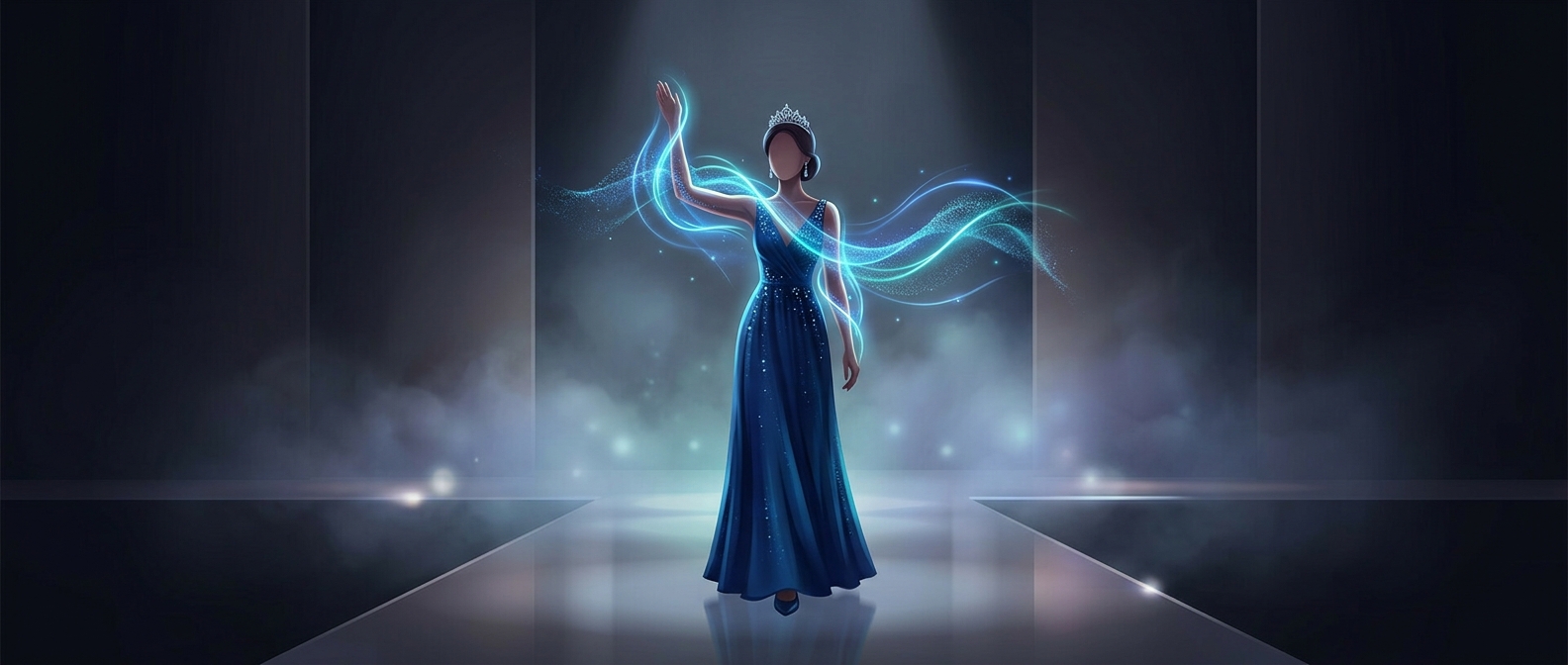
A broad wave swings the whole arm: the shoulder lifts, the elbow travels, and the upper arm shifts against the gown. A pageant wave keeps that larger structure comparatively quiet. The contestant holds the upper arm close to the body and makes the greeting mainly with the forearm, wrist, and fingers. Because the movement happens farther from the shoulder, it can read clearly to the audience without making the entire arm bounce.
That matters because soft tissue continues moving briefly after a larger limb motion stops. Limiting the swing reduces that visible follow-through—the jiggle the technique is meant to avoid. It also gives the wave a steadier outline in photographs and video, where a small, repeated motion can be more noticeable than it feels in person.
A Greeting Built for Repetition
Contestants may need to acknowledge people across a wide audience while facing cameras and holding a poised stance. A compact wave can be repeated without repeatedly raising and lowering the whole arm, making it easier to sustain through a long appearance. The stillness is not an absence of movement; it shifts the movement into smaller joints that are easier to control.
The result is a greeting that remains visible while keeping the shoulder line and upper arm relatively still. In a close-up, that restraint can make the wave look deliberate rather than merely smaller.