How a Pedal Steel Guitar Changes Notes Mid-phrase
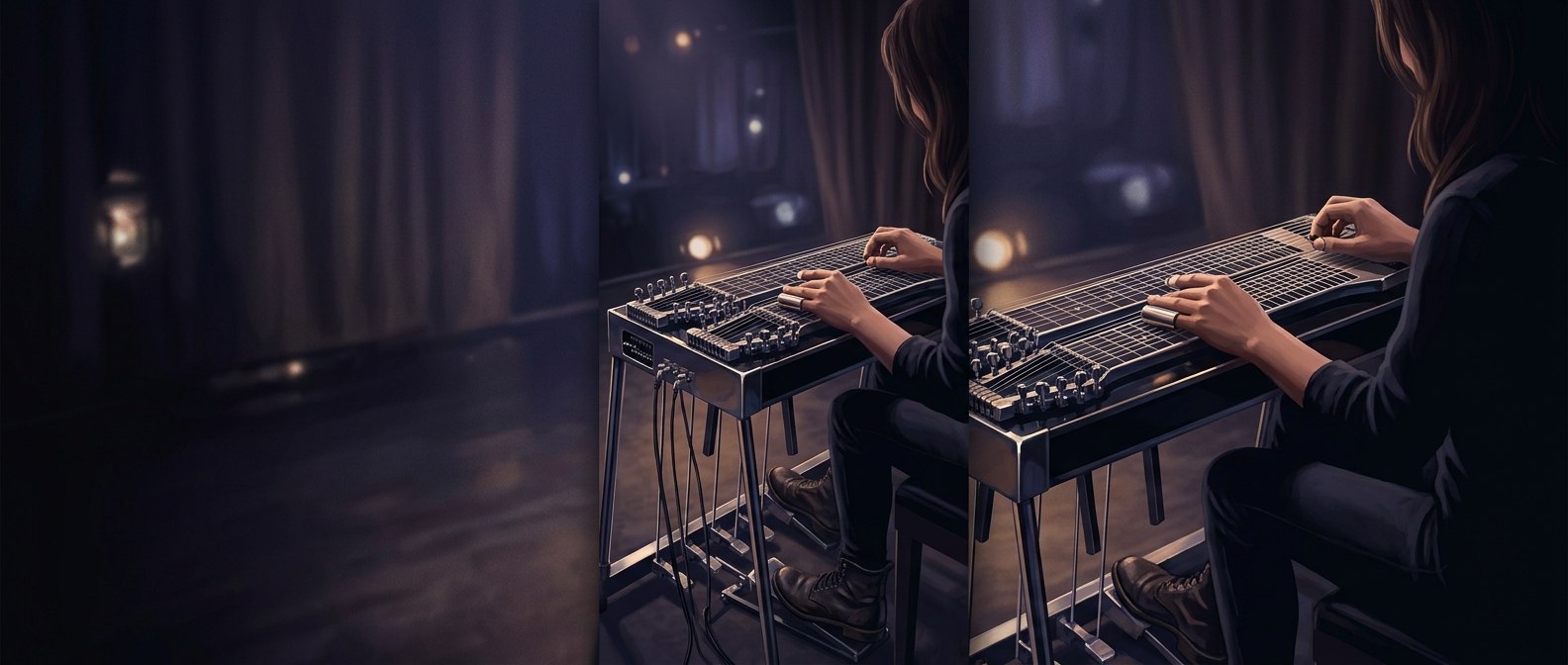
A pedal steel guitar has no fixed frets to determine each note. The player lays a smooth steel bar across the strings and slides it along them, changing pitch continuously. One hand guides the bar; the other plucks the strings. That lets the player glide between notes, but it is only part of the instrument’s range.
Under the guitar, foot pedals and knee levers connect to a mechanism at the bridge. Pressing them changes the tension of selected strings, raising or lowering their pitch while the bar stays in place. The player can therefore alter notes inside a ringing chord without stopping to retune the instrument or shift the bar to a new position.
Why the Feet and Knees Matter
Those controls make otherwise awkward musical changes available in an instant. A player can pick a chord, move one or more strings within it, and let the notes overlap as they change. The result can sound like a chord slowly unfolding rather than a sequence of separately struck notes.
The limbs have distinct jobs, but they must coordinate in time: hands pick and steer the bar while feet and knees choose which strings change pitch and when. The player is not necessarily pressing every control constantly; the challenge is making each movement land precisely within the phrase. A pedal steel’s expressive sound comes not just from sliding across the strings, but from changing a chord’s internal shape while it is still sounding.