A mountain built as a shell
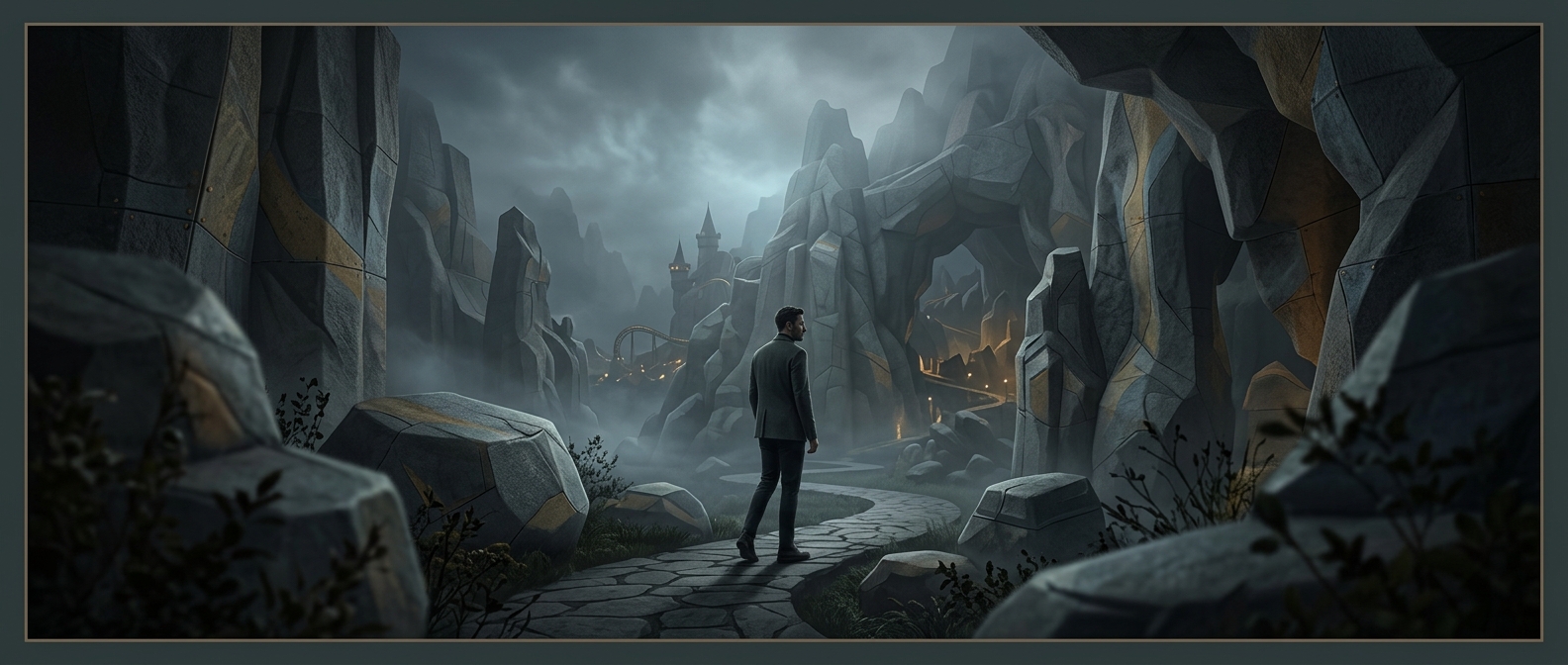
Theme-park rockwork looks massive because its surface is designed to read as solid stone, not because the structure is a mountain of rock. A framework of steel rebar—reinforcing bars that give a structure strength—sets the shape. Concrete forms an outer skin over that framework, while the space behind it can remain hollow.
That construction changes the engineering problem. Building the same landmark from solid stone would add enormous weight and require far more material. A supported shell can create a tall cliff face or jagged peak without filling its entire volume, though it still has to be engineered to stand securely and withstand its setting.
The surface sells the illusion
The visual work happens on the outside. Crews shape the concrete into ledges, cracks, and uneven planes, then use color in the material to help the surface resemble natural rock. The irregularity matters: repeating shapes or a uniformly smooth finish can make a large formation look artificial even from a distance.
Designers can also control the outline and color of a feature rather than accepting whatever geology provides. That makes it possible to build a dramatic mountain beside paths, buildings, or rides where a real rock formation would not exist.
Empty space has a job
A hollow interior is not merely unused space; it avoids turning scenery into a solid block. Depending on the design, the area behind the visible face can accommodate parts of the attraction or provide access for inspection and upkeep. From the guest’s side, the result is a convincing cliff. Behind it, the “mountain” is a carefully supported scenic surface—one that can hide a ride while leaving much of the apparent mass unbuilt.