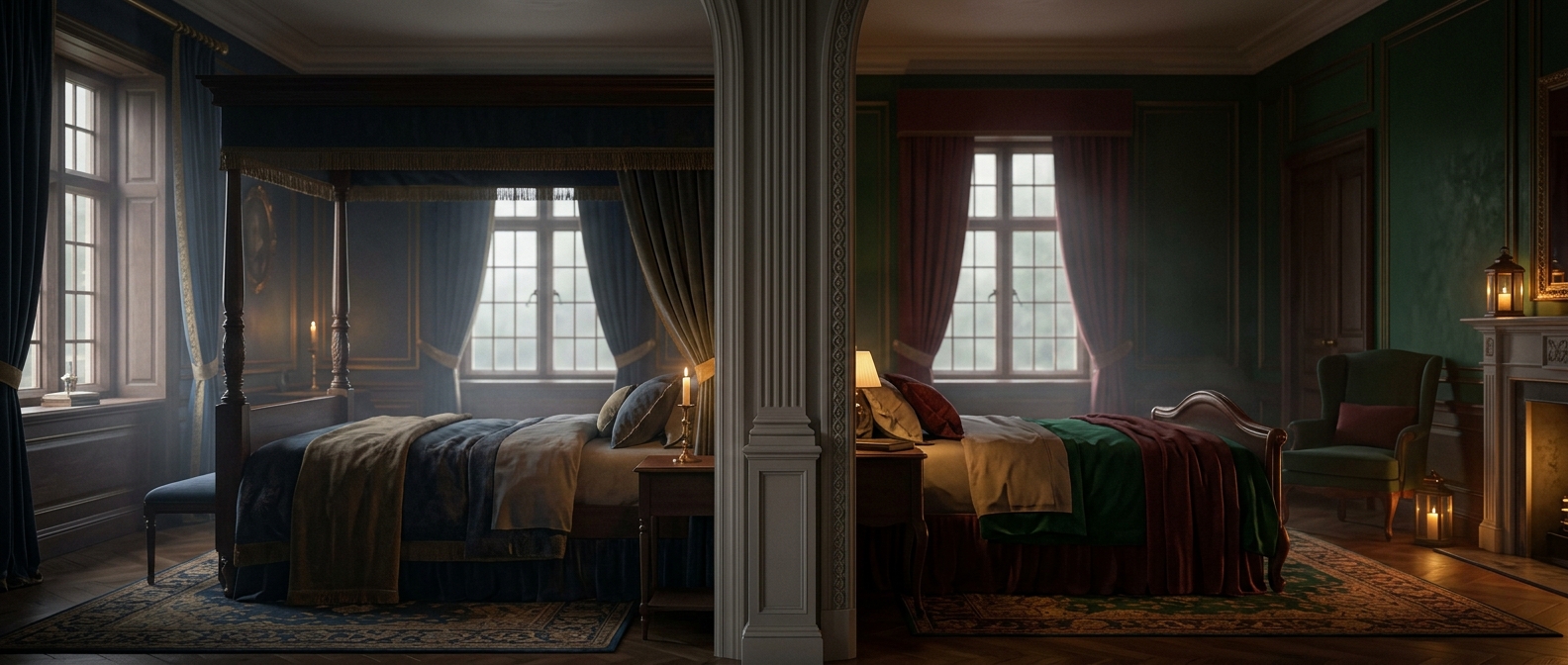
A private bedroom made wealth visible
For an aristocratic household, a separate bedroom was more than a place to sleep. It was space that did not have to serve several people at once—a luxury in homes where many families shared cramped rooms. A person with a bedroom of their own could close a door, keep belongings nearby, and set a personal routine without negotiating every part of the room.
That privacy depended on resources beyond floor space. Large houses, servants to maintain them, and the means to furnish multiple rooms made it practical to give each spouse a separate sleeping chamber. A whole wing devoted to one person made the same point on a grander scale: the household could spare rooms for individual comfort rather than concentrate domestic life in a few shared spaces.
The house itself signaled rank
Aristocratic homes were arranged to express who had authority and access. More rooms meant more control over where people slept, met, and moved through the house. Separate bedrooms therefore turned wealth into a daily experience: each spouse had a distinct domain, while the size and organization of the residence displayed the household’s resources to visitors and dependents.
This was a status pattern, not a rule followed by every aristocratic couple. Sleeping arrangements varied with the house, the couple, and the period. But the underlying distinction was easy to read: when sharing a bed was associated with limited space, having rooms to spare could make separation itself a privilege.