When the dungeon gave way to daily life
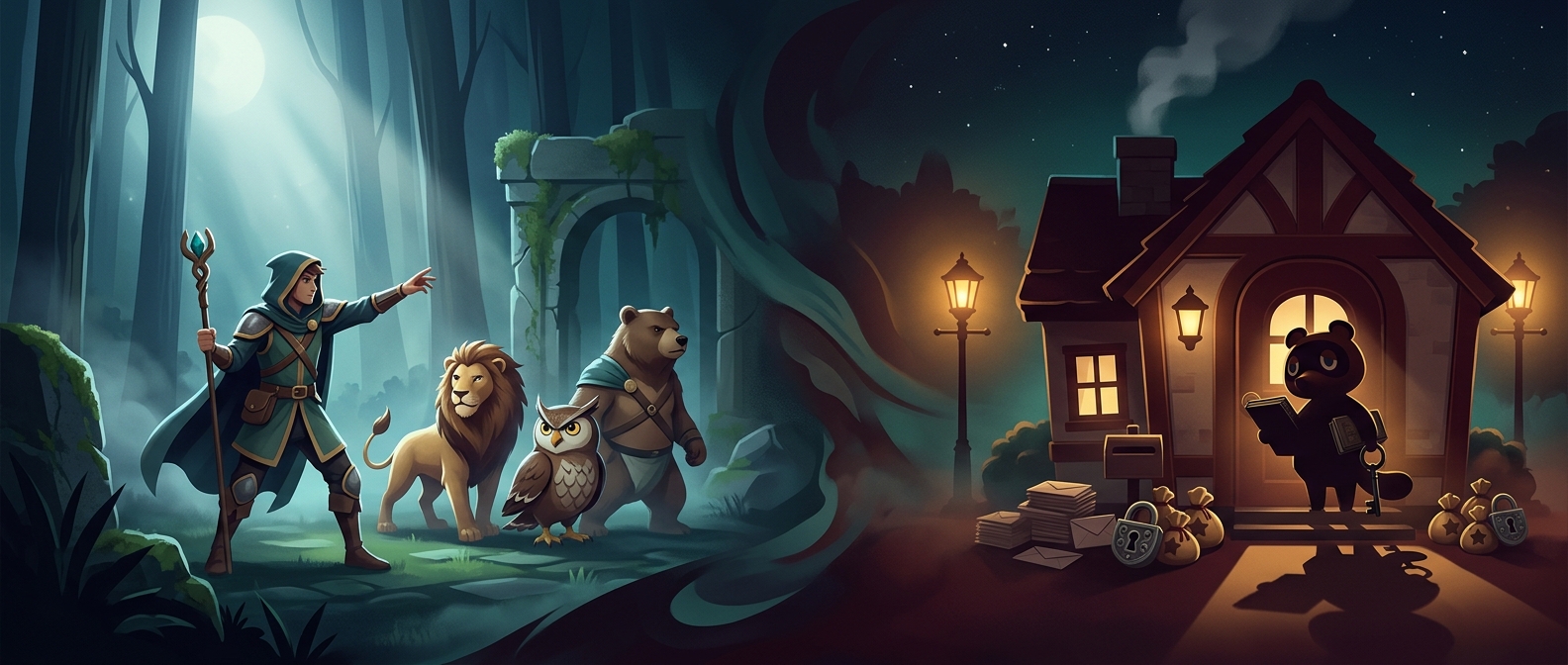
Animal Crossing began with a very different kind of loop: explore dungeons, meet animal companions, and fight monsters together. That premise would have made the animals part of an adventure party—characters whose abilities and behavior mattered in combat.
But combat is expensive in more than one sense. A fighting RPG needs enemies to behave, attacks to animate, and encounters to fit into playable spaces. On the Nintendo 64, those demands competed for limited hardware capacity. The developers dropped combat and redirected the project rather than trying to squeeze the original adventure into the system.
A change in what players do together
Without battles, the animals no longer needed to function as fighters. The game could instead center on living among them: sharing a place, meeting neighbors, and returning to familiar routines. That shift changed the role of the player, too. Progress would come less from defeating threats and more from taking part in an ongoing community.
The result was not simply an RPG with its combat removed. It was a different design built around a different use of time. The hardware constraint helped turn animal companions from members of an adventuring party into neighbors—and made everyday life the game’s main activity.