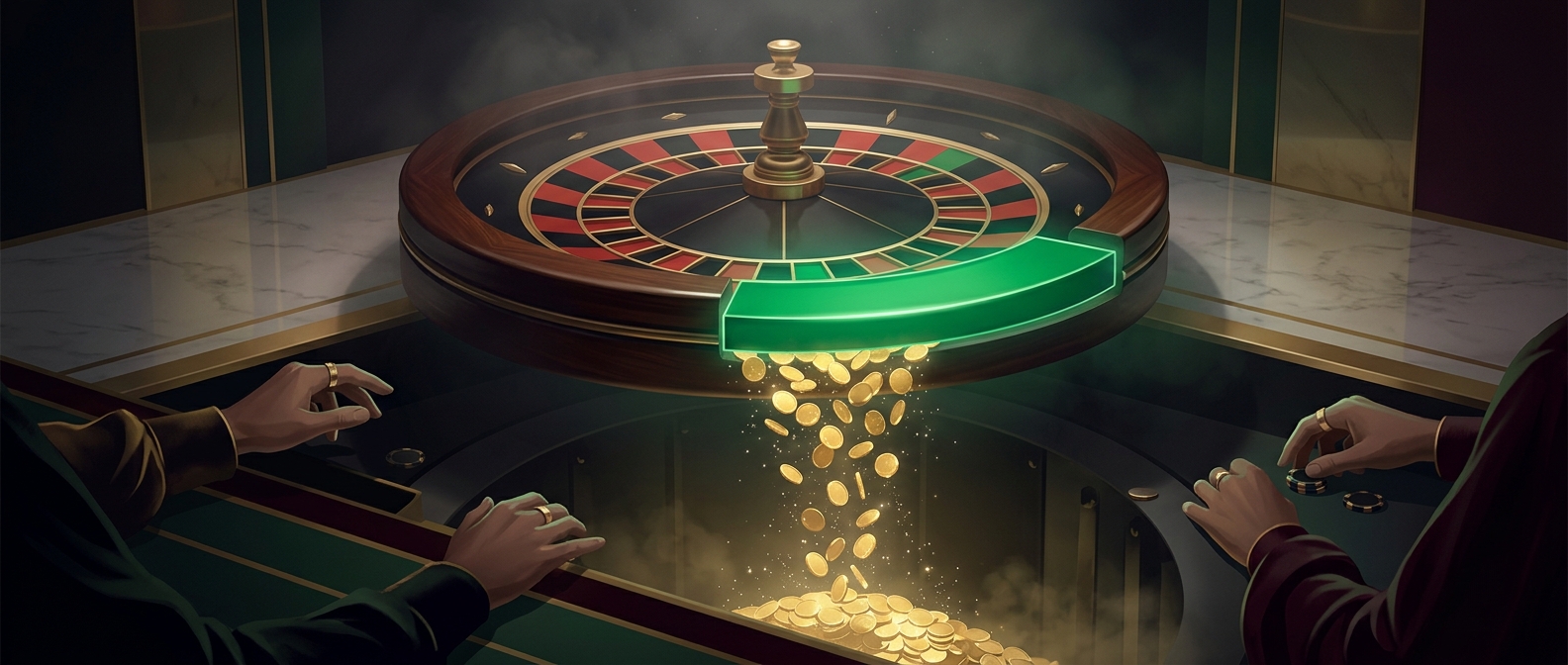
One extra pocket changed the wager
Before the zero, a bet on red or black had an even chance of winning: half the numbered pockets were red, half black. The green zero created a third outcome. It belonged to neither color, so a red-or-black bet lost when the ball landed there.
That small addition mattered because the payout did not rise to compensate. On a 37-pocket wheel numbered 0 through 36, a winning red-or-black bet pays even money. Yet red appears only 18 times, not half of all 37 outcomes. The casino therefore has a built-in edge of 1 pocket in 37—about 2.7 percent—on those bets.
A small edge, repeated many times
The zero does not make the casino win every spin; players still win plenty of individual bets. Its advantage emerges over repeated play: for every amount wagered on an even-money bet, the expected loss is about 2.7 percent. That is an average across many spins, not a prediction of what any one player will lose.
The Blanc brothers’ single-zero wheel made the game more favorable to the house without changing its basic appeal: players could still bet on familiar choices such as red or black, while the green pocket quietly made those choices less than truly even. On an American wheel, a second green pocket, 00, increases the edge on the same bets to about 5.3 percent.