The arithmetic behind the total
On a standard roulette layout, the numbered pockets run from 1 to 36. Add them in pairs from opposite ends: 1 + 36, 2 + 35, and so on. Each pair makes 37, and there are 18 pairs, giving 18 × 37 = 666.
That’s a useful shortcut for any consecutive sequence: pair the smallest number with the largest, then multiply the shared sum by the number of pairs. The result comes from which numbers are present—not from where they sit around the wheel.
Why the wheel has extra pockets
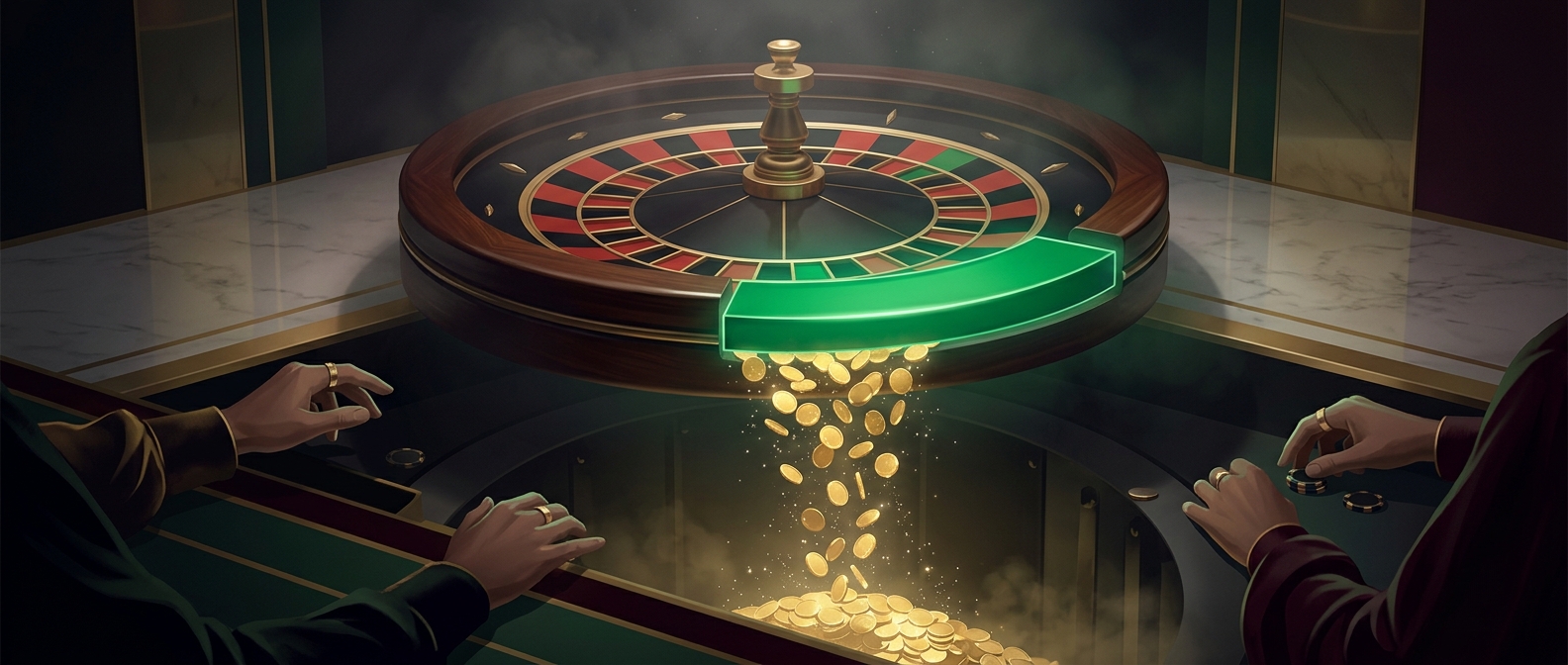
The green zero pocket is separate from the numbered run, so it does not enter that calculation. European roulette has one zero; American roulette adds a second, marked 00. Those pockets matter to the game’s odds, but not to the sum of 1 through 36.
Roulette wheels place the numbers in a deliberately mixed order rather than arranging them from low to high. The striking total survives that shuffle because rearranging a set of numbers never changes their sum. So the eerie coincidence belongs to the collection of numbered pockets, not to a special pattern traced by the wheel.