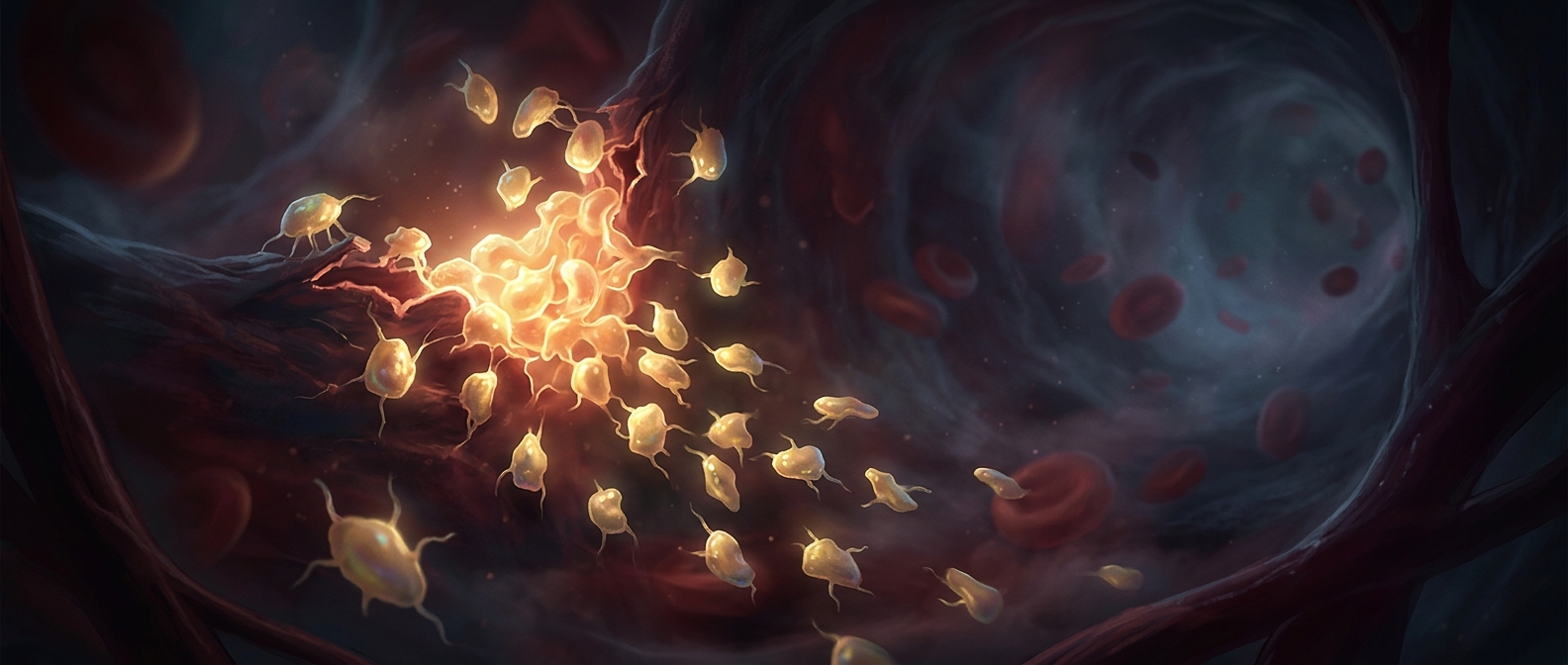
How a hormone gets from gland to target
An endocrine gland does not usually pipe its message directly to one organ. It releases hormone molecules into the fluid around its cells, and nearby tiny blood vessels carry them into circulation. The heart and blood vessels then distribute those molecules widely, including to tissues that will not respond.
That route is useful because a single release can reach targets in different parts of the body. But it also means the signal is diluted among a much larger volume of blood and tissue than the gland itself occupies. Hormones can still have an effect at low concentrations because a responsive cell’s receptors can bind the right molecule and start changes inside the cell.
The receptor is only the first step
Receptors work like molecular recognition sites, but their location and the cell’s internal machinery shape the result. Some receptors sit on the cell surface and pass the signal inward; others are inside the cell. In either case, binding can prompt the cell to change what it does—for example, alter its activity or make particular proteins.
So the same circulating hormone can have different effects in different tissues. A cell’s response depends not just on whether it has a matching receptor, but also on what other components it has available to carry out the instruction.
Signals are temporary
The message does not remain active indefinitely. Hormones are broken down or removed from the blood, while glands adjust their release in response to the body’s needs. This helps signals rise and fall rather than leaving a target under constant instruction.
The result is a broad delivery system with selective consequences: blood distributes the message, but each cell’s molecular equipment determines whether—and how—it acts.