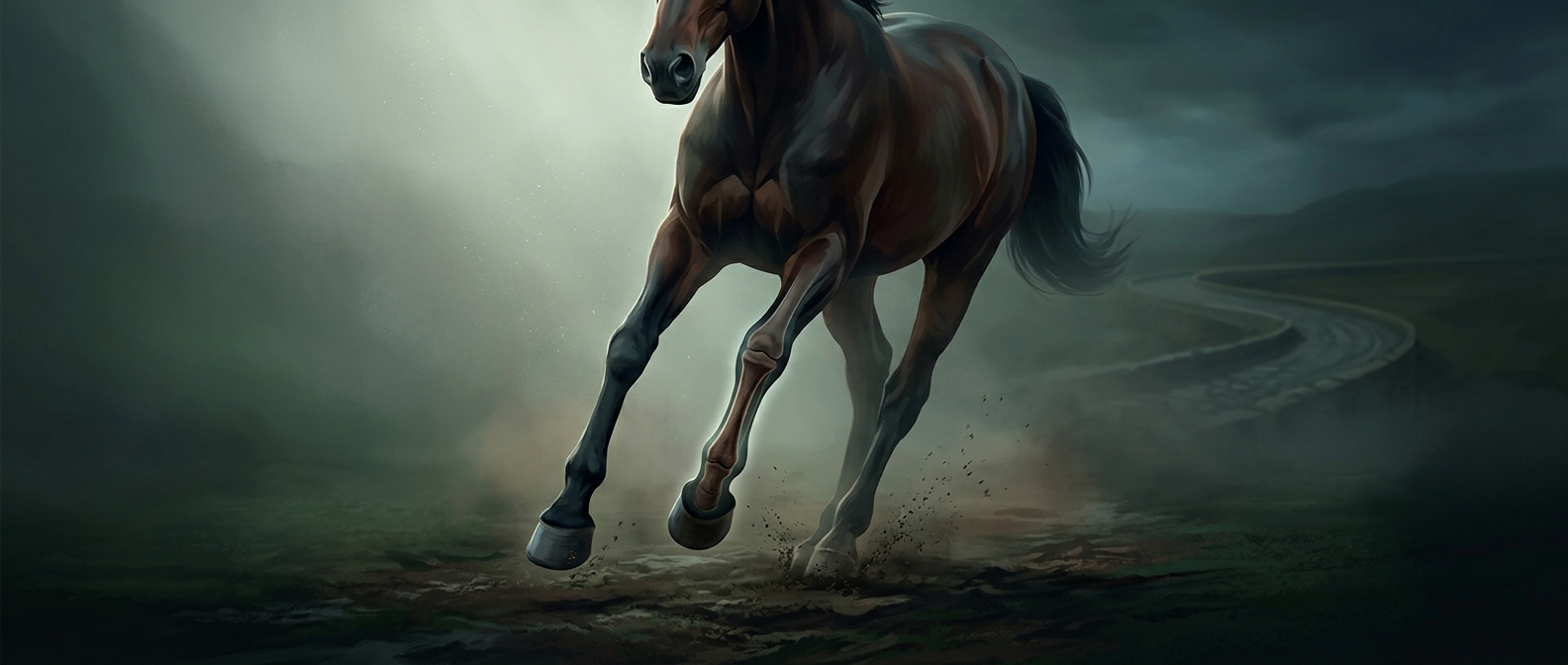
A long palate keeps the airway on the nasal route
In a horse, the soft palate—the muscular curtain at the back of the roof of the mouth—extends far enough to meet the epiglottis, a flap of tissue above the entrance to the windpipe. Together, they separate the mouth from the airway leading to the lungs. Air normally travels from the nostrils through the nasal passages and throat, then into the windpipe; the mouth does not provide a parallel route as it does in people.
That arrangement is part of the horse’s unusual throat anatomy, not a habit the animal can simply switch off. For air to pass through the mouth, the seal between the soft palate and epiglottis would have to be disrupted. A horse with an obstructed nose therefore cannot rely on ordinary mouth-breathing as a backup.
A tradeoff built for running
The separation also helps keep swallowed food out of the airway. When a horse eats, food moves through the mouth and down the esophagus, the tube to the stomach, while the airway remains distinct. The system is effective at protecting breathing, but leaves little flexibility when the nose is blocked.
During exertion, horses draw air through their nostrils, which can widen to admit more airflow. Their nasal route is thus both the everyday passage and the route they depend on when running hard. The tradeoff is easy to remember: a horse can flare its nostrils to meet a greater demand for air, but it cannot open its mouth and breathe around a blocked nose.