How a Horse’s Single Toe Became a Running Surface
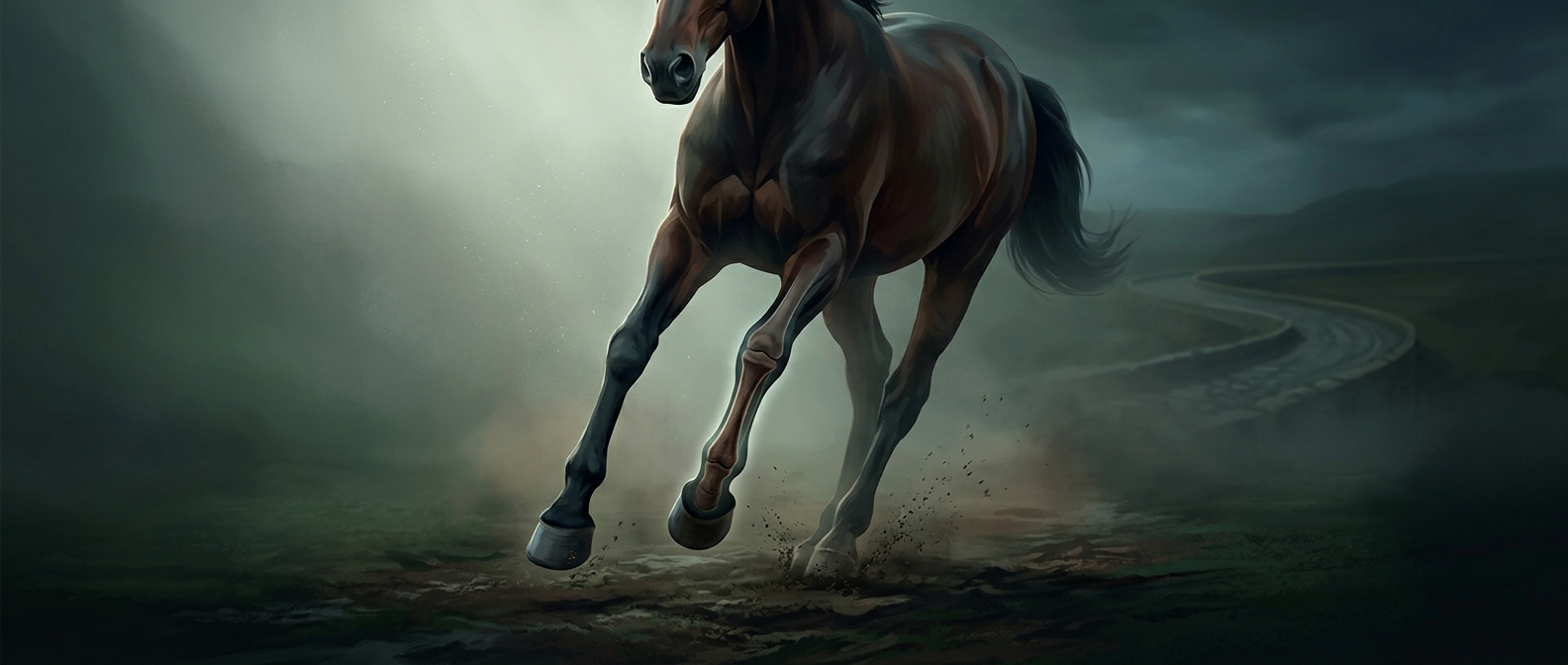
A horse’s hoof is not a shoe attached to the foot: it is the tough outer covering of the last bone in the central toe, much like a greatly enlarged fingernail. That bone sits inside the hoof capsule, the hard keratin shell that meets the ground. The visible hoof therefore surrounds and protects a digit; it is not a solid block of horn.
Over the horse family’s evolutionary history, the side toes became smaller and no longer reached the ground. The middle toe grew larger and stronger, leaving one main digit to bear the animal’s weight. This change was part of a broader shift toward longer lower limbs and fast movement across open ground. Fewer, lighter structures at the end of the leg can swing forward with less effort, helping a horse take long, rapid strides.
A Hard Shell With a Working Foot Inside
The hoof’s hard wall takes much of the wear from contact with the ground, but the foot also has living tissues and flexible structures inside it. The sole helps protect the underside, while the frog—the softer, V-shaped area on the bottom—works with other tissues to cushion impact and provide grip. As the foot lands, these structures help manage force rather than making the leg a rigid post.
The tradeoff is that one central digit carries the job that several toes share in many other mammals. A crack, infection, or poor alignment in a hoof can therefore affect the horse’s movement substantially. Each stride depends on a remarkably specialized arrangement: one enlarged toe protected by a shell, with cushioning and support built into the foot around it.