Why a horse may move its head to inspect the ground
A horse’s side-facing eyes give it a wide field of view, useful for noticing movement across open terrain. But the two eyes’ views overlap only in a relatively narrow area. That overlap helps the brain judge distance, while areas seen by just one eye provide less reliable depth information.
The shape of the horse’s head also leaves a small patch close in front of its face that neither eye can see clearly. To examine something near its muzzle, the horse may lower or turn its head, bringing the object into a different part of its visual field. That movement changes the viewing angle; it is not simply a matter of the horse failing to look directly at the object.
Why the blind spot matters around horses
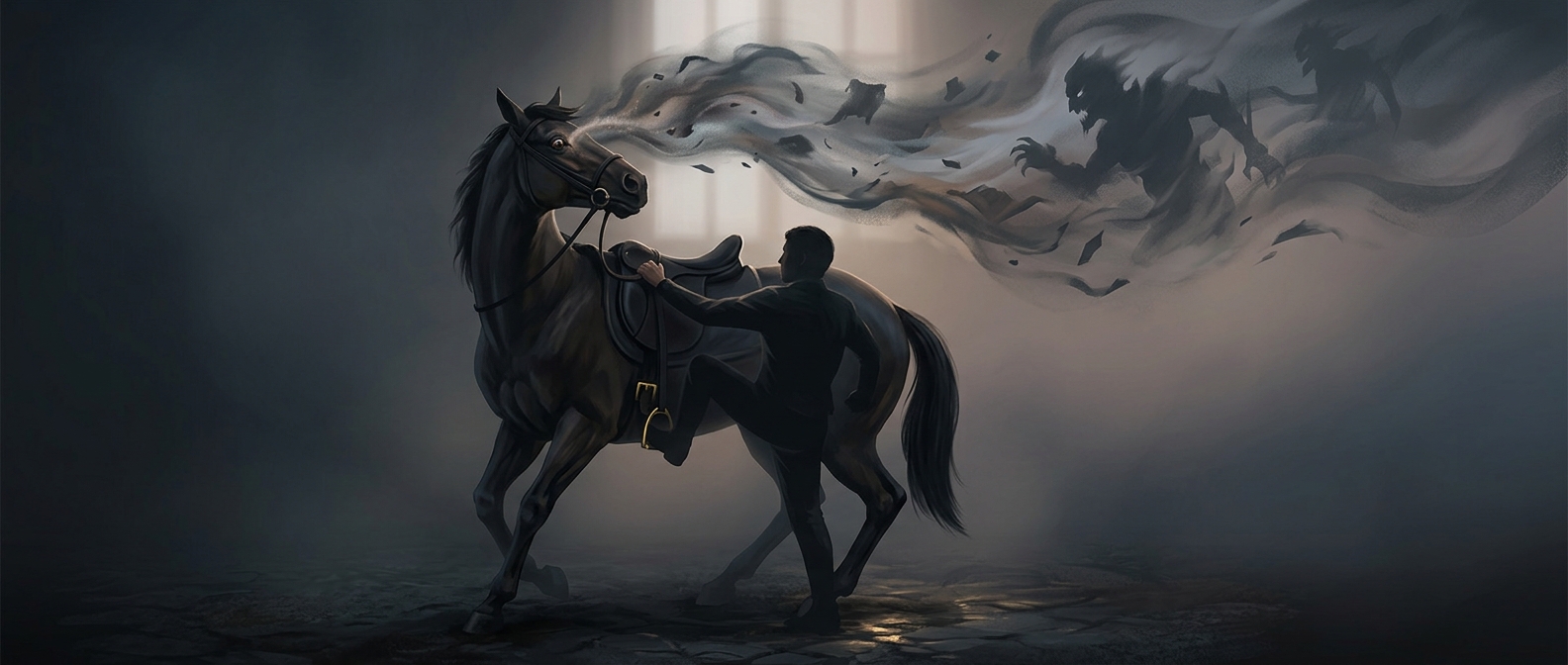
A person standing close to a horse’s face may be hard for the animal to see, especially if the person is near the ground. The horse may shift its head or body as it tries to locate what is there. Approaching calmly and speaking so the horse can hear you gives it another way to detect your presence, rather than relying on sight alone.
The same broad, side-oriented vision that helps a horse scan its surroundings comes with a tradeoff: an object right beneath its nose can disappear from view until the horse changes its head position.