How Horse-Pulled Skiing Works
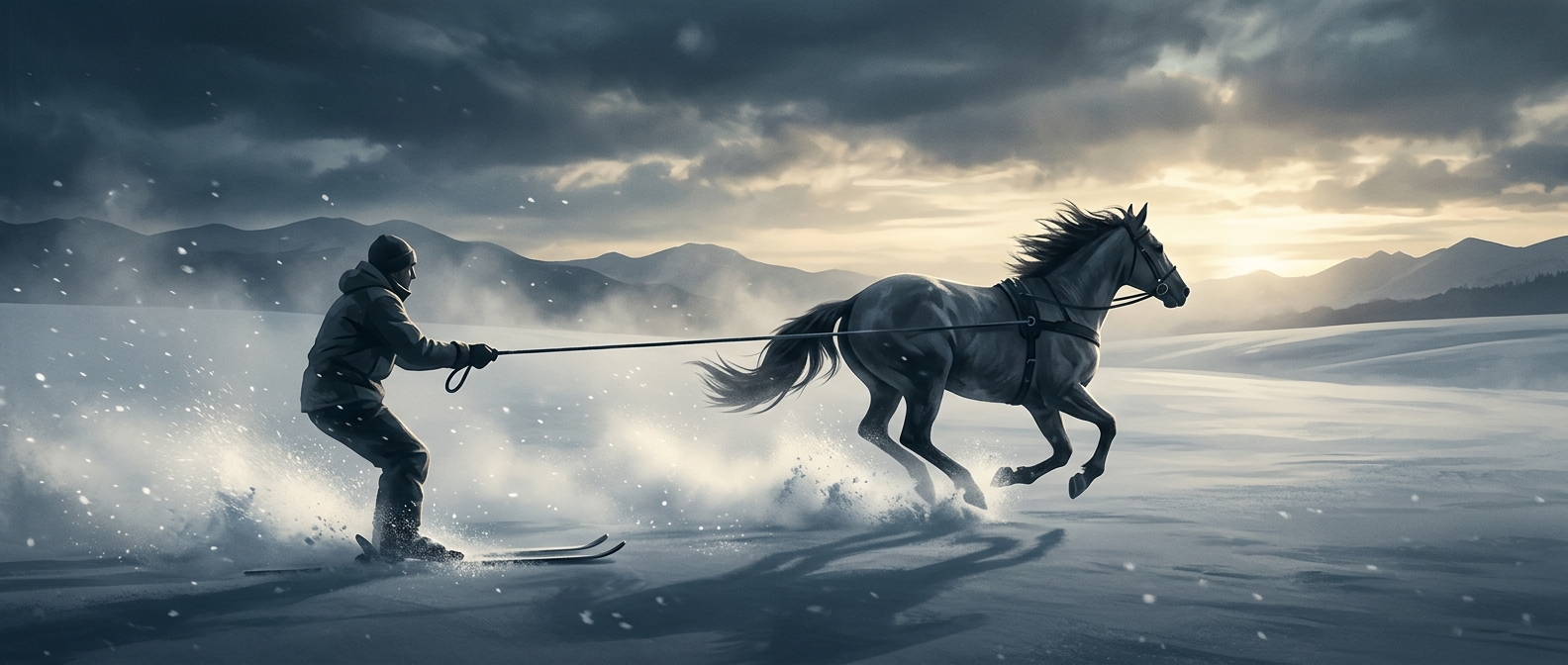
Skijoring turns a horse’s forward motion into a tow for a skier. The skier holds a rope attached to the horse or its tack, then rides behind on skis while the horse moves along a course. Unlike a lift, the tow does not carry a passenger sitting upright: the skier has to stay balanced while being pulled over snow and around turns.
The rope is the link between two very different kinds of movement. If it goes slack, the skier loses the pull; if it tightens suddenly, the jolt can throw off their balance. A steady path and coordinated pace matter, because the skier cannot simply steer the horse from behind. The horse’s direction determines where the tow goes, while the skier uses ski edges and body position to follow the line.
Why It Takes More Than Speed
A turn makes the skier’s job harder. The horse changes direction first, and the skier must trace a compatible curve without swinging wide or catching an edge. A course therefore tests coordination as well as velocity: the horse must keep moving through the route, and the skier must manage the pull without losing control.
That arrangement also explains the sport’s unusual engineering tradeoff. The horse provides propulsion, but there is no rigid frame or steering mechanism connecting it to the skier. The rope transmits force while allowing distance and movement between them. The skier is not merely being dragged; they are actively managing a moving connection.
The result is a race in which a small change in pace or direction can ripple down the rope. The horse chooses the path at the front; the skier has to make that path work on skis.