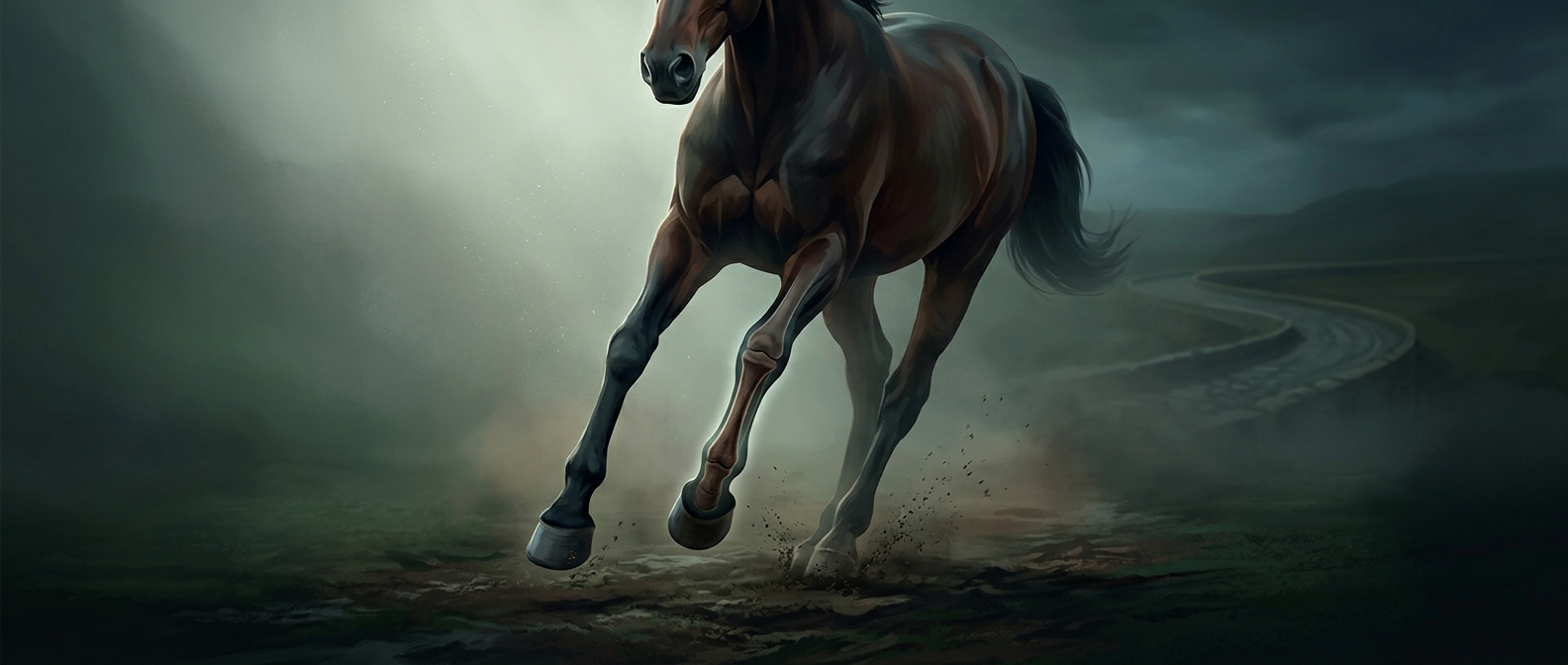
How four steps keep a horse moving steadily
A horse’s walk is a four-beat gait: the legs move in a repeating sequence, but each hoof meets the ground separately rather than in a paired thud. As one leg swings forward, the others take turns supporting the body. The result is a measured transfer of weight from hoof to hoof, with no airborne phase in an ordinary walk.
That timing helps the horse stay balanced at low speed. The animal can place each foot deliberately, adjust to uneven ground, and keep its body supported while the next leg moves. Unlike a trot, in which diagonal pairs of legs move together, a walk does not require the horse to lift off the ground between steps.
Why the rhythm matters in transport
For a rider, the walk’s separate footfalls produce a gentle, rolling motion rather than the sharper bounce of faster gaits. That makes it useful for covering ground at a controlled pace, especially when careful footing matters. The rhythm also gives a rider or handler clues: a change in timing, stride length, or weight-bearing can be noticeable before it becomes a dramatic stumble.
The beats are a pattern of movement, not a promise of four equally loud hoof sounds. Soft soil, hard pavement, shoes, and the horse’s individual stride all affect what reaches the ear. But beneath those variations, the same practical sequence keeps unfolding: one hoof takes the next turn supporting the journey.