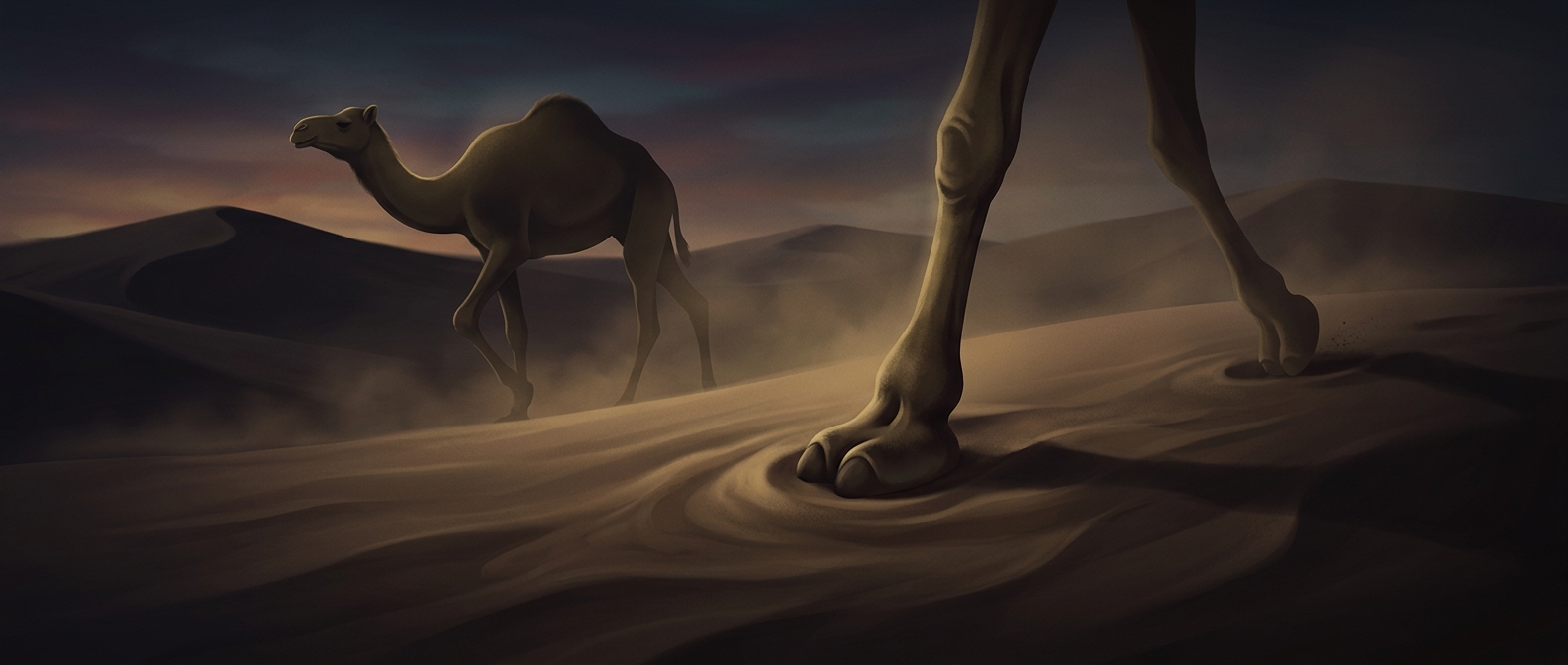
A gait that rocks the body sideways
A camel’s characteristic walk is called a pacing gait: the front and rear legs on one side move in a closely timed pair, followed by the pair on the other side. Many familiar four-legged animals, including horses at a walk, use a diagonal sequence instead—one front leg moves with the opposite hind leg. That difference changes how the animal’s body shifts beneath a rider.
As a camel steps, its weight transfers from one side to the other. The torso rolls, and the rider—seated well above the legs—moves with it. The alternating shifts make the ride feel less like a series of small up-and-down bumps and more like a steady lateral sway.
Why the motion reaches the rider
The rider is carried along with the camel’s trunk, so each weight transfer travels through the saddle rather than disappearing at the animal’s feet. A camel’s long stride can also make the movement feel broad and deliberate. The effect is especially noticeable at a walk, when the side-to-side rhythm is easy to follow.
Riders adapt by staying loose through the hips and letting their upper bodies move with the animal instead of bracing rigidly against every shift. That does not eliminate the sway; it makes it easier to remain balanced through the repeating motion. The surprising part is that the ship-like feeling is produced not by soft sand or unstable footing, but by the timing of the camel’s steps beneath the passenger.