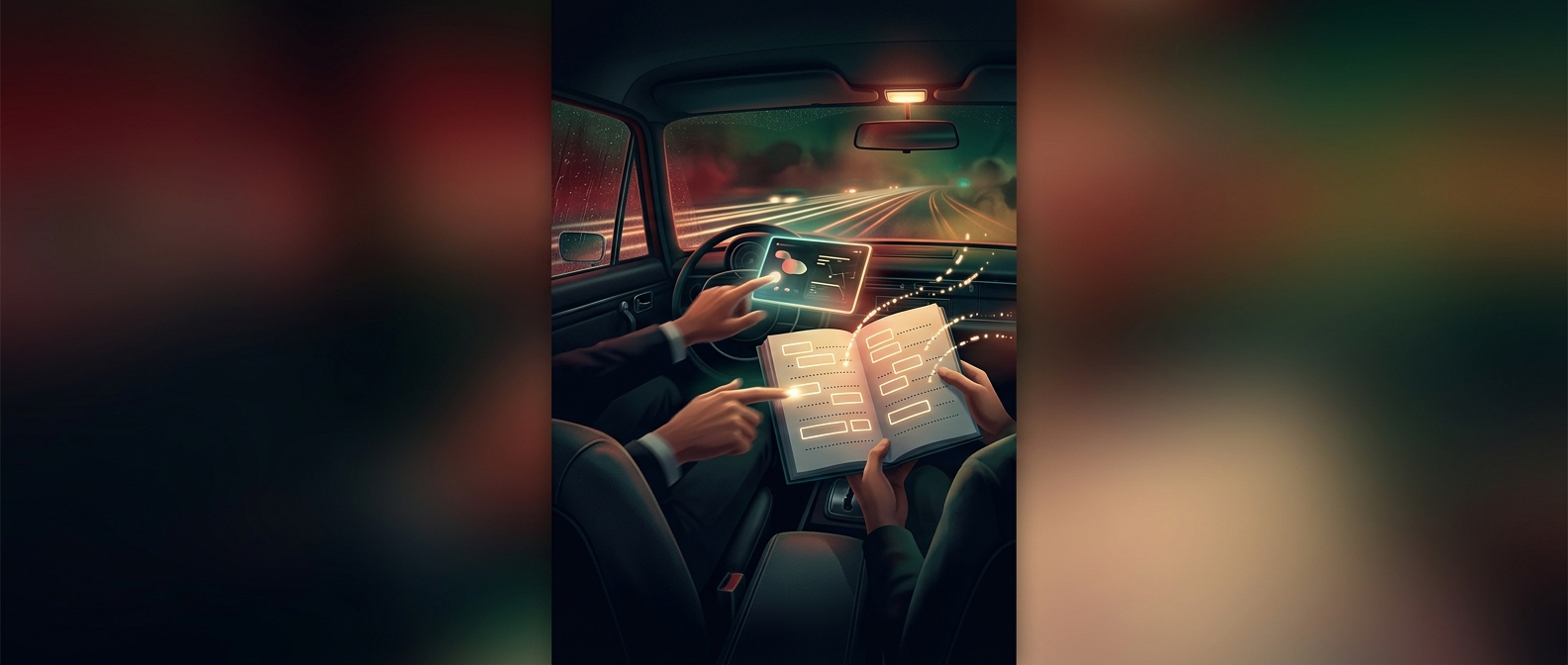
A game built for the space between destinations
A road-trip game has to fit the conditions of a car: little room to spread things out, no convenient place for a board, and stretches of time when passengers need something to do. Mad Libs could be played from a booklet and aloud. One person read a story with missing words; the others supplied words without knowing the sentences they would complete. No pieces had to stay put, and the game could pause when the car did.
That format also made the ride part of the game. Passengers could take turns thinking of words and listening as the reader filled in the blanks. The driver did not need to participate, so the activity could entertain people in the back seat without requiring the person at the wheel to handle anything.
The pitch matched the product
Calling Mad Libs road-trip entertainment was more than attaching a travel theme to a game. It highlighted a practical advantage that families could recognize immediately: the booklet turned otherwise idle passenger time into a shared activity. The blanks made the result unpredictable, too. Because players supplied words before hearing how they fit the story, the final reading often produced an absurd surprise—and a reason for everyone to listen.
That combination made the marketing easy to understand at a glance: a small, simple game for a familiar travel problem. Instead of needing a table or a long setup, it could begin with a reader and a question for the next passenger. The car’s limited space became part of the product’s appeal.