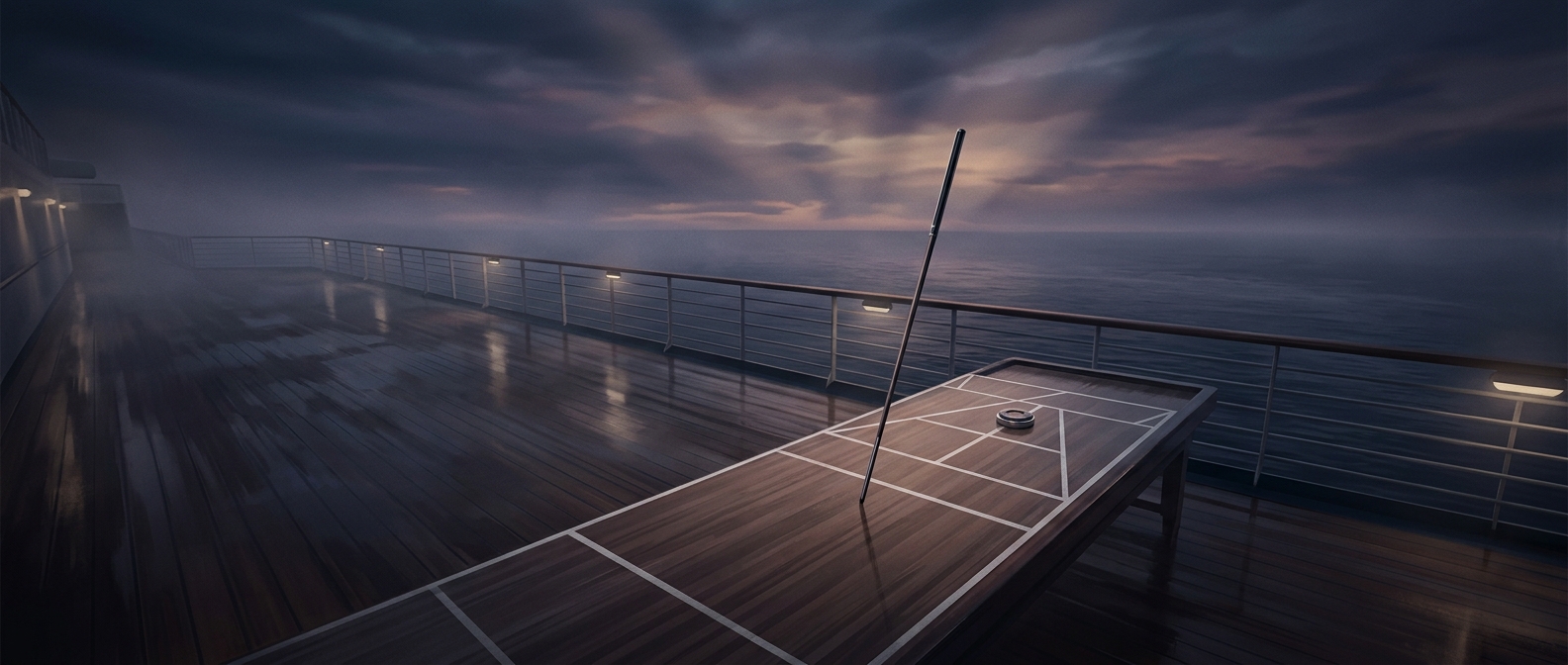
Why Shuffleboard Rewards a Gentle Push
On a shuffleboard court, the puck does the traveling; the player supplies only the initial push. Once it leaves the cue, it coasts across the smooth surface, gradually losing speed to friction. A harder shove does not make a better shot—it can send the puck sliding past the scoring area.
That makes control more useful than power. Players judge how far the puck must travel and adjust the push accordingly, while aiming to leave it in a scoring zone or place it where an opponent will have trouble knocking it away.
The Court Turns Small Differences Into Strategy
Because the puck keeps moving after release, tiny changes in force and direction can change where it stops. Players must estimate distance, account for the court’s feel, and decide whether to aim for a safe score or take a riskier shot. A puck that comes up short may score nothing; one that goes too far can overshoot the target.
The physical demand is modest compared with many sports, but the decision-making is constant. Shuffleboard makes a simple movement—a controlled push—carry the weight of the whole turn.