The “pancake” is a padded, spreading foot
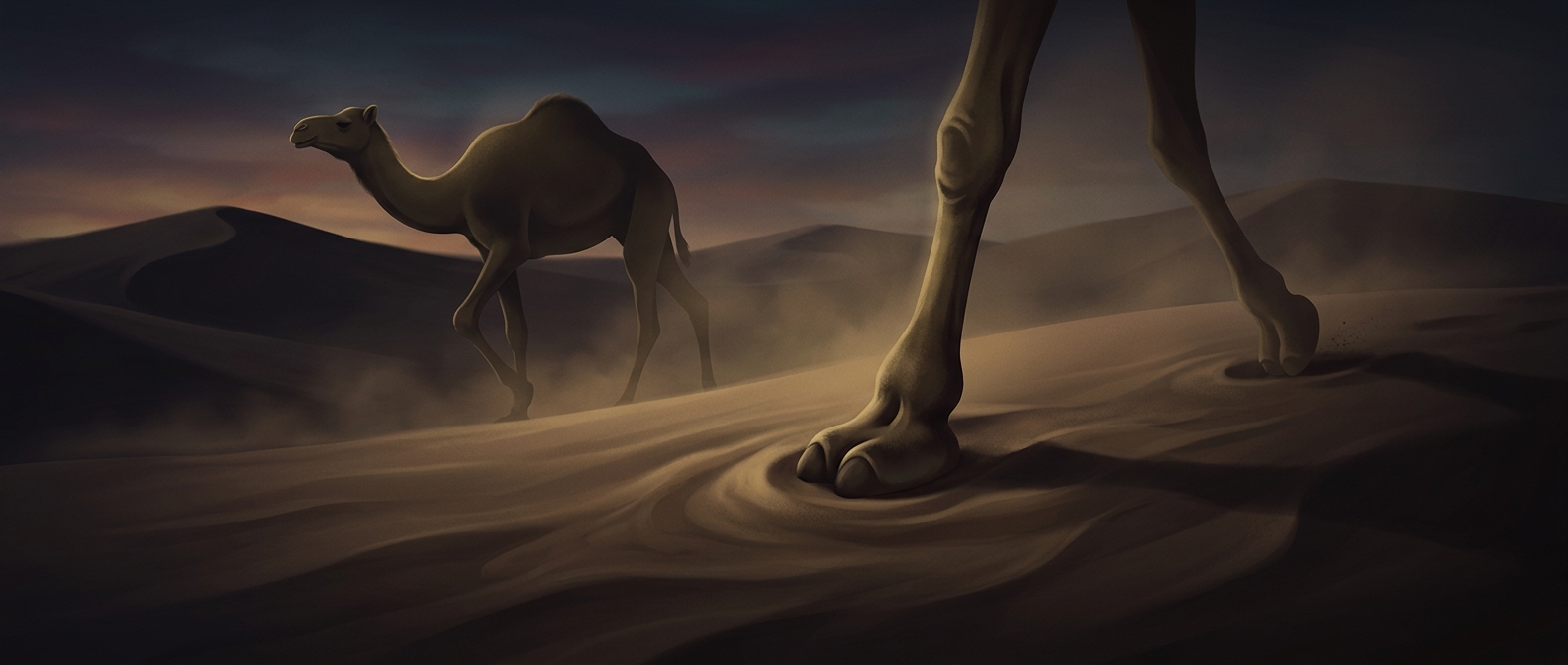
A camel’s foot is not a single hard hoof. It has two toes, each ending in a small nail, with a broad, tough pad beneath them. When the foot takes weight, the toes spread and the pad presses against the ground, creating a wide contact area. The pad is resilient rather than floppy: it cushions impact while supporting the camel’s heavy body.
Why a wider footprint matters on sand
Sand gives way when pressure pushes its grains aside. A narrow foot concentrates an animal’s weight on a small patch, making that patch more likely to collapse and the foot to sink. A camel’s broad footprint distributes the same load over more sand, lowering the pressure at each point. That means less sinking and less effort hauling each leg free.
The advantage is especially useful on loose ground, where a firm, narrow point of contact can behave like a stake driven into the surface. The camel’s foot instead spreads its load, much as a snowshoe does on snow—but through flexible toes and a cushioned pad, not a rigid frame. Its broad base lets the animal cross yielding terrain without each step turning into a deep excavation.