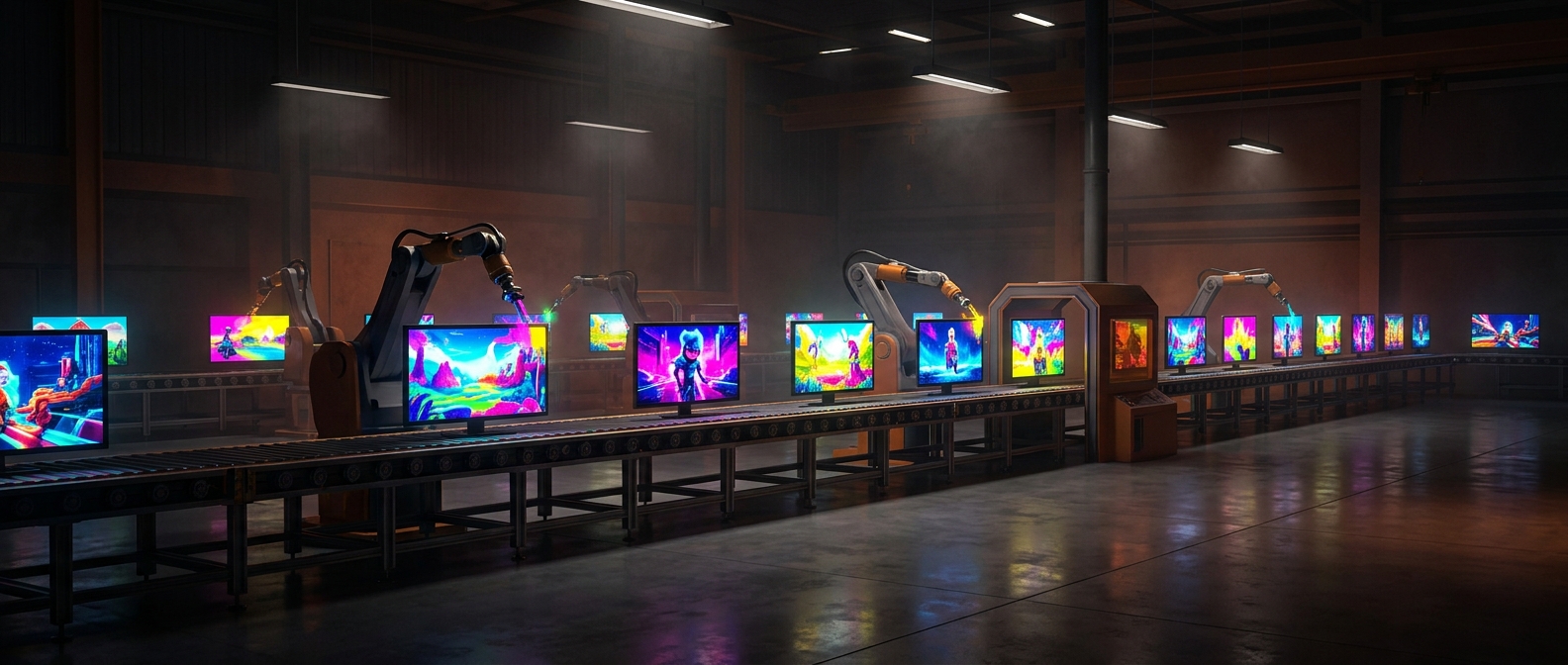
Why craft videos are easy to reproduce
A simple craft project can be turned into a repeatable video format: show the materials, demonstrate a few steps, then reveal the finished object. Hot glue is especially useful on camera because it makes small pieces appear to attach quickly, keeping the action easy to follow. Once a format works, producers can change the colors, materials, or final design without rebuilding the entire production process.
One template, many audiences
The same basic footage or sequence can be adapted for viewers in different places. Producers may replace captions, voice-over, music, or examples so a video feels more familiar locally. Projects built around visible hand movements need little explanation, which makes them easier to adapt than videos that depend on jokes, dialogue, or local references.
Bright, high-contrast colors serve a practical purpose: they help shapes and materials stand out on a small screen, and make the finished object immediately recognizable in a scrolling feed. That visual clarity can also make different videos look strikingly alike, especially when many use the same overhead view, quick cuts, and reveal-at-the-end structure.
The tradeoff behind the volume
A template lowers the effort needed to make each new video, but it can also narrow what gets produced. When a familiar format is quick to repeat and easy to localize, networks have reason to make more variations rather than invent a different approach each time. The result is a flood of distinct-looking projects built from a remarkably similar recipe: change the materials and colors, keep the steps legible, and save the clearest visual payoff for the final shot.