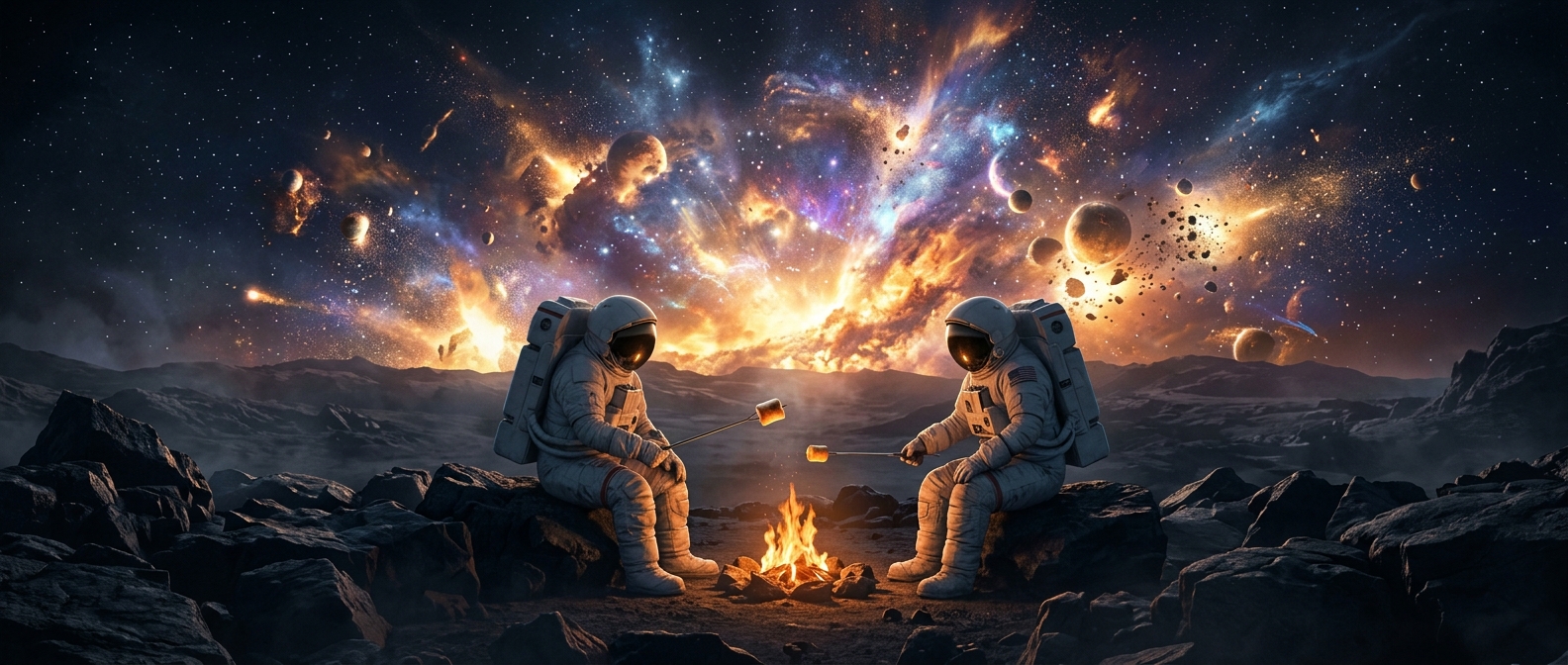
A campfire inside a cosmic countdown
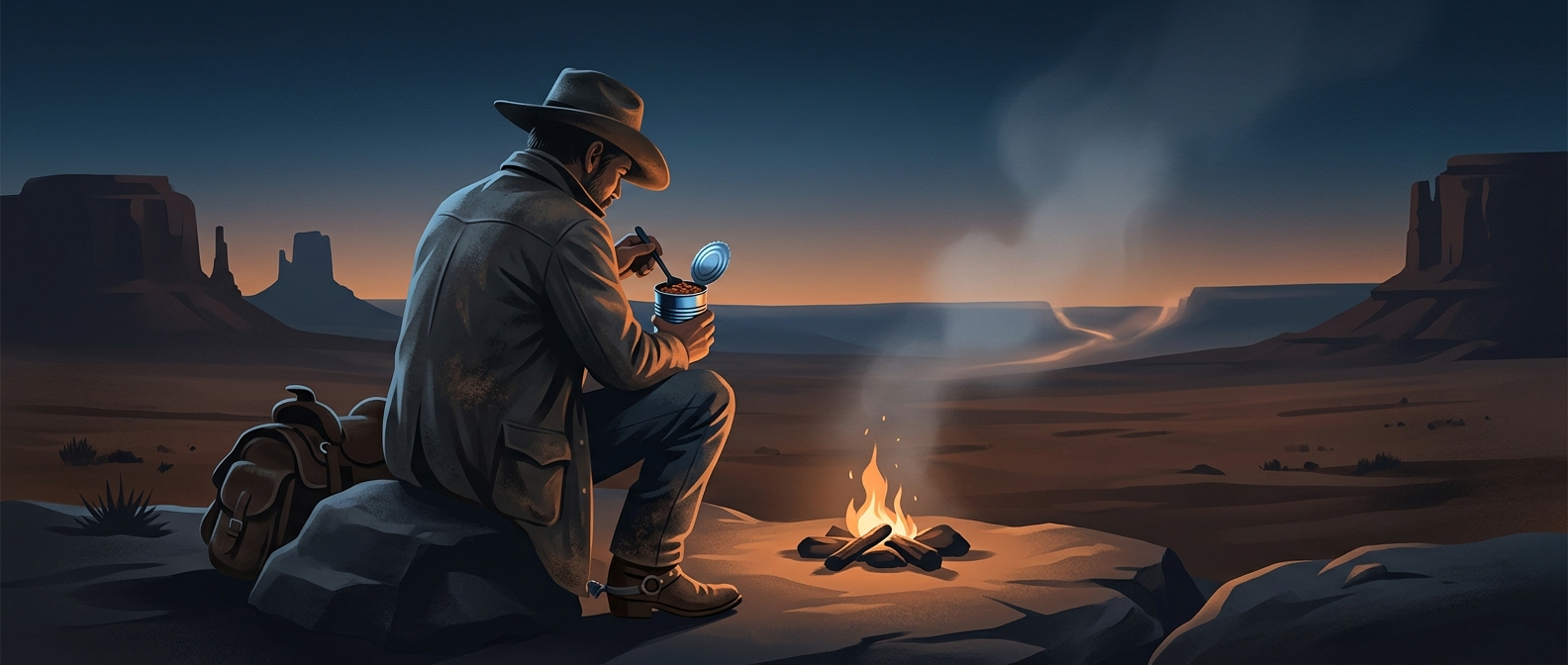
In Outer Wilds, the Sun’s impending supernova gives each expedition a fixed horizon: after about twenty-two minutes, the solar system is destroyed and the loop begins again. The player can spend that interval chasing clues—or stop at a campfire and roast a marshmallow. The small activity is part of the game’s world, not a cutaway from it: the fire remains a place to pause even as the larger catastrophe approaches.
Time resets; understanding does not
The loop’s key distinction is between the world and the player’s knowledge. When time resets, the solar system returns to an earlier state, but discoveries remain with the player. That makes a quiet campfire break more than a joke about bad timing. It offers a moment of ordinary routine in a game built around exploration, while the countdown keeps that routine temporary.
Roasting a marshmallow also makes the clock tangible. It takes a little time, and waiting too long can burn it—one tiny, familiar consequence unfolding against an event too vast to affect. The contrast is the point: even as the Sun ends the world, you can still choose how to spend the minutes before it does.