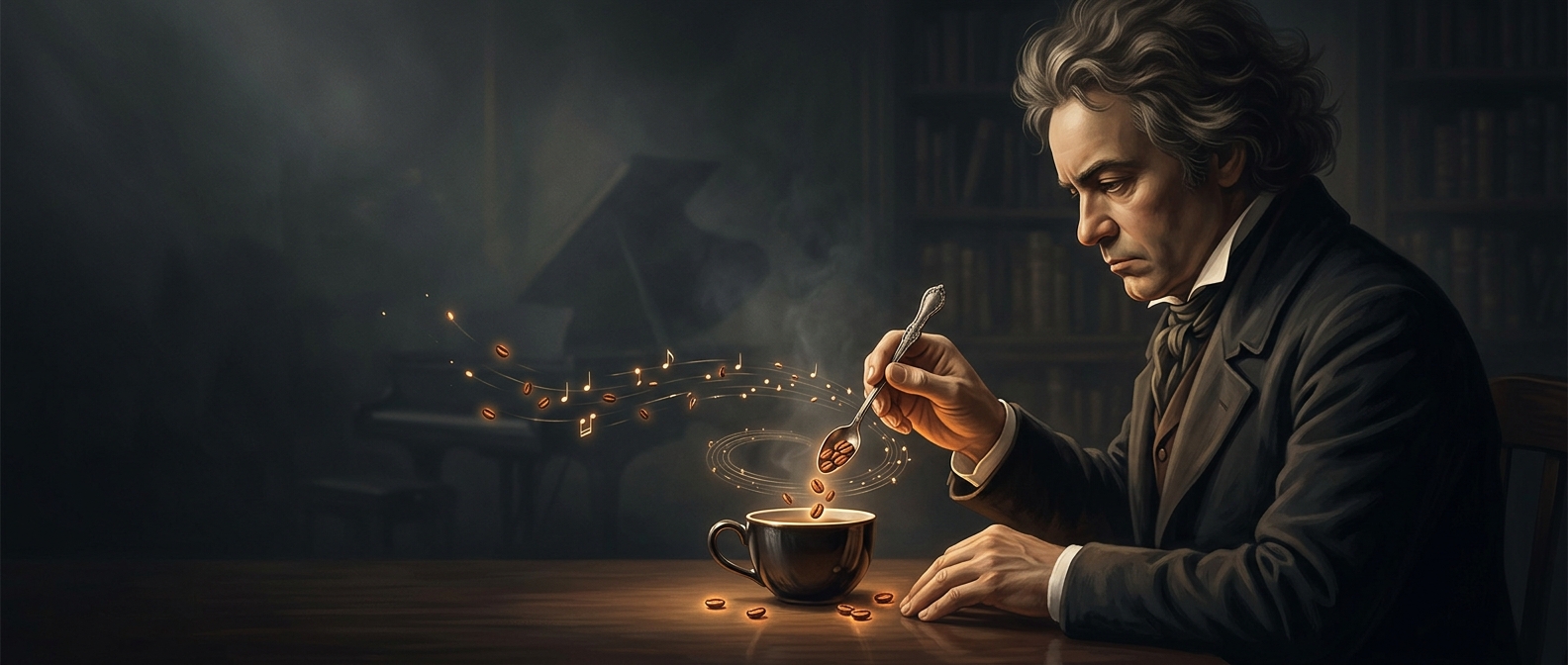
A measured cup, bean by bean
The point of counting coffee beans was precision at the smallest scale. Instead of judging a portion by eye or scooping from a container, Beethoven could start with the same number of beans each time. Once ground, they became the dose for a cup—a simple way to make the preparation repeatable.
That method was exact in one sense, but not in every sense: beans vary in size, so sixty beans would not always weigh the same. Still, counting gave the routine a clear stopping point. The cup was not ready when it looked like enough; it was ready when the count was complete.
What the ritual suggests
The anecdote makes coffee preparation feel less like an afterthought than a small procedure with its own rules. It does not tell us why Beethoven preferred that method, or whether the count produced a perfectly identical drink. It does show how a very ordinary task could be made deliberate: before the coffee was brewed, each bean had to pass through his hands.